
Political Enemies and the Weaponization of the DOJ
Pam Karlan and Bob Weisberg unpack the Comey and James indictments, and what they reveal about the rule of law in a politicized justice system
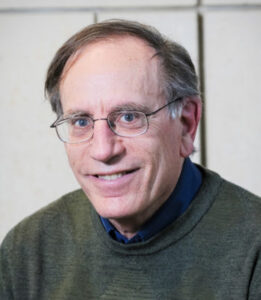
When politics drives prosecutions, what happens to the rule of law? Are we in uncharted waters? Stanford Legal host Professor Pamela Karlan sits down with her colleague criminal justice expert Robert Weisberg to unpack the extraordinary federal indictments of former FBI director James Comey and New York Attorney General Letitia James—with more potentially on the way.
Weisberg, the Edwin E. Huddleson, Jr. Professor of Law and co-director of the Stanford Criminal Justice Center, explains how grand jury indictments normally work, why these cases are unusual, and how selective and vindictive prosecution claims might play out when the evidence of political motivation is broadcast via Truth Social missives. Karlan and Weisberg also discuss how Justice Department norms separating the White House from individual charging decisions have been systematically broken—and why these indictments, built on shaky legal ground and thin narratives, could face serious procedural challenges.
This episode originally aired on October 16, 2025.
Transcript
Robert Weisberg: The term “vindictive prosecution” is a term in law, not in statute, but it’s in Supreme Court case law. It’s somewhat different, but related, and it can overlap. Think of it as spite. You can’t prosecute out of spite.
Pam Karlan: This is Stanford Legal, where we look at the cases, questions, conflicts, and legal stories that affect us all every day. I’m Pam Karlan. Please subscribe or follow this feed on your favorite podcast app. That way you’ll have access to all our new episodes as soon as they’re available. Today it is great to be joined by my colleague Bob Weisberg. Bob is the Edwin E. Huddleson, Jr. Professor of law. The “junior” there is like the “junior” in “Leland Stanford Jr. University.” We’re not actually a “junior university,” and he is not a junior professor of law. Indeed, he’s one of the longest-serving members of our faculty. He’s also the faculty co-director of the Stanford Criminal Justice Center.
Welcome to the show, Bob.
Robert Weisberg: Great to be here.
Pam Karlan: Today we’re going to be talking about two recent indictments. One of them against James Comey and the other against Letitia James. And I think maybe the place to start, Bob, is by talking about how the government goes about getting an indictment?
Robert Weisberg: A prosecutor—a U.S. attorney or an assistant U.S. attorney—goes to a grand jury. In theory, the grand jury is convened by a federal judge, but it will always be done at the behest of the prosecutor. And the prosecutor will put on witnesses who will, if things work out the way the prosecutor wants, convince the grand jurors that there is probable cause that a particular person has committed a crime. It’s not an adversarial hearing; it’s one-sided. But if the grand jury does indict, then a formal charge has happened, and the case could proceed to pretrial or ultimately trial.
Pam Karlan: Normally with a grand jury, it does not have to be unanimous to indict somebody, and the jurors don’t necessarily hear both sides of a case. Although, in general, should a prosecutor be presenting to the grand jury enough evidence for the grand jury to know what the arguments are on both sides, or is it really just supposed to be, “Here’s my best shot”?
Robert Weisberg: There’s no law that requires the prosecutor to present counterarguments that would come from the defense. In fact, the Supreme Court has clarified that that is not necessary. The DOJ guidelines, which are not binding as matters of law, but are administratively binding on federal prosecutors, would suggest that no prosecutor should try to win an indictment unless the prosecutor is, in all good faith, convinced that guilt can be proved beyond a reasonable doubt. But that still leaves open the possibility of pro-defense arguments that the grand jury will never hear. State law, by the way, differs from state to state, and in some states, there is an opportunity for the person who ultimately becomes indicted to raise counterarguments.
Pam Karlan: I think also there are often a number of different grand juries at the same time sitting in a particular district. There have been some reports that in the Letitia James case, they presented some stuff to a grand jury in the Eastern District in Norfolk and then presented other stuff to a grand jury in the Eastern District of Virginia in Alexandria.
Robert Weisberg: Yes. It’s a question of venue and in the Letitia James case, which is all tied up in obscure matters of mortgage applications, there were two different—at least two different—properties involved. So that means that it’s perfectly legitimate for the prosecutor to go to a grand jury in a place where the alleged crime might have occurred with respect to a particular piece of property, but obviously it gives the U.S. attorney a bit of an opportunity for so-called forum shopping for friendly grand juries.
Pam Karlan: And generally, when prosecutors go to a grand jury, there’s an assistant U.S. attorney who’s been with the case for a while and goes and presents that case, and these two cases seem to be different. Can you explain a little bit about what’s different about these two cases?
Robert Weisberg: What’s different is a lawyer named Lindsey Halligan. Now, as this happened a lot in the Justice Department in recent years, when there has been a push from the Attorney General or frankly, and certainly truly in this case, the president, to push for an indictment, here the so-called career prosecutors generally said, “No, there’s nothing here. We think there’s no possible way of making an argument that guilt can be established against either of them beyond a reasonable doubt, and certainly there’s no probable cause.”
So, Halligan then was inserted as the U.S. attorney in the Eastern District, replacing a longtime civil servant, Earl Seibert, who refused to file the charges. And Halligan apparently couldn’t find anybody on her U.S. attorney staff to do the work. They just didn’t believe it. So, she has her name on the indictment and appeared before the grand juries herself. This…
Pam Karlan: It’s quite unusual for the actual U.S. attorney.
Robert Weisberg: People experienced in federal law say this never happens. The U.S. attorney is, of course, the head U.S. attorney—a manager—who would never have the time to do exactly what you refer to, Pam: follow the case thoroughly and learn all the details of the investigation to make the case. It may have been a dramatic move by Halligan, but it actually looks like a rather feckless one.
Pam Karlan: Then, of course, she went to present the indictment to the magistrate judge, and she had two indictments with her in the Comey case. One indicted him on two charges. We’ll get to the charges in a moment. The other on three. And she seemed to hand in both and didn’t really understand what was going on at all.
Robert Weisberg: Yes, ultimately, we’re talking about the one with the two charges though. And it’s been criticized, shall we say, for being one of the thinnest and most obscure indictments ever seen.
Pam Karlan: Yes, usually in a big case—and I certainly remember this from when I was at the Department of Justice and the Civil Rights Division had some major criminal prosecutions, for example, of the officers in the George Floyd case, or the officers in the Ahmaud Arbery case—the indictment was pretty … it told the story of “here’s what we think happened and here’s what we’re charging you with.” And I have to say, reading the Comey indictment, it is one of the shortest indictments I’ve ever seen in something that isn’t just a cookie-cutter bank robbery case or drug bust-and-buy.
Robert Weisberg: Absolutely right. Now, the two charges there, and their relationship to each other, is a little obscure. One flat out says that he lied when he testified before the Senate in 2020, but it doesn’t say much about the lie.
Pam Karlan: It doesn’t tell you what the lie was.
Robert Weisberg: It doesn’t say what the lie was. And in fact, we know, indirectly, what the alleged lie was. And there was certainly a narrative to tell there, but it wasn’t told. And you’re quite right that prosecutors, although they’re not legally required to do this, usually will tell a story with a fair amount of factual information, much of which, of course, bears on evidence that would be presented by the prosecution at trial because, of course, they want to make a good case before the grand jury.
The other charge is interesting. It’s an obstruction charge in terms of interfering with a congressional proceeding. Now, its relationship to the first one is a little unclear. It is … obstruction can mean many different things. Obstruction is an extremely complicated legal concept. The obstruction statutes passed by Congress are Byzantine, spaghetti-like, mix your metaphors any way you want.
It’s possible for a false statement, or perjury, to also constitute obstruction. But if that’s what’s going on here, it’s a double charge for the same alleged act, which is supposedly lying in 2020.
Pam Karlan: Yes, and I think when he was actually arraigned, Mr. Comey’s lawyer said, essentially, “We don’t know what exactly he’s been charged with here, because it’s not clear what statement they’re talking about, it’s not clear what proceeding they’re actually saying he obstructed or the like.” Why do you think the government did such a spare indictment here?
Robert Weisberg: I don’t know, except for the possibility that Lindsey Halligan didn’t know much of anything about the case. Somebody mumbled a few things in her ear as to what Pam Bondi, at least in the Comey case … By the way, I say, “at least in the Comey case,” because it appears that Pam Bondi wasn’t even consulted about going to the grand jury on the James case. Somebody just whispered in her ear, “this is what we think happened.” I don’t want to accuse her of prosecutorial malpractice, but it’s just unbelievable that she would do that and I don’t have a good explanation.
Pam Karlan: So, we have these two charges against Comey … and just for our listeners who are wondering why, if this is about his testimony, was he charged in the Eastern District of Virginia? I think it’s because he testified over Zoom.
Robert Weisberg: Yes.
Pam Karlan: Because the testimony was during COVID. So he’s testifying from a house in the Virginia suburbs.
Robert Weisberg: Presumably his home in Virginia.
Pam Karlan: And I guess from the administration’s point of view, that’s probably lucky because they’ve been having some really bad luck recently in getting grand juries inside the District of Columbia to indict.
Robert Weisberg: However, questionable are Lindsey Halligan credentials, the U.S. attorney in DC, Jeanine Pirro, an interesting character, a Fox News pundit, and frankly, a pretty vulgar propagandist when she was on Fox News, nevertheless has experience as a prosecutor. She had been the head DA in Westchester County, New York. But she keeps losing, or her office keeps losing the possible indictments in DC because the grand jurors, the local citizens, just say no. At some point she even tried a maneuver whereby she went to the local Superior Court, which is a special quasi state court in DC, but still under federal authority, to get an indictment. But yes, the Eastern District just looked a little riper and proved only barely riper in the sense that she, Halligan, was able to secure the Comey indictment apparently with just 14 votes out of 23.
Pam Karlan: Which is rare because as you will remember, having just alluded to New York, your home state from many years ago, that’s the source of the famous Sol Wachtler quote about “any DA should be able to get a jury to indict a ham sandwich.”
Robert Weisberg: Yes, that ham sandwich joke has been around so long that I thought…
Pam Karlan: I know they started out with fresh pork and it became ham.
Robert Weisberg: I thought it needed to be retired, but there was some kind of sandwich involved in a recent indictment I seem to recall. So, it came to reality. Anyway…
Pam Karlan: Anyway, so we have the indictment in the Comey case. Normally there’s a “speedy trial act” that says that the case should go to trial between 35 and 70 days, I think, after the indictment, although it’s a little bit like an NBA game or an NFL game, the clock stops a lot. So, it actually can take longer than that, but the judge has set the trial there for not very far out.
Robert Weisberg: January, I believe.
Pam Karlan: Yes, in January. Before we get to the trial though, there are two kinds of motions in addition to the motions, for example, asking the government to actually specify what precisely Mr. Comey’s alleged to have done wrong. There are two kinds of motions that people are talking about that they think may get filed here. One is about selective prosecution, and the other is about vindictive prosecution. Can you explain to our listeners what those are, how they differ from each other, and how those things normally get resolved?
Robert Weisberg: Great. And by the way, we’ll throw in a third if we have time, which is to talk about the motion to disqualify Ms. Halligan, but…
Pam Karlan: Oh yes, I’d forgotten about that one.
Robert Weisberg: Now, selective prosecution is an unfortunate term because it’s often invoked by defense lawyers to just signal a terrible thing. All prosecution is selective in some sense; prosecutors can’t possibly prosecute all the cases that are able to achieve at least the probable cause standard.
It’s clearest if you talk about equal protection. The most famous case on the subject, U.S. versus Armstrong, was one in which, in a cocaine case, the defendant argued that white people were not getting charged with the exact same crime that he was getting charged with and that could constitute a true equal protection claim if it could be proved that the prosecutors were purposely discriminating on the basis of race. Armstrong did not win, but at least he enabled the setting out of the principle. One of the big issues there was discovery. In other words, the problem of similarly situated people—Black and white people who had done the exact same crime—that’s very hard to establish factually or empirically and the first hurdle a defendant has to overcome is just to get enough discovery to establish that point. But it’s possible.
The other area where selective prosecution has been deemed illegal: there have been a few cases where the defendant has arguably exercised a right of free speech and other similarly situated people who committed the same or allegedly committed the same crime, didn’t speak up on a matter of any public notice. The most famous case there involves draft protestors, some who had been vocal—I’d just say draft non-signers people, who did not show up for the draft. Some who were publicly vocal and some not. And the idea there: it’s not exactly equal protection, but it’s like it in the sense that you have to prove the “similarly situated” and therefore the real motive for the prosecution is allegedly to punish someone’s exercise of free speech. In both those situations, in a sense you are getting into the mind of the prosecutor, which is hard to do. It’s a subjective phenomenon. The reason it is hard is that the defendant has to establish certain objective circumstances from which an inference could be drawn about this bad motive by the prosecutor. The difference here may be that President Trump has, shall we say, offered a fair amount of data about his subjective thinking. And that might make this an unusually strong case.
Pam Karlan: There is this amazing post he did on Truth Social. and maybe also on the thing formerly known as Twitter. It was it was supposed to … people think it might’ve been a private email or something to Pam Bondi, but instead he broadcast it to the world and said, “It’s time for you to go after these people. You ought to make Lindsay Halligan, who likes you a lot, the person to do this…” And it might be easier to get discovery here than in a case where…
Robert Weisberg: It’s almost as if that itself is a great piece of discovery that came free, and it could be the basis of more. Now, the term “vindictive prosecution” is a term in law, not in statute, but it’s in Supreme court case law. It’s somewhat different, but related, and it can overlap. Think of it as spite. You can’t prosecute out of spite. Now, the assumption, as with selective prosecution, is that, at least putting aside the problems with this particular indictment, assume that the charge is otherwise valid, but what’s the prosecutor’s motive for bringing it? And the clearest case would be where the case is at a certain point, either the defendant hasn’t been charged, there maybe has been charged with a lower crime, and at some point in the proceedings, the defendant exercises a legal right, usually a constitutional right, filing a motion to dismiss, filing a motion to suppress evidence, whatever. And in response to that, the prosecutor files a charge or files a bigger charge.
Now the term vindictive is a funny kind of psychological term, but the assumption is that it’s a violation of due process if the clear causal motive of the charge is retaliation, if you will, against the defendant for exercising a constitutional right. And the constitutional right here of James Comey is really, well to say whatever he wants to take actions in his role as FBI head and so on. So there’s a difference between the two, but they share the characteristic that it’s usually hard to prove because you have to draw the subjective inference from objective evidence. Except here you got all the subjectivity out there.
Pam Karlan: Yes, and I think it’s worth explaining something to those of our listeners who aren’t familiar with the Justice Department, that really from the end of the Nixon administration up until the second Trump administration, there was a general rule inside the Department of Justice that although the president sets the kind of overall agenda for the department so he can say, “I want more fraud prosecutions and fewer drug prosecutions” or “more drug prosecutions and fewer white collar prosecutions” or the like, or “I want you to defend the constitutionality of the Defense of Marriage Act,” or, “I don’t.” There was a general rule, and it was a general written-down rule that the president and the White House did not interfere in the decision about individual criminal prosecutorial matters. That the White House might be notified if it was going to be a high-profile case, we’re going to indict James Comey tomorrow or the like.
But there was no back and forth between the White House and the actual prosecutors bringing the case. That was thought to be something you left to the civil servants and the U.S. attorney who was managing them, or the Assistant Attorney General that was managing that section. And that’s been blown out of the water by this administration, which has really, I think, taken to heart the statement from the Trump v. United States immunity decision that the president has the authority to direct the Department of Justice.
Robert Weisberg: You used the term “rule.” It was a kind of assumption, a guidance rule, if you will, within the Department of Justice, therefore not binding as a matter of law. Another term we hear is a “norm” or as we say in my old neighborhood, a norm, which nevertheless was held virtually sacred by generations of prosecutors. But norm-breaking has been pretty much what Trump has been about.
Pam Karlan: Yeah and there’s, of course, this very famous speech given by Robert Jackson when he was Attorney General before he became our chief prosecutor at Nuremberg and also a Supreme Court justice, that talks about the role of the prosecutor and says: look, the problem is you should never have … the prosecutor should see the crime and then look for the perpetrator of the crime rather than seeing a person and then looking for what crime you might be able to charge the person. With the Letitia James case, it really does seem like that latter thing is happening here.
Robert Weisberg: Oh my gosh, yes. Now, just a word about that indictment. You’d have to be an expert on real estate finance to understand its nuances, and I’m certainly not that, but it has nothing to do with her public role as AG of New York, except to the extent that she, of course, brought actions against Trump, and again, the motive would be imputed to Trump: “Let’s find something on her.”
They certainly couldn’t find anything on her in her public role. So apparently, they just dug into some of her financial records. She bought several properties, one in New York, but I think two in Virginia. And there were very technical questions about whether there were mistakes in some of the papers she signed, largely having to do with when or whether she noted that a particular place she was seeking a mortgage on was to be her principal, personal residence. The details are mind numbing. There were several properties, there were many different documents. As with Comey, so with James, the career prosecutors said, “There’s nothing here.” It’s not entirely clear that the statements she made were false anyway, because of some very odd complexities or vagueness in some of the Freddie Mac or Fannie Mae rules about mortgages.
Either way, though, you can’t prove fraud. And by the way, the crimes there would be … it’s essentially a kind of bank fraud, but they throw in a wire fraud charge and a mail fraud charge, so it comes to the same thing. They’re incredibly hard to prove because they have a very high mental state requirement.
And without going into the criminal law weeds, it would be real intent to defraud for material gain, causing material harm to the victim—the victim, let’s say, being the bank. Well, she made other statements in some of the applications, which were perfectly consistent with the idea that this was not to be her principal residence, though she might share it to some extent with the niece. So, if anything, she would’ve done a horrible job of trying to defraud the bank because she actually gave them a perfectly clear set of facts. And it’s clear that any prosecutor would say, “Hey, if you’ve ever done mortgage financing …” I’ve done it a couple of times, you sign 9 million pieces of paper that they rush you through, and the mental state requirement for proving fraud is unbelievably high, and the general consensus of the U.S. attorneys was that this case is even weaker than …
Pam Karlan: It started off as a case about the property in New York and a different property in Virginia. And then her lawyer sent this public letter with a bunch of attachments to it that kind of blew those cases out of the water, and then they came up with this one. And I guess I’ve two thoughts about this. I’d love your reactions to: One, is it all reminds me of the title of that wonderful Harvey Silverglate book, Three Felonies a Day, which is essentially about the extent to which our criminal law, if the government wants to go after somebody, they can almost always find something you’ve done wrong or arguably enough something that you might have done wrong in the last five or six years before the statute of limitations runs, so they can go after you for that. The second thing is that it seems that where this all came from, is that a political appointee at the Federal Housing Finance Agency, Bill Pulte, was just combing through all of the mortgage documents that were available on various people that the Trump administration doesn’t like. And ProPublica then, using public documents, showed, I think, that two members of the president’s cabinet have also claimed on more than one document that it was a primary place residence. Is that going to help on a selective prosecution defense?
Robert Weisberg: If she makes the selective prosecution claim as well as Comey, yes, I think so.
And yes, I guess it’s not unheard of, but it’s unusual for a criminal referral to come from a guy who’s in the housing area, but he was quite, shall we say, transparent in doing exactly what you described: “Let’s find something on this woman. Surely we can find something.” And the complexity and overlap and redundancy and vagueness of federal criminal statutes gives the DOJ ample opportunity to throw a lot of charges at someone.
Pam Karlan: And I gather that when these cases are going to be prosecuted in the Eastern District of Virginia, they’re not even going to use assistant U.S. attorneys from that district to do the prosecutions. They’re bringing them in from other districts?
Robert Weisberg: Which is legal. I’ve heard that.
Pam Karlan: No, it’s not that it’s illegal …
Robert Weisberg: … but it says something about the case. Do we have time to say something about Halligan’s appointment?
Pam Karlan: Oh, yes, absolutely.
Robert Weisberg: This has been raised, in particular in the Comey case, and I say “in particular in the Comey case” because they’ve got a real problem with the statute of limitations there. If this indictment against Comey were dismissed, then the case is over because we are now past the statute of limitations. The indictment came in at the last moment, as they waited a long time. Now talk about technicalities. Oh my gosh. So, Earl Seibert was the longtime head U.S. attorney in the Eastern District of Virginia. He was allowed to stay on as acting U.S. attorney, and under a statute, which nobody ever paid much attention to until recently, he could serve for, I believe, 120 days. After that, he could no longer serve as an acting appointee of the president. Rather, any new appointment of a U.S. attorney would have to be done by the judges of the federal district court. Now, that was, I believe, done for Mr. Seibert. But then Ms. Halligan is brought in—appointed by the president.
The legal argument, which apparently Patrick Fitzgerald is going to make, is that statute only allows the 120-day measure to be exercised once. Once that 120 … we don’t start the clock all over again. Therefore, the only legitimate basis for her serving as U.S. attorney would be if she were appointed by the district court, but that hasn’t happened. Now, yes, we can say highly technical, but remember, for better or worse, and in her case, probably for worse, she has her name on the indictment. It’s perfect…
Pam Karlan: And there’s no other name.
Robert Weisberg: There’s no other name. And therefore, we have the argument, it’s pretty blunt, but there it is: that somebody was not qualified legally to be the U.S. attorney is the charging party here and therefore the charge can’t stand.
Pam Karlan: A judge in the District of New Jersey has already held that Alina Habba, who was the president’s personal lawyer in a number of his cases before he was reelected, which is the same sort of thing as with Lindsay Halligan, that she was not validly able to continue serving as the U.S. attorney there.
Robert Weisberg: Right. Now, we haven’t had a U.S. Supreme Court opinion on this obscure point of law, but the “piquant irony,” which some people may have heard of, is that the issue somehow arose in a case in the 1980s. An opinion on this, I don’t mean any formal legal opinion, a reading of the statute was offered by a then-DOJ official named Samuel Alito, who took the same view of the statute as [unintelligible] is taking now, namely, you can’t restart the clock. That doesn’t constitute any kind of legal precedent, but I think my pompous use of the term “piquant irony” is justified here.
Pam Karlan: And so, in both of these cases, there’s a question whether these cases will ever go to trial. And I’m assuming that having obtained these two indictments, the president is going to continue down this path, so we should expect more of these to come.
Robert Weisberg: One that we’re told is imminent is against John Bolton who … a very conservative foreign policy hawk who was hired as National Security Advisor by Trump, but wound up turning into a very anti-Trump person on clear, if controversial, principles in terms of his views on foreign policy, I think Ukraine in particular. There were two searches—one of his house and one of his office—several months back and the story seems to be that the charge against him would be, guess what: illegally possessing classified documents. That case will be tied up in all the obscurities of the meaning of “classified.” Some of the documents say “secret,” some say “confidential,” and so on. Next up, conceivably, although this is pretty unlikely, is: Trump has made it clear he’d love to go after Adam Schiff., now he’s senator from California, and that would have something to do with a Leticia James-type question about principal residences.
Pam Karlan: I guess we’re lucky, you and me, Bob, that we each own one and only one house here at Stanford.
Robert Weisberg: It makes things much simpler.
Pam Karlan: It does. And I want to thank you again for coming on and being our guest. Thanks to Bob Weisberg for talking with us about the Comey and James indictments.
This is Stanford Legal. If you’re enjoying the show, please tell a friend and leave us a rating or a review on your favorite podcast app. Your feedback improves the show, and it helps us to get new listeners to discover us. I’m Pam Karlan. See you next time.