
California Should Prioritize Electric Vehicle Incentives, Not Biofuel Subsidies
On March 13, the Department of Energy used the expanding U.S. war in Iran as an excuse to override California’s environmental laws and force resumption of oil production along the Santa Barbara coast. Over the strong objections of state and local officials, crude oil is now flowing through a pipeline that ruptured in 2015, fouling beaches and causing millions of dollars of environmental damage. The new order commanding the that the pipeline be reopened is the Trump Administration’s boldest move yet to operationalize Executive Order 14260, which unabashedly seeks to crush state climate and renewable energy policies in favor of fossil fuel production. This latest development makes it clearer than ever that California should redouble its efforts to electrify the state’s transportation sector.
A potential path forward is to redirect subsidies that currently flow to biofuel producers and methane digesters under the state’s Low Carbon Fuel Standard. Repurposing these LCFS credits to provide tax incentives for EV purchase and infrastructure expansion could help California achieve its looming zero-emission vehicle targets. Equally important, a decarbonized vehicle fleet would help protect Californians from the kind of global oil shock we are experiencing today and from the human health and ecological harms associated with oil drilling and refining.
When California first adopted the LCFS more than 25 years ago, it made sense as part of the state’s “all-in” climate portfolio. To lower greenhouse gas emissions from the transportation sector, the LCFS assigns every liquid fuel a carbon intensity (CI) score and sets a CI score target that declines over time. Sellers of fuels with CI scores above the target must purchase credits awarded by the State to those who produce fuels with a CI score below the target. In practice, this means that producers of crop-derived biofuels like ethanol and renewable diesel and those who capture methane from large industrial animal operations and landfills can obtain LCFS credits, which they then sell to fossil fuel producers like petroleum refineries.
Under this program, gasoline consumers effectively subsidize biofuel producers. If this cross-subsidy achieved meaningful carbon emissions reductions by those selling the credits, then the LCFS might be doing its job. The problem is that the LCFS, as implemented today, is creating serious unintended environmental consequences. For instance, LCFS credits subsidize large polluting North Carolina hog farms whose inhumane animal handling practices preclude the sale of their products in California under Proposition 12, as well as California dairy operations, which threaten to pollute drinking water and worsen air quality in local communities. And the LCFS widely supports biofuels production that encourages the clearing and use of land for fuel (rather than food) crops, creating adverse ecological impacts that are not accounted for anywhere in the system. These complications and the complexity of today’s LCFS program raise serious questions about its efficacy in achieving significant greenhouse gas emissions reductions.
Equally important, since adoption of the LCFS, California has moved from an all-in strategy to one that prioritizes decarbonization of the transportation sector through widespread EV adoption. The State currently aspires to have 100 percent of new car and truck sales be zero-emission vehicles by 2035 and the same for new medium- and heavy-duty vehicles by 2045. With the recent rescission of federal tax credits for EV purchases and charging stations, and the auto industry’s pullback in EV production, achieving these core goals is increasingly challenging.
To counter these headwinds, California should redirect LCFS credits to improving the public EV charging infrastructure network and incentivizing consumer purchase of EVs. Currently, biofuel producers capture roughly 80 percent of the LCFS credits, valued at somewhere between $3 and $4 billion annually. Imagine what the State could achieve if it channeled a greater share of those billions into electrifying the transportation sector. And rather than funneling EV rebates through the utilities and air districts, as now happens, California could provide a direct refundable state income tax credit that immediately lowers the vehicle purchase price at the dealership, similar to the federal program that sunset last September; doing so would significantly simplify the consumer purchasing experience and reduce transaction cost frictions.
If these changes were implemented, what would become of the biofuel production activities currently being subsidized by the LCFS? Let’s consider methane digesters capturing “renewable natural gas” at industrial dairies and hog farms. If digesters significantly reduce methane emissions – and for purposes here, let’s assume they do – the sensible alternative is to require their use by regulation as the best available control technology, just as we do for many sewage treatment plants. Indeed, California law is already moving in that direction. Mandating that industrial-scale animal agricultural facilities meet the same emissions standards as other industrial operations is hardly radical.
As for renewable diesel, which has come to dominate the California diesel fuel market over the last few years due to LCFS credits, the existing climate benefits are less than clear. The federal Renewable Fuel Standard already requires blending of biomass-based diesel into the national transportation fuel system, and it might well be that out-of-state renewable diesel is simply substituted into the California market to obtain LCFS credits while fossil diesel produced by California refineries is shipped out of state. Such “resource shuffling” does not actually reduce overall emissions, but California’s accounting system makes it difficult or impossible to determine whether and to what extent such substitution is actually happening. EV tax credits, on the other hand, would produce clear, visible benefits, including the necessary expansion of California’s public charging network.
Moreover, renewable diesel production is more hydrogen-intensive than convention fossil diesel refining, and traditional hydrogen production via steam methane reforming is, in turn, a highly carbon-intensive process. As a result, conversion of petroleum refineries to renewable diesel production facilities using conventional gray hydrogen, as has occurred in California, is unlikely to produce meaningful net reductions in greenhouse gas emissions.
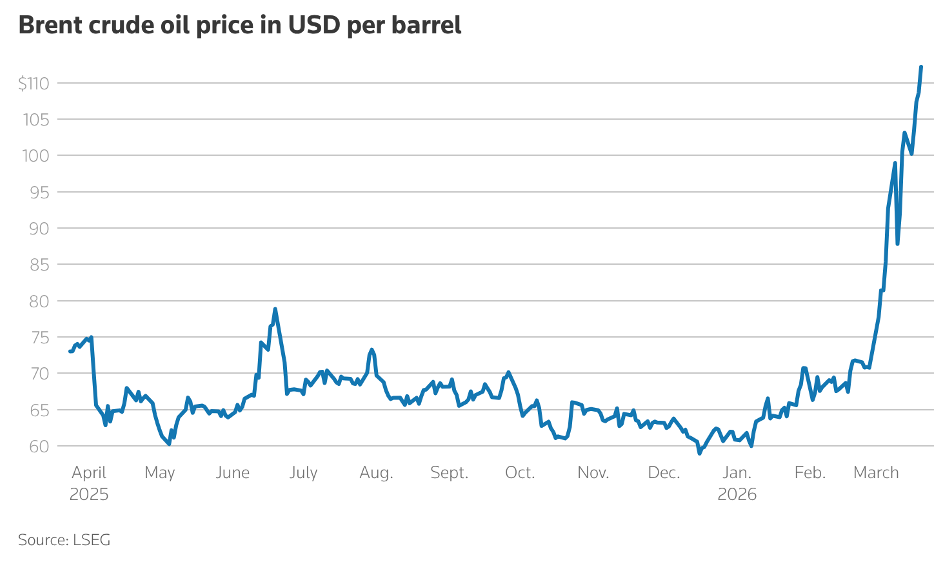
Which brings us back to where we started: President Trump’s aggressive actions in the Middle East have nearly doubled global oil prices in the period of a few weeks. For California drivers, that has translated into an immediate, nearly 25 percent increase in pump prices for a gallon of regular gasoline, with some stations now posting price in excess of seven dollars per gallon.
In California, the Trump Administration has responded to these self-inflicted wounds by compelling the immediate restart of a corroded Santa Barbara pipeline that does not yet have the necessary safety clearances by state and local oversight agencies. The multi-year saga surrounding this pipeline long predates the current conflict in Iran and centers on a recently-formed Houston, Texas corporation that appears to be politically well-connected but insufficiently capitalized to deal with potential liabilities associated with another pipeline incident. The debate around the federal government’s expansive use of the Defense Production Act to override state law and compel the pipeline’s immediate reopening will continue to play out in the courts, with the California Attorney General lobbing the latest legal challenge last week.
This legal dispute may have profound consequences for federalism, in California and elsewhere. Many expect the Trump Administration to expand its federal preemption arguments to new offshore oil and gas leasing currently under consideration. Indeed, if the Defense Production Act is as broadly discretionary and judicially unreviewable as Trump’s Department of Justice now claims, the President may try to exercise those same powers to supersede state laws regulating onshore oil production activities or to commandeer state oil refineries.
But whatever the outcome of that consequential legal battle, the reopening of the Santa Barbara pipeline, which the company anticipates could produce up to 50,000 barrels a day, is no more than a drop in the bucket for a U.S. domestic industry that can refine more than 18 million barrels of crude oil per day. Even in California’s somewhat isolated market, the pipeline’s meager contribution will have a marginal impact, at best, on the State’s daily refining capacity of over 1.4 million barrels. Resuming negligible crude oil production that poses significant environmental and public health risks is not the path to an affordable and sustainable energy future.
While the current situation may turn out to be short-lived, it highlights a longer-term tension. As we have explained elsewhere, the California petroleum refining sector is in prolonged decline, for myriad reasons. Continued consolidation and closure of refineries raises the specter of monopoly profits, as well as the need for infrastructure improvements to increase gasoline imports in the short term, as the State transitions to EVs. The faster we can make that transition, the better.
California already has the legal authority to temporarily limit gasoline price spikes and penalize violators, although state regulators have delayed enforcement over fears of pushing remaining oil refineries toward earlier exits. If current gasoline price spikes persist much longer, California should give serious consideration to invoking its existing price-gouging penalty authority or instituting a new temporary windfall tax to recover some of the soaring profits that the oil industry is reaping. If it does so, any resulting revenues should support policies that further the necessary EV transition.
But California needs a more durable and robust strategy to continue its forward progress on electrifying the vehicle fleet now that federal mandates and incentives have fallen away. A dramatic repurposing of LCFS credits would be a good start. One silver lining of such a revamped climate strategy is that an increasingly energy-independent California may be better-positioned to withstand relentless federal pressure to expand harmful in-state oil production.