
The Art of Disagreement: Lessons from Congressman Jim Clyburn
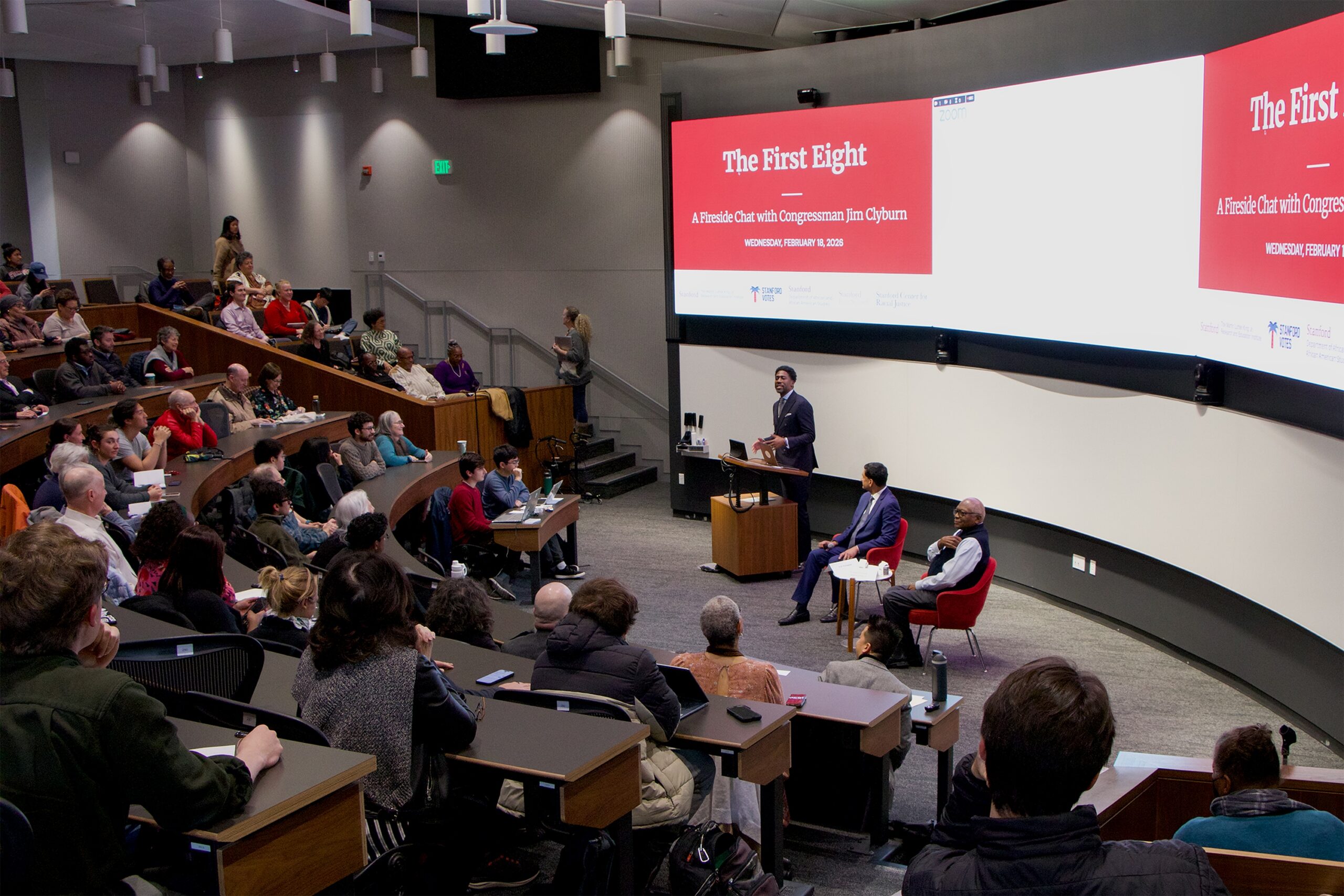
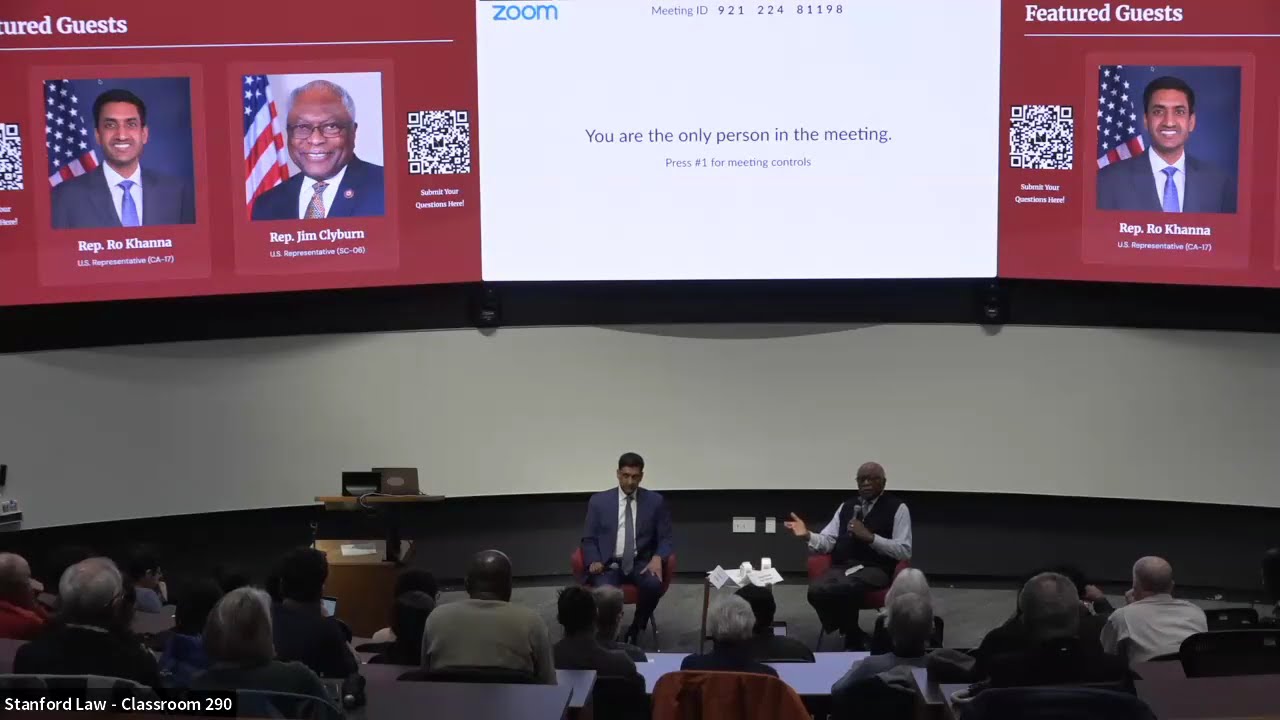
The First Eight: A Fireside Chat with Congressman Jim Clyburn was held on February 18, 2026 and co-sponsored by the Martin Luther King, Jr. Research and Education Institute, Stanford Center for Racial Justice, Department of African and African American Studies, and StanfordVotes. Prior to the event, Congressmen Jim Clyburn and Ro Khanna hosted a lunch with students from across the university. Below are reflections from our interns—Nkemjika Emenike, JD `28, and Reva Kale, JD `28—who attended.
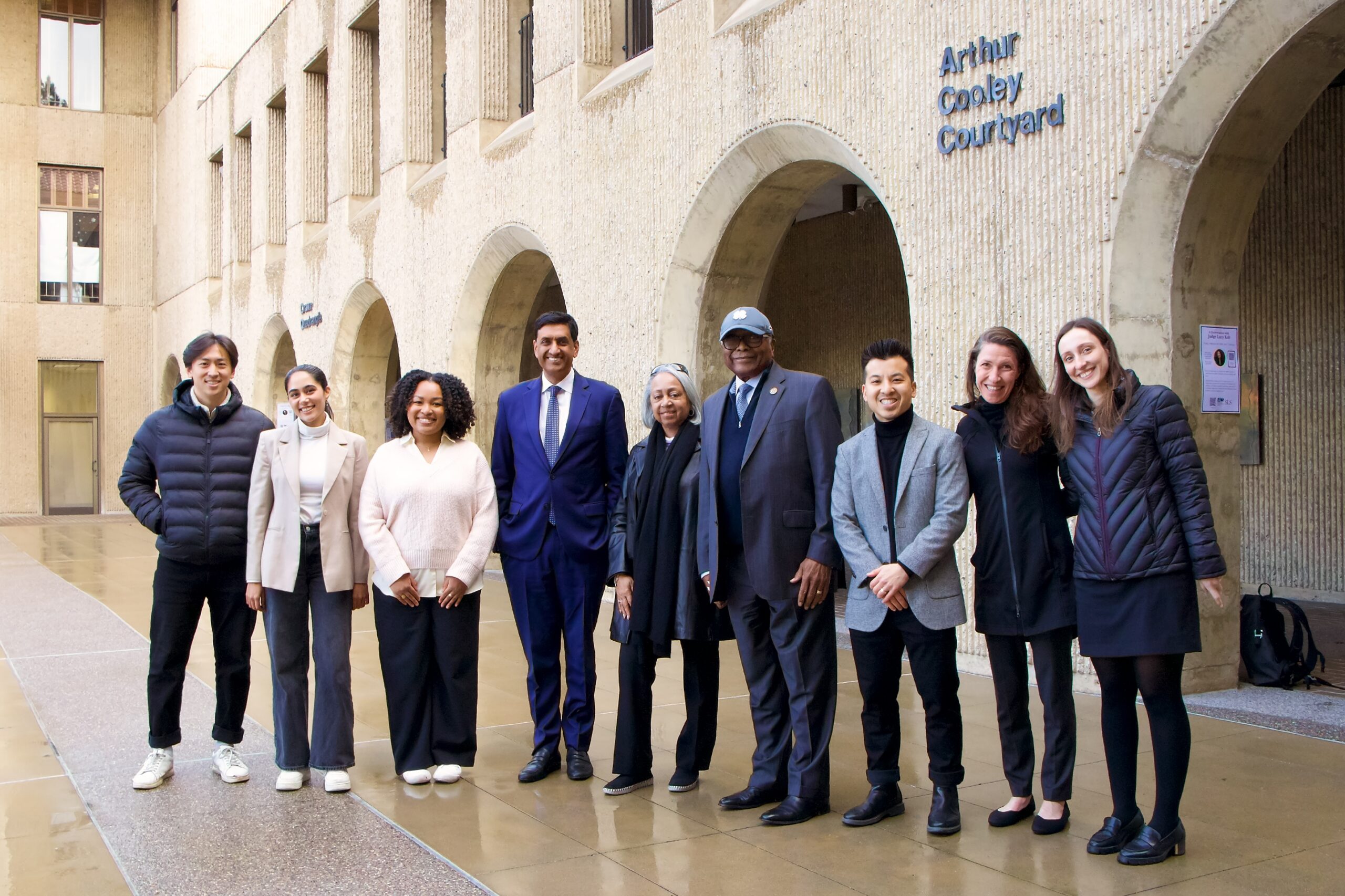
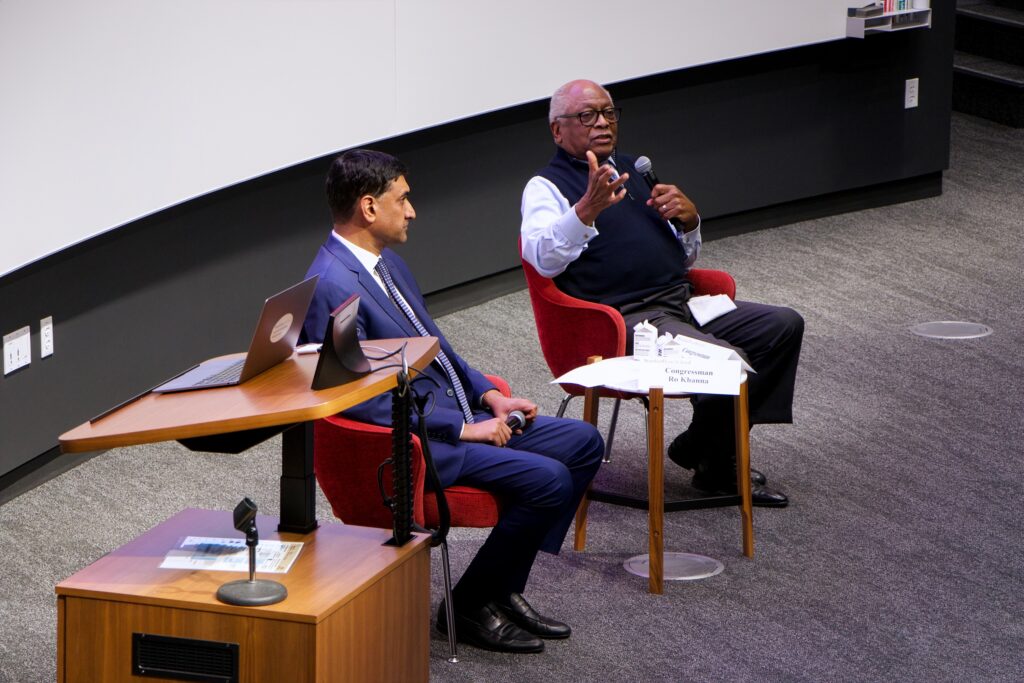
Before Rep. Jim Clyburn spoke at Stanford Law School in February about his new book, The First Eight: A Personal History of the Pioneering Black Congressmen Who Shaped a Nation, we had the opportunity to attend a student lunch with him and Rep. Ro Khanna at the Martin Luther King, Jr. Research and Education Institute. During the lunch, both congressmen shared thoughtful insights and lessons drawn from their years of public service. Rep. Clyburn spoke about his experiences growing up in Jim Crow South Carolina, his work as an educator and lover of history, and his more than 20 years in Congress. In this blog, we reflect on the progress this country has made since Rep. Clyburn’s early organizing days in the 1960s, the rich cultural history of Black Americans, the impact of the law on racial justice, and prospects on how the nation can move forward in a time of such political divide.
Faith, History, and the Making of a Leader | Nkemjika Emenike
Rep. Clyburn started the lunch recalling the ways his community shaped his interests in history and politics. Specifically, he mentioned how his father would make him and his siblings read a Bible verse everyday and share a current event at the dinner table. These habits instilled in him the importance of being led not only by knowledge, but by faith.
As a historian with a deep interest in Black American history, I was so curious to hear about the ways Rep. Clyburn’s political ideologies have been shaped by the Black Church. The Black Church is often seen as one of the centers for Black American culture. But for young Black Americans, the Church has also been viewed as an institution that perpetuates conservative ideas about sexuality and gender, even as many young Americans have embraced more progressive views on both. Understanding these critiques, it is imperative that we preserve a historical memory of the Black Church as the heart of civil rights and social progress movements. As he continued speaking, it was clear that the Black Church played a key role in his development as a person and as a leader. History shows that this connection between faith and justice for Black Americans is strong—the plainest evidence being that Dr. Martin Luther King, Jr. was a reverend before he was a civil rights leader, and it was his direct positionality as religious leader in the community that allowed for him to be one of the most iconic and effective civil rights leaders of modern American history. The Black Church was historically the epicenter of the political rights movement. Specifically, the Black Church has a history of being a place of safety within a community, a place for liberation, and a place for organizing.
One message to be taken from Rep. Clyburn’s reflection on the Black Church is that faith and knowledge were intertwined in his understanding of progress and justice. His experiences in the Black Church also broaden our understanding of where political education can happen. Rep. Clyburn spoke deeply of the ways the Church impacted his understanding of civil rights, justice, and history. Rep. Clyburn described the Church as part of a broader ecosystem of civic life in Black communities. He identified three key spaces for civil discourse: the Church, the barbershop, and the funeral home. In the Jim Crow South, Black Americans carefully cultivated these spaces as refuges from racial violence and as places to argue, disagree, and debate politics with dignity and decorum.
Decorum and the Work of Democracy | Reva Kale
A running theme in Rep. Clyburn’s message was decorum. He believes that modern Washington D.C. has forgotten an art that he is determined to keep practicing: treating your political opponents as human beings. It is the golden rule we all learn as children, but often find hard to place in a culture that values “authenticity” and “realness” over politeness and careful speech. Rep. Clyburn believes there is room for both. As an active participant in the 1960s Civil Rights movement, he knows what it means to put his body on the line for his beliefs. At the same time, he is someone who cares about doing things the right way and will not apologize for it. He invites members of his caucus over for dinner, sits them down, and asks them to explain a comment that he may have disagreed with. He is convinced that you should have dialogue with the very people who provoke you, because we need to move towards a more unified society rather than a more polarized one. He told us: “When you show basic disrespect to another human being you make it impossible to find common ground.”
Rep. Clyburn’s words had me wrestling with a difficult issue. My social media is filled with people my age saying they want politicians to be more real, more emotionally candid, and more willing to speak in a way that feels familiar. However, there are also many who want to see their politicians conduct themselves with a dignity that they aspire to emulate. On one hand, decorum can function as a weapon for silencing legitimate anger. On the other hand, decorum can be empowering, and strategically necessary, for communities that have been historically marginalized and denied dignity in political life. Ultimately, is decorum a tool for politicians to avoid hard questions—or is it a form of political expression to show Americans what we should be and how we should treat each other?
I think anyone, including myself, who claims to want “realness” in politics should take a moment to sit with the fact that social media algorithms may bury the voices of people for whom “realness” actually means politeness. And it is important to recognize that a lot of change happens through strategic conversation over time rather than immediate bold moves. As Rep. Clyburn discusses in his book, some of the most consequential decisions in history have been decided by a single vote in Congress. That means compromise and dealmaking does lead to change. The way you speak to people matters. So do the details: their spouse’s name, where they were born, and the issues they care about.
We should take Rep. Clyburn’s opinions on decorum seriously. He has spent his career building relationships within a political system designed to exclude him. Decorum, to him, does not mean playing nice and ignoring the need for change. It means giving others enough benefit of the doubt to wrestle with their concerns honestly. It also means taking some time to get to know people as human beings, even in ways some would consider superficial, because people like being known and being treated with kindness. That matters deeply in a political climate where building coalitions across lines of difference is more urgent than ever.
Nkemjika Abad Emenike is 1L at Stanford Law School from Los Angeles, CA, and Las Vegas, NV. Her academic interests focus on civil rights work, community organizing, history, and racial justice. Before coming to Stanford she was a paralegal at a civil rights firm in Chicago working on wrongful conviction cases and sexual harassment cases. Nkemjika graduated from Washington University in St. Louis in 2023, magna cum laude, with a degree in History and minors in Chinese and African and African American Studies. At SLS, she is active in the Stanford Journal of Civil Rights and Civil Liberties, Black Law Students Association, and the Sports and Entertainment Law Students Association. In her free time, she enjoys sitcoms, baking, and running.
Reva Kale is a 1L at Stanford Law School. She is originally from Westport, Connecticut, and received her undergraduate degree from UC Berkeley. At SLS, she is a member of the Racial and Disability Justice Pro Bono Project. Before law school, she worked for two years at the Manhattan District Attorney’s Office on ghost gun cases. She also helped design a training program to educate law enforcement officers on Autism Spectrum Disorder. She is interested in exploring how AI tools can be ethically integrated into the criminal justice system, especially when it comes to improving the experience of people with disabilities.
Follow the Stanford Center for Racial Justice on LinkedIn and Instagram and subscribe to our newsletter.