
Inside the Supreme Court’s Birthright Citizenship Decision
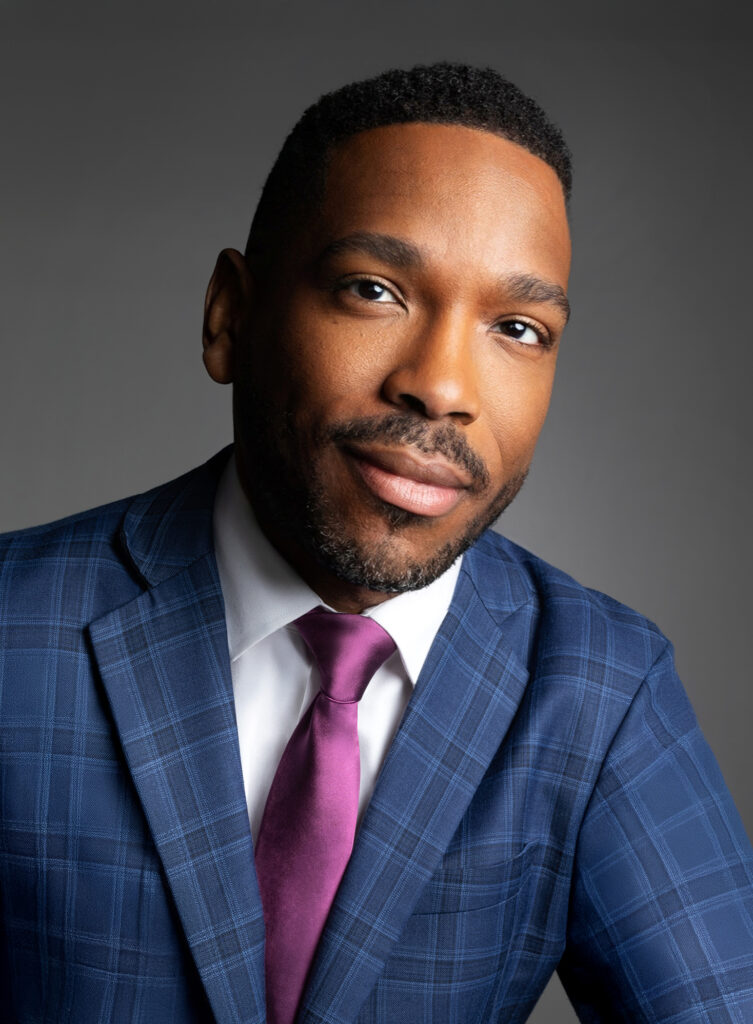
On a recent episode of Stanford Legal, Professor Fred Smith, a leading scholar of the federal courts, joined host Professor Pam Karlan to examine the Supreme Court’s decision upholding birthright citizenship. Their discussion, recorded on the day the decision was handed down, traced the history of the Citizenship Clause to Dred Scott, which denied citizenship to Black Americans, and to the Reconstruction-era effort to overturn it, as well as United States v. Wong Kim Ark, long understood to affirm birthright citizenship for those born on U.S. soil.
Karlan and Smith dissect the majority opinion, concurrences, and dissents, examining how the justices approached the text and history of the Fourteenth Amendment, the force of precedent, and the limits of presidential and congressional power over citizenship.
The following is an edited and condensed version of the podcast transcript, which is available here.
Pam Karlan: The Supreme Court issued its decision today in Trump v. Barbara. The case began as a dispute over nationwide injunctions but ultimately raised a more fundamental question: What does the first sentence of the Fourteenth Amendment mean? That sentence provides that all people born or naturalized in the United States, and subject to its jurisdiction, are citizens of the United States and of the state where they reside. Why was that language added to the Constitution in the first place?
Fred Smith: All of the justices seem to agree that the answer begins with Dred Scott, perhaps the most notorious decision in Supreme Court history. The Court held that people of African descent could not be citizens because, at the founding, they were considered to have “no rights which the white man was bound to respect.”
After the Civil War, the Reconstruction Amendments did more than abolish slavery and guarantee equal protection. The Fourteenth Amendment begins with birthright citizenship because its framers wanted to overturn Dred Scott and establish that people born in the United States are citizens.
Pam Karlan: Since then, the general understanding has been that anyone born in the United States is a citizen, with a few narrow exceptions. That understanding remained largely settled until President Trump issued an executive order declaring that children born here would not be citizens unless at least one parent was a U.S. citizen or lawful permanent resident. Under that order, children of undocumented immigrants—or, say, foreign students studying at Stanford—would not receive birthright citizenship. Where did that theory come from?
Fred Smith: The majority tells a compelling historical story that reaches back to Calvin’s Case, an early 17th-century English decision. That case helped establish the common-law principle that a person owes allegiance to—and receives the protections of—the place where they are born.
The United States later adopted that tradition. The majority cites a Civil War-era attorney general’s opinion, as well as senators who said the Fourteenth Amendment was meant to restore the rule that existed before Dred Scott. Birthright citizenship, in other words, has deep roots in both English and American law. Until quite recently, it was not only the prevailing legal understanding but also part of our constitutional identity.
Pam Karlan: That English common-law tradition—jus soli, or citizenship by birthplace—contrasts with jus sanguinis, citizenship by blood. In a sense, Dred Scott embraced the latter idea by making race a condition of citizenship, while the Fourteenth Amendment repudiated it and reaffirmed birthright citizenship. What struck me about today’s decision is that, on that constitutional question, the Court divided five to four.
Fred Smith: It is striking. Justice Kavanaugh’s position is understandable: If the case can be resolved on statutory grounds, why reach the constitutional question? But this should have been a moment for a full-throated endorsement of the Constitution’s guarantee of birthright citizenship. The text and original public meaning are unusually clear, and the conclusion is reinforced by precedent.

Pam Karlan: Yes, and the major precedent here is United States v. Wong Kim Ark. Wong was born in the United States to Chinese parents who, under the racist immigration laws of the time, could never become citizens themselves. Yet the Supreme Court held that he was a U.S. citizen because he was born here. Justice Kavanaugh’s opinion essentially acknowledges that Congress understood Wong Kim Ark that way when it enacted a citizenship statute in 1940. But he and Justice Alito suggest that times have changed because many people now live in the country without legal status. Justice Alito’s opinion seems to be: “We now have a lot of people who are in the country who are undocumented, and they shouldn’t be here at all, so why should children born to them be citizens of the United States?”
Fred Smith: It’s a tricky opinion. Justice Kavanaugh begins by saying the case can be resolved on statutory grounds—and if so, he could have stopped there. Instead, he goes on to question whether Wong Kim Ark correctly interpreted the Fourteenth Amendment, even though his statutory analysis depends on the longstanding understanding of that very decision. The opinion makes several difficult moves. If he believed the statute resolved the case, it probably would have been wiser simply to say so.
Several of these opinions surprised me, but Justice Gorsuch’s may be the most puzzling. He does not appear to doubt that Wong Kim Ark was correctly decided. He suggests that the outcome might have been different had this case been brought as an as-applied challenge rather than a facial one. He also notes that the government’s position could produce the implausible result that some people would be domiciled nowhere.
Yet he simultaneously agrees with Justice Thomas’s account of the Fourteenth Amendment’s original public meaning. That creates a conflict between what he says Wong Kim Ark requires and what he believes the Constitution originally meant. Ordinarily, an opinion would resolve that conflict. His does not clearly do so.
Listen to the Podcast Interview
Pam Karlan: One thing that has always puzzled me is how the executive order was structured. First, it applied only prospectively. It did not strip citizenship from people already born here to undocumented parents or parents with temporary status. Second, it covered two very different groups: children of parents who were in the country unlawfully, and children of parents who were here legally but temporarily—including graduate students and workers on specialized visas who may remain in the United States for years. What significance do you see in those distinctions?
Fred Smith: One striking aspect of Justice Gorsuch’s opinion is that it may be more sympathetic to children of undocumented parents than to children of parents who are lawfully here on temporary visas. He emphasizes that unlawful presence does not necessarily mean a person is not domiciled in the United States. Some undocumented immigrants, after all, have lived here for 20 or 30 years.
That is a surprising distinction. You might expect the justices to be more receptive to the claims of people who are lawfully present. But Justice Gorsuch focuses instead on the possibility that someone can be firmly domiciled here even without lawful status.
Pam Karlan: Yes, and I wondered whether the administration drafted the executive order that way in hopes the Court would split the difference between the two groups.
Justice Alito, though, seems to overlook that many supposed “visitors” are here lawfully, often at the government’s invitation. His opinion appears focused instead on the image of people arriving late in pregnancy solely to give birth in the United States and then leaving.
He also raises the concern that those children may owe allegiance to another country and later become hostile to the United States. But that concern is hardly limited to children of temporary visitors. It can also apply to children born here to U.S. citizens who hold dual nationality.
Fred Smith: Justice Alito signals his focus from the outset by invoking “birth tourism,” an issue he also raised at oral argument with the example of an Iranian parent having a child in the United States. But it is difficult to identify a principle that would limit his concern to that situation. A child born here to a U.S. citizen and an Iranian citizen might also be considered an Iranian national and subject to obligations imposed by Iran. Yet that child would unquestionably be a birthright citizen. The same logic could apply to many children of American citizens, which makes the argument both overbroad and, in my view, deeply troubling in the way it portrays these children.
Pam Karlan: What did you make of Justice Jackson’s concurrence, joined in part by Justice Sotomayor, responding to Justice Thomas’s dissent?
Fred Smith: Justice Jackson’s concurrence is especially interesting because it reads as a direct response to Justice Thomas, even though it appears before his dissent in the published opinions. Together, the two opinions amount to a debate between the Court’s two Black justices about the meaning of the Fourteenth Amendment.
Justice Thomas argues that the Citizenship Clause was aimed specifically at overturning Dred Scott and securing citizenship for formerly enslaved people. In his view, that was its particular purpose, and the clause should not be extended beyond it. What is striking is that this is not a race-neutral or colorblind account of the Fourteenth Amendment. It is an explicitly race-conscious one.
Pam Karlan: Yes. Just two weeks ago, Justice Thomas was saying, “Our Constitution is colorblind.” Now he is saying that this provision is not colorblind at all—that it was specifically about Black freedmen, and no one else.
Fred Smith: Right. That position seems to surprise Justice Jackson, who has described the Fourteenth Amendment as an anti-caste and anti-subordination provision—one that can permit some degree of race-consciousness to dismantle racial hierarchy.
She finds it striking that a justice who usually embraces a colorblind Constitution would offer such a race-specific reading of the Citizenship Clause. She then points to statements from the period surrounding the Fourteenth Amendment’s adoption to argue that the clause was not understood as benefiting freed people alone. Its promise was broader: once one group had secured constitutional protection, the ladder was not meant to be pulled up behind them.
I think she offers a compelling response to Justice Thomas. That said, Thomas may have persuaded Justice Gorsuch, who joined his opinion but not Justice Alito’s. After oral argument, it was fairly predictable where Alito and Thomas would land. Gorsuch’s position was much more surprising.
Pam Karlan: Yes. Given Justice Gorsuch’s concern for Native American rights, I had expected him to resist an expansive reading of the exceptions to birthright citizenship.
His position also raises a difficult question about tribal members born in the United States outside Indian territory. Are they citizens from birth under the Fourteenth Amendment, or is their citizenship solely a matter of federal statute? If the dissenters are right, could a future Congress simply withdraw citizenship from children who are tribal members?
Fred Smith: I wonder about that too. The majority opinion seems to provide a clear answer, but it is hard to know where some of the dissenters would come out. That is especially surprising given one of the most memorable moments at oral argument: Justice Gorsuch asked the solicitor general whether Native Americans are natural-born citizens under the Constitution, and the solicitor general fumbled through an answer.
Pam Karlan: So going forward, it is clear that anyone born in the United States is a citizen unless their parents are diplomats or members of an invading force. Birth tourism appears to account for only a tiny share of U.S. births—perhaps three-tenths of 1 percent—and even that figure may include people here for extended periods, such as students. But could Congress make it a crime to enter the United States for the purpose of giving birth on U.S. soil?
Fred Smith: Congress might be able to regulate the conduct of adults—for example, by treating misrepresentations on a visa application as fraud or by changing the rules governing who may receive a visa. But that is different from denying citizenship to the child. Whatever authority the government may have over entry and immigration, punishing a child by withholding citizenship appears to be constitutionally off limits.
Fred Smith Jr., JD ’07, is a Professor of Law at Stanford Law School and a leading scholar of the federal courts. His work on abstention, governmental immunities, and the allocation of power between state and federal courts has shaped contemporary debates over federal jurisdiction. This work has recovered histories the field forgot and people its doctrines render invisible. He co-authors Federal Courts in Context (with Erwin Chemerinsky, Seth Davis, and Norman Spaulding) and Constitutional Torts, now in its sixth edition (with Sheldon Nahmod, Tom Eaton, Noah Smith-Drelich, and Michael Wells), and serves as an Associate Reporter for the American Law Institute’s Restatement of Constitutional Torts. He is also building the emerging field of posthumous legal interests, where he created the first law school course of its kind.