

Housing (Eviction Defense)
The Housing Crisis Up Close
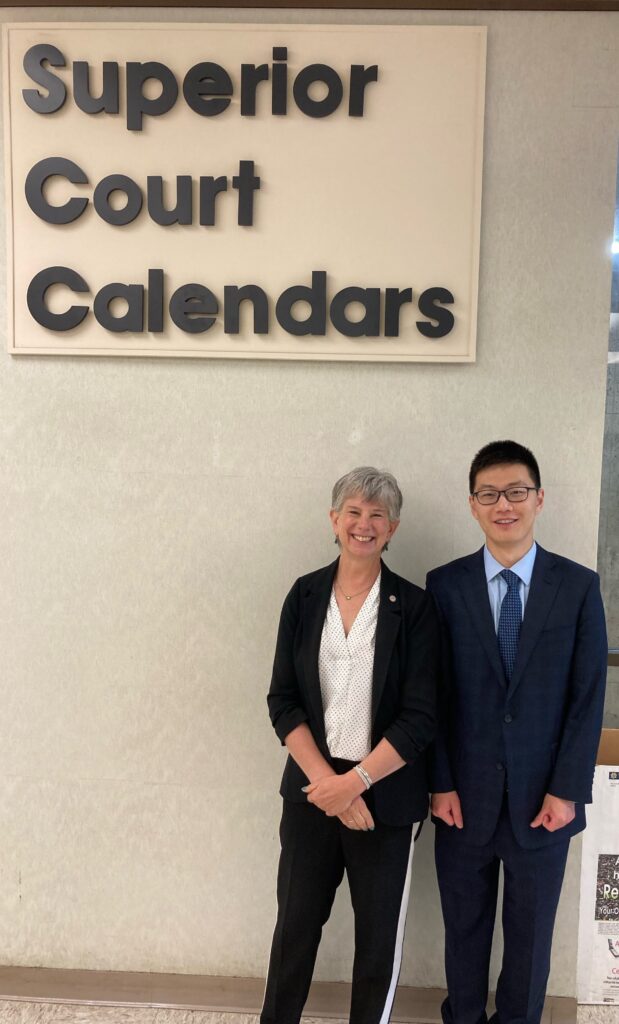
Like many communities in the United States, the Bay Area is experiencing a housing crisis. A chronic supply shortage has resulted in skyrocketing rents and economic incentives to replace low-income tenants with higher earners. In many neighborhoods surrounding Stanford, tenants are facing evictions for nonpayment of rent at an unprecedented rate. Tenants often have legal defenses, but without representation they cannot assert them, and they are vulnerable to swift and often catastrophic dislocation.
CLC students and attorneys are among the only lawyers in the local community who provide full-scale representation to tenants facing eviction in San Mateo County. These cases move fast, and CLC students draft pleadings, interview witnesses, assess the availability of dispositive motions, conduct discovery, negotiate with opposing counsel and prepare for trial all within a short number of weeks.
Students also participate in community-facing weekly clinics where legal aid lawyers assist unrepresented tenants. CLC’s eviction defense practice exposes students not only to the displacement crisis but also to the access to justice crisis, as they experience first-hand how having an attorney moves the needle for families facing eviction, and observe the hundreds of tenants who go unrepresented faring much less well.
Litigation
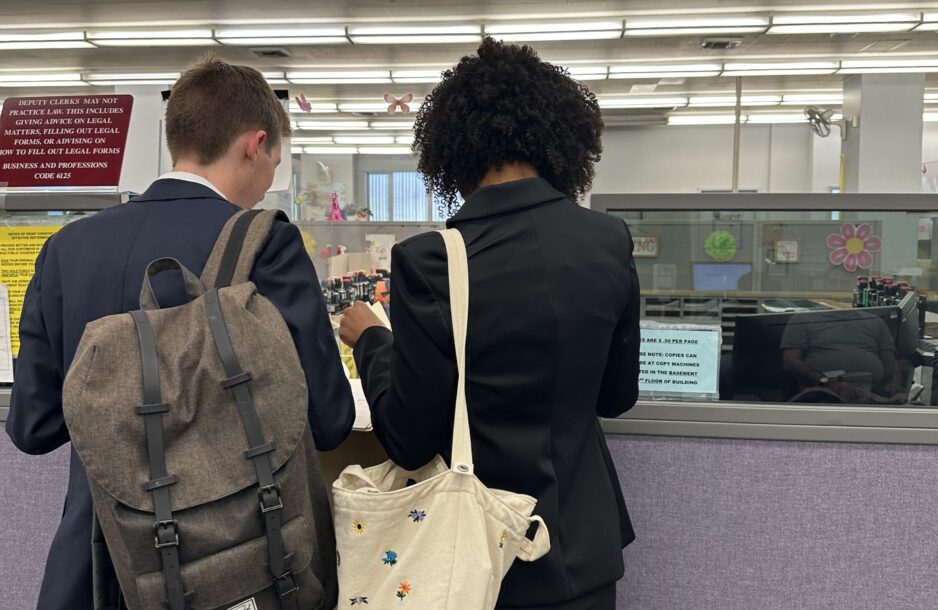
CLC Students Act Fast To Preserve Client’s Defenses

CLC Students Negotiate for Favorable Settlement
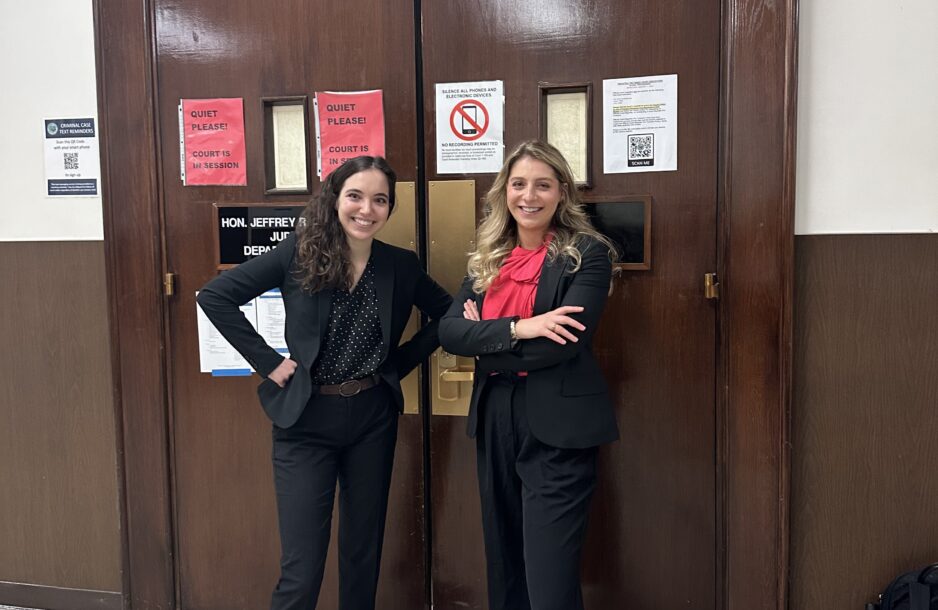
CLC Students Never Give Up!
Advocacy Projects
Law & Policy Lab Practicum: Possible Reforms to CA Eviction Statutory Scheme
WIN-WIN: Paying Landlords and Keeping Californians Housed
Nonpayment of rent is far and away the leading cause of eviction, in California and across the nation. Whether called a “housing crisis,” an “affordability crisis,” or something else, many tenants are “rent-burdened,” paying well more than the recommended 30% of their income to rent. In that scenario, a temporary set-back (lost hours at work, unavoidable auto or health-related expense, even funeral expenses for a loved one) can disrupt a family’s ability to make rent in any given month. Housing providers have a right to earn income from their units, but under current California law, eviction (a judgment for possession swiftly executed by the sheriff, with a questionably collectible money judgment also entered against the tenant) is an over-used, and questionably effective, remedy for landlords seeking to collect delinquent rent.

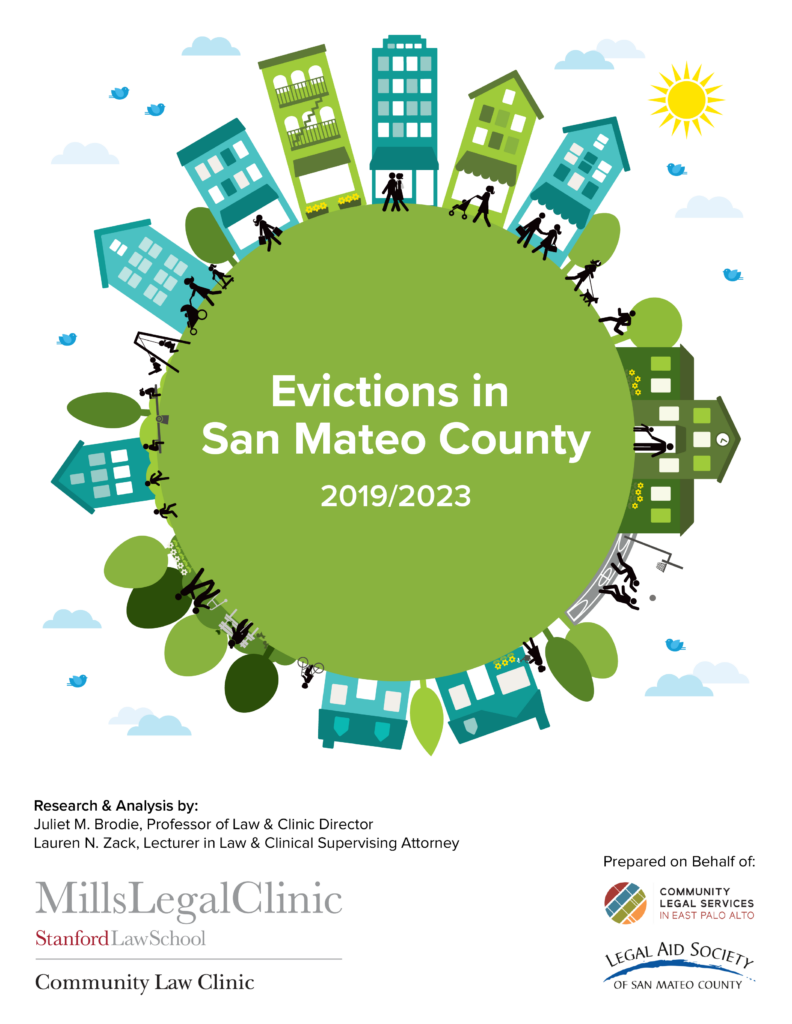
Evictions in San Mateo County: 2019 & 2023
Researchers at Stanford University studied the complete universe of residential unlawful detainer (eviction) filings in San Mateo County for calendar years 2019 and 2023, the first full year before and after COVID-19-related moratoria and rental assistance were in place.
Key findings include:
- The number of evictions filed in 2023 returned to pre-pandemic level.
- Most evictions are based upon alleged nonpayment of rent.
- Most landlords are represented by counsel and most tenants are not, with the rate of landlord representation increasing from 2019 to 2023.
- Most landlord-plaintiffs are business entities rather than individuals, and the percentage of entity plaintiffs rose significantly from 65% in 2019 to 75% in 2023.
- The percentage of cases that ended in judgment (including default judgment, and as opposed to dismissal), decreased from just over 50% in 2019 to 44% in 2023.
- The rate at which writs of possession were issued in both years was dramatically lower in cases in which the defendant-tenant appeared than in cases where the defendant-tenant defaulted.
- The rate of judgment against defendant in both years was dramatically lower in cases in which the defendant-tenant appeared than in cases where the defendant-tenant defaulted.
Supporting Local Tenants’ Rights Activists
CLC recently represented community group Envision, Transform, Build – East Palo Alto (ETB-EPA) in their campaign to qualify for a ballot initiative. ETB-EPA’s measure requires a pre-existing municipal tax on landlords to be spent in ways that support tenant rental assistance, affordable homeownership, preservation of affordable housing, and protection of EPA residents from displacement or homelessness. With CLC’s support, ETB-EPA satisfied all of the legal requirements to place their initiative, Measure JJ, on the November 2024 ballot. Measure JJ passed with 77.41% “yes” votes.