
George Fisher
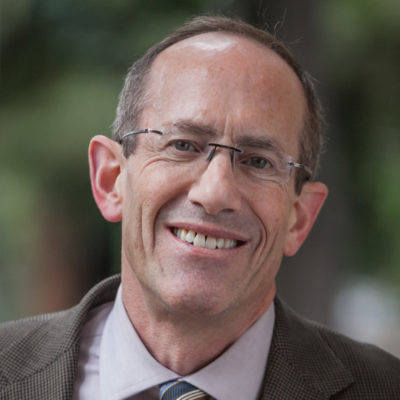
- Judge John Crown Professor of Law
- Faculty Co-Director, Criminal Prosecution Clinic
- Room N259, Neukom Building
Expertise
- Clinical Education
- Constitutional Criminal Procedure
- Criminal Law
- Criminal Procedure
- Criminal Prosecution
- Criminology/Criminal Law Policymaking
- Drug Policy
- Evidence
- Legal History
- Plea Bargaining & Juries
- Prosecutorial Ethics
- Trial Advocacy & Skills Training
Biography
George Fisher is the Judge John Crown Professor of Law at Stanford Law School and one of the nation’s leading scholars of criminal law and evidence. Before joining the Stanford Law faculty in 1995, he was an Assistant Attorney General in the Civil Rights Division of the Massachusetts Attorney General’s Office and an Assistant District Attorney for Middlesex County, Massachusetts.
He is a four-time winner of Stanford Law School’s John Bingham Hurlbut Award for Excellence in Teaching, given annually to a professor who “strives to make teaching an art.” In his scholarship, he employs meticulous archival research to examine the history of criminal law and criminal institutions, including prisons, juries, plea bargaining, and the regulation of alcohol and drugs.
Fisher co-founded and leads Stanford’s Criminal Prosecution Clinic, through which students gain hands-on experience in case preparation, courtroom advocacy, and the ethical exercise of prosecutorial power.
Earlier in his career, he was an assistant clinical professor at Boston College Law School and clerked for Judge Stephen G. Breyer, BA ’59, then of the U.S. Court of Appeals for the First Circuit.
His latest book, Beware Euphoria: The Moral Roots and Racial Myths of America’s War on Drugs (Oxford University Press, 2024), explores the history of American drug regulation and the cultural ideas that shaped it. His forthcoming book, Letter to a Young Prosecutor: Guidance on Ethics, will be published in the summer of 2026 by Foundation Press. Here Fisher writes with regret of his own ethical failures as a young prosecutor and offers them as cautionary tales to the young prosecutors of the future.
Fisher’s other publications include the acclaimed casebook Evidence, most recently revised in 2023; Criminal Practice: A Handbook for New Advocates with Ingrid Eagly and Ronald Tyler (2021); Plea Bargaining’s Triumph: A History of Plea Bargaining in America (2003); and The Crime Conundrum: Essays on Criminal Justice, coedited with Lawrence Friedman (1997).
He has also published numerous articles and essays in scholarly journals and other publications.
Education
- AB Harvard University 1982
- JD Harvard Law School 1986
Related Organizations
Courses
- Advanced Criminal Prosecution Clinic
- Criminal Prosecution Clinic: Clinical Coursework
- Criminal Prosecution Clinic: Clinical Methods
- Criminal Prosecution Clinic: Clinical Practice
- Directed Professional Writing
- Directed Research
- Discussion (1L): Criminal Legal Histories
- Evidence
- Externship, Special Circumstances
- TGR: Dissertation
Affiliations & Honors
- Member, Board of Directors, Forum for Academic and Institutional Rights
- Brought the (losing) case, FAIR v. Rumsfeld, 126 S. Ct. 1297 (2006)
- Recipient, John Bingham Hurlbut Award for Excellence in Teaching, Stanford, 1999, 2003, 2007, and 2011

Criminal Prosecution Clinic
Through Stanford’s Criminal Prosecution Clinic, students shape the outcome of felony prosecutions in conjunction with the Santa Clara County District Attorney’s Office.
Guided by Professor George Fisher, six students learn basic case preparation and courtroom skills on campus in a trial advocacy class. Then they spend Thursdays and Fridays working on their cases with guidance from Professor Fisher and prosecutors at the DA’s office. Students confront cases with strategic and logistical challenges and grapple with the complex ethical issues that define prosecutors’ fundamental charge to seek justice.
News
How to Prevent Future U.S. Attorneys General from Being Subservient Attack Dogs
Los Angeles Times
Todd Blanche, a onetime personal lawyer for the president, squeaked through Senate confirmation recently by a single vote. Asked Sunday on NBC’s “Meet the Press” whether the Justice Department he now leads will always act independently of the White House, Blanche declared flatly, “No, I’m not going to pledge that.”…
Read More : How to Prevent Future U.S. Attorneys General from Being Subservient Attack Dogs