
SLS International Postgraduate Fellowship
Stanford Law School’s Levin Center for Public Service and Public Interest Law offers postgraduate Public Interest Fellowships which enable our graduates to work full-time for a year in a law-related endeavor designed to further the public interest. These include both general postgraduate Stanford Law School fellowships on any public interest issue and those targeting specific substantive areas (e.g., international, criminal defense, criminal justice, immigrants’ rights, and environmental law, education law, or youth law).
There are slightly different eligibility requirements for each program, but there will be one joint application process for these fellowships. Finalists will be invited to an interview with the selection committee.
Please review the FAQ on our Fellowship Program and direct questions regarding the international postgraduate fellowship to Kevin Lo.
Testimonials
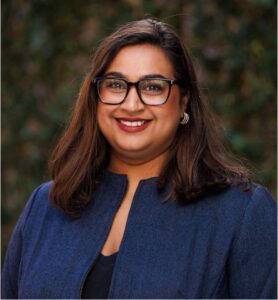
“The Fellowship facilitates access to international networks, mentorship, and platforms otherwise unavailable to a public-interest lawyer from the Global South. It allows me to amplify the voices of developing nations in global climate policy, inform rights-based approaches to climate litigation, and accelerate my path toward becoming a leading practitioner at the intersection of climate law, research, and policymaking.”
– Nishtha Sinha, LLM ’25
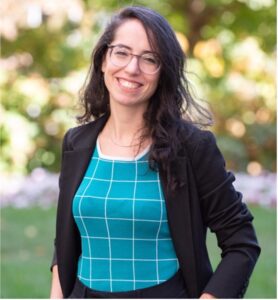
“My fellowship with the Center for Justice and Accountability (CJA), specializing in federal civil litigation in the human rights space, has been one of the most impactful experiences of my professional life. Helping to secure justice for survivors of human rights abuses was incredibly meaningful and gave life and texture to themes I had explored and analyzed in my doctoral studies at Stanford Law. In particular, it was a deeply gratifying experience to witness and take part in the empowerment process which civil litigation can offer to such survivors. Nowadays, as a law professor at Temple University Beasley School of Law, I draw on my fellowship experience often in the classroom, where the lessons I learned continue to teach, motivate and inspire my students.”
– Dr. Gilat Juli Bachar, JSD ’18
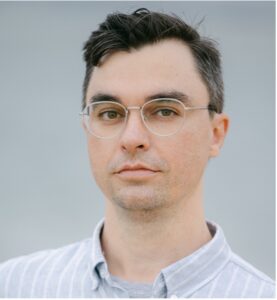
“I wouldn’t be working as a researcher for Human Rights Watch if it weren’t for the SLS International Public Interest Fellowship. After graduating, I spent a year at the organization investigating labor rights violations in the US meatpacking industry. I traveled across the country interviewing workers and published a report that advocates and lawmakers have widely cited, and which was even featured on HBO’s Last Week Tonight with John Oliver. The fellowship opened the door for me, giving me the opportunity to prove I could do the work — documenting abuses, producing rigorous findings, and advocating with policymakers.”
– Matt McConnell, JD ’18
Eligibility
For 2026-2027, up to two international postgraduate fellowships will be offered.
All members of the current graduating class of SLS JD and advanced degree students and the prior two classes who have not previously been awarded a postgraduate legal fellowship or government honors/new attorney program position are eligible to apply for a fellowship. Current students must be in good standing to be eligible.
Our program allows applicants to propose placements at any international non-governmental organization that advances the public interest in the developing world. Clerkships with international tribunals are eligible for this fellowship, but US and foreign government agencies are presumed ineligible. Stanford University entities (e.g., clinics, programs, and centers) are also ineligible to host an SLS International Postgraduate Fellow. Please see the list of current and prior fellows below for examples of suitable host organizations.
Applicants do not need to propose creation of a new project but should outline the responsibilities they anticipate undertaking if selected. SLS makes no recommendations regarding specific fellowship sponsors nor guarantees that placement will be feasible and/or permitted with all potential sponsors or in all foreign jurisdictions.
If feasible, hosting entities are asked to contribute toward the Fellow’s salary. The host organization must also demonstrate its ability to support the Fellow (e.g., appropriate supervision, adequate office space, resources to support program expenses).
All applicants for this fellowship must consult with Kevin Lo by mid-December before preparing the application.
Program Details
Each fellowship will include a grant of up to $60,000 maximum for a 12 month term. Grants are typically distributed to the host organization but may be made directly to the alumnus/a if the host organization cannot receive the grant (such as when the host is a government agency). We encourage our fellowship recipients to seek host organizations who can supplement the SLS grant by increasing the Fellow’s salary and benefits.
After the Fellows are selected and before payment can be disbursed, each host agency is also expected to sign a Memorandum of Understandinglink1 outlining each party’s responsibilities. International or governmental hosts who cannot accept the funds from Stanford would sign this Memorandum of Understandinglink2, which grants the funds directly to the Fellow.
Grant payments are made after September 1 due to Stanford University’s fiscal calendar. Thus, the fellowship start date is usually after September 1, with some flexibility upon consultation with Levin Center staff. If a Fellow ends their fellowship before the 12 month period for any reason, the fellowship grant is prorated and remaining funds must be returned to Stanford.
Finally, SLS’ Loan Repayment Assistance Program will provide additional funds directly to JD alumni to meet qualifying educational loan repayment obligations during the fellowship year.
Application Process
The 2026-2027 application is due Monday, February 9, 2026. The Fellows will be selected by the middle of March 2026.
Please address all questions regarding the SLS international postgraduate fellowship to Kevin Lo.
Each applicant should also request that their host organization submit a commitment letter. This letter should outline the host’s capacity to support a Fellow, whether they can supplement the SLS Fellowship grant, and what their past record has been in hiring previous Fellows at the end of their fellowship term. We provide a sample host letter from a domestic nonprofit and an international nonprofit here:
Domestic fellowship host organization’s commitment letter
International fellowship host organization’s commitment letter
The Selection Committee will include members of the faculty and alumni who previously served as an SLS Fellow. Selection will occur by the end of March each year.
In reviewing each application, the committee will consider several factors, including:
- the applicant’s commitment to a career in public interest law,
- the applicant’s capacity to maximize the fellowship opportunity,
- the applicant’s contributions to the public interest community at SLS,
- the potential impact of the applicant’s work, and
- the capacity of the sponsoring organization to provide meaningful supervision to the fellow.
In evaluating these factors, the committee will look to the application and accompanying essays, law school record, recommendations, and organizational letter of support. All letters of recommendation and support should be specific to your candidacy for this fellowship. All information provided will be used only for the purpose of considering your candidacy for the Fellowship.
Starting in 2025, the committee will not be conducting interviews. Instead, there is an option for applicants to upload/record videos answering brief prompts. You must have an active SUNet ID to access the Canvas website. Any alumni applicants who wish to submit pre-recorded answers should contact Anna Wang so she can request to temporarily reactivate your SUNet ID.
Current and Previous Fellows
In 2025-2026, Dorna Maryam Movasseghi, JD ’25, will be prosecuting atrocity crimes around the world–crimes against humanity, war crimes, and genocide through universal jurisdiction and bringing cases in front of other international courts and human rights bodies as part of Legal Action Worldwide’s team. Nishtha Sinha, LLM ’25, will work at the Climate Litigation Lab, University of Oxford to support strategic climate litigation and design legislation and policy briefs for developing countries to recover damages from fossil-fuel companies for climate harm.
In 2024-2025, Olamide Abiose, JD ’23, worked with International Rights Advocates and used her neuroscience expertise to incorporate research around child brain development into lawsuits brought by West African children working in hazardous conditions along the cocoa supply chain. Ana Cutts Dougherty, JD ’24, served as a fellow at REDRESS, where she worked on strategic litigation and policy advocacy in partnership with local NGOs to deliver justice and reparation for torture survivors across several countries including Nepal, Kenya, and South Africa.
In 2023-2024, Ragini Gupta, LLM ’23, joined ClientEarth’s research and public policy advocacy efforts regarding the application of corporate laws in Asia to climate change and the regulatory framework applicable to the energy transition in this region. Tara Ohrtman, JD ’21, helped the Public International Law & Policy Group (PILPG) manage policy-oriented legal research projects, some responding directly to ongoing international events, others focused more on the long-term development of international law.
In 2022-2023, Sherah Tan, JSM ’22, engaged in strategic litigation, conducted empirical research, and advocated policy reform for the rights of labor trafficking victims under the Trafficking Victims Protection Act with the Human Trafficking Legal Center. Molly Norburg, JD ’22, joined the Clooney Foundation for Justice’s gender justice initiative, where she used international human rights law, data-driven strategic litigation, and legal advocacy to combat discrimination and sexual violence in domestic systems.
In 2021-2022, Katelyn Masket, JD ’21, worked with Accountability Counsel to amplify the voices of communities around the world whose environmental and human rights are threatened by internationally financed projects. Christie Wan, JD ’21, joined the Center for Justice and Accountability to represent victims in actions against perpetrators of gross human rights violations, war crimes, and other atrocities through both civil litigation in U.S. courts and legal advocacy before foreign and international judicial fora.
In 2020-2021, Emily Hawley, JD ’20, worked with the Free Yezidi Foundation in Duhok, Kurdistan Region of Iraq, a local, Yezidi-run non-governmental organization, where she served Yezidi survivors of ISIS genocide in an investigative and legal capacity. Daniela Garcia Aguirre, LLM ’20, joined AIDA‘s Mexico City office as a Legal advisor with AIDA’s “Advocating for Healthy Air” program. She provided technical support and developing policy and legal strategies to protect the rights of vulnerable groups harmed by air pollution in Latin America.
In 2019-2020, David Cornell, JD ’19, joined the Center for Justice and Accountability and brought civil actions against human rights abusers and perpetrators of atrocity crimes. Peter John, JSM ’19, contributed to Reprieve’s global advocacy efforts against the death penalty through outreach, research, and strategic engagement with the United Nations in New York.
In 2018-2019, Gilat Bachar, JSD ’18, joined the Center for Justice and Accountability to conduct research, devise litigation strategy, and work with survivors of human rights violations. Akansha Dubey, JSM ’18, worked on issues related to land leasing and women’s land rights in India and scrutinize the progress and completion of work on the Telangana Land Law Review process with Landesa. B. Matt McConnell, JD ’18, was the lead researcher at Human Rights Watch on a research and advocacy project documenting human rights abuses associated with the operations of private entities and corporations, particularly as they relate to US immigration and border policy.
In 2017-2018, Kevin Chand, LLM ’17, worked as a legal adviser with Islands First providing legal and policy support related to climate change and oceans to small island developing state missions to the UN. Ana Cristina Nuñez, JSD ’17, conducted field and desk research on human rights developments in the Americas to document and expose government abuses, including attacks on freedom of expression, measures to undermine judicial independence, laws that limit the work of human rights defenders, and arbitrary arrests of anti-government protesters.
In 2016-2017, Swain Uber, JD ’16, worked with European Roma Rights Centre on human rights issues faced by the Roma communities in Bulgaria and throughout Europe.