
Summer 2019 Internship Testimonials
Taylor Benninger, JD ‘21
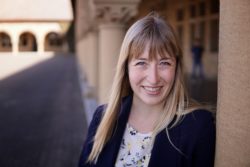
Host Organization: US National Park Service, Yosemite Park Prosecutor’s Office (Yosemite, CA)
What I did: The Yosemite Park Prosecutor’s Office handles all misdemeanors and infractions within the park. As a legal intern, I was given full responsibility for my cases. I decided whether to proceed or drop charges, wrote and swore to charging documents, and drafted settlement offers for opposing counsel. I worked closely with Park Rangers on investigations and even got to tag along to execute a search warrant. And under Local Rule 180, I handled all of my own matters in court.What I enjoyed the most:All of the in-court time! Since my pre-law job, I have been itching to stand up in court—and in Yosemite, I got that chance regularly, starting on day three of my internship. I loved the fast pace of the misdemeanor docket. An initial appearance might transform into a failure-to-appear or a guilty plea and contested sentencing at a moment’s notice. Learning to adapt in those situations was challenging, rewarding, and plainly, fun.
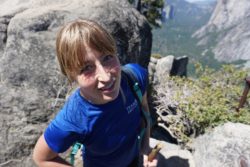
What I learned: The themes of this summer were flexibility and adaptability. Even seemingly straightforward cases usually had hidden complications, and I learned to spot them and shift my priorities accordingly. Through negotiations with defense counsel and pro se defendants, I learned to be open to creative resolutions.And I learned to adapt to unusual circumstances outside of the legal world, too: as far as I’m aware, no other legal internship teaches you how to deal with lizards in your office.
My background: After graduating from Harvard in 2016, I worked as a paralegal in the Boston US Attorney’s Office. For two years, I got to work alongside a team of tremendously talented attorneys to prosecute cyber, IP, and sex trafficking cases. I found the work both fascinating and meaningful, and after watching my attorneys stand up in District Court, I knew I wanted to do the same kind of work.
Plans for the future: In the immediate future—fall quarter this year—I’m excited to continue on part-time with the Yosemite Park Prosecutor’s Office. (I’m currently scheduled to be on trial twice in October; here’s hoping those trials go forward!) Longer term, I’m hoping to clerk for a year or two after I graduate and to find my way back to government work after I get the prerequisite litigation experience.
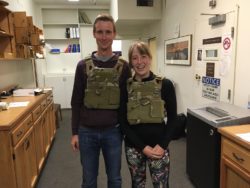
Final thoughts: I am so lucky to have spent the summer getting hands-on legal experience, working with a supportive and knowledgeable team, and living in one of the most beautiful places in the country. I’m deeply grateful to the Levin Center for making this once-in-a-lifetime summer internship possible.
Noah Breslau, JD '20
Host Organization: MacArthur Justice Center at Northwestern Law School
What I did at my summer internship: The MacArthur Justice Center aspires to reform the country’s criminal justice system through litigation. MJC relies on damages and injunctive suits to challenge racially biased policing and imprisonment, promote decarceration, and protect the rights and wellbeing of those who are locked-up. I supported their Chicago-office attorneys by providing legal and fact-development research on subjects ranging from the safety and care of imprisoned transgender women to bail reform litigation strategies.
What I enjoyed the most? I loved my internship. I was blessed with great work and inspiring supervisors: zealous and skilled litigators who never put the mission before a client’s individual needs and wishes.
I felt most grateful for projects that allowed me to ruminate on the ways that prison hides state-sanctioned cruelty and suffering. In the Seventh Circuit, the Fourth Amendment categorically does not apply to “visual inspections” of prisoners’ bodies. One supervisor wrote an amicus brief urging the Seventh Circuit to revisit this notion en banc in a case concerning strip searches conducted solely for training purposes. There, 200 women were forced, eight at a time, to stand naked and expose their genitalia for “inspection” by guards making derogatory comments (like “smells like death”). Some women had to pull their tampons out.
MJC wanted to argue that this type of enforced nudity of women is a hallmark of autocratic regimes, unbecoming of American democracy. I helped them do so by identifying instances where international monitors or tribunals criticized or prosecuted Serbians who explicitly used nudity to humiliate Muslims and Albanians during the Yugoslav conflicts.
While I was happy to see my work in a brief, what stays with me is how much freedom guards have to manage those under their authority. Later in the summer, while working on other projects, I found a number of other cases challenging retaliatory mass strip searches of men. In those cases, hundreds of prisoners were forced to search their own mouths after probing their anal cavities or had to push up on other naked men while crammed into gymnasiums. It was enraging, but not surprising, that the state virtually had carte blanche to humiliate people without a pressing security need. I left MJC excited to finish school and get back to work.
My background: I grew up in Chicago, Illinois, and graduated from the University of Pennsylvania, where I studied political science and fine arts. Inspired by coursework on the politics of mass incarceration, I worked as an investigator at the Public Defender Service for the District of Columbia for two years before spending four years as the inaugural investigator at the New York Civil Liberties Union. There, I worked on many criminal justice projects, like improving upstate public defender delivery systems through litigation and advocacy. Outraged by the way we treat our most vulnerable neighbors, I came to Stanford to develop new skills to pursue criminal justice reform.
Plans for the future: MJC is supporting my applications for externally-funded fellowships. If successful, together we will pursue litigation building on the seminal mandates of Gagnon v. Scarpelli, protecting Illinois parolees from unnecessary incarceration during parole revocation proceedings by improving access to counsel and due process protections.
Final Thoughts: After spending ten years on the East Coast and two (magical) years in California, it was wonderful to return home and work on issues near and dear to my heart. This internship paved the path for me to return to Chicago and MJC in 2020, so I can support efforts to ameliorate the way the criminal justice system unfairly treats the poor, the marginalized, and the othered.
Mishi Jain, JD '21

Host Organization: U.S. Attorney’s Office, Southern District of Texas, Appellate Division
What I did at my summer internship: As a legal intern, I worked on both direct appeal and habeas cases in front of the Fifth Circuit that covered the areas of complex fraud, sex trafficking, and sentencing enhancements. My tasks included drafting memoranda on novel legal questions, writing and copy-editing sections of appellate briefs, and researching case law to address opposing counsel’s arguments of insufficiency of evidence, double jeopardy, and ineffective assistance of counsel. I also helped prepare the Assistant U.S. Attorneys for their oral arguments through moots.
What I enjoyed the most? As someone who is incredibly interested in appellate work, I enjoyed working on complex and novel legal questions that do not have any case precedent because that forced me to be creative with my legal strategy and recommendations. Not having much, if any, circuit precedent can be challenging to work with, but it also means that the work is equally as rewarding. Accordingly, I enjoyed mooting the Assistant U.S. Attorneys for their upcoming oral arguments on complex criminal issues by asking challenging legal questions.
My background: I’m originally from Houston, TX where I attended Rice University and graduated with double majors in Political Science and Policy Studies. Before attending law school, I interned with the White House Initiative on Asian Americans and Pacific Islanders and Asian Americans Advancing Justice where I primarily worked on the intersection of immigration issues and the Asian American community. In addition, I interned with a federal district court judge and appreciated the advocacy and adversarial role that lawyers play. All of these experiences affirmed my interest in pursuing a J.D. which I can use to serve the interests of my Asian American community.
Plans for the future: After graduating, I’m hoping to clerk on the federal district and appellate levels to garner diverse skills from both experiences. Eventually, I hope to work in the federal government in an appellate capacity on high-stakes litigation. At some point, I hope to find my way to a policy-making role.
Final Thoughts: This past summer was easily one of best internships experiences I have had, primarily because I was exposed to a variety of substantive areas and work. I’m very grateful for the support of the Levin Center this past summer-–without their assistance in finding and navigating options, it would have been difficult for me to find the perfect first law school internship and sustain it financially.
Diana Li, JD '21
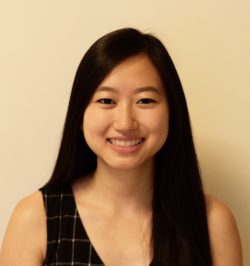
Host Organization: New York Legal Assistance Group
What I did at my summer internship: The New York Legal Assistance Group is a non-profit that provides legal services to New York residents. I was in the Special Litigation Unit, a team that brings primarily class action lawsuits on a range of topics, including government benefits, consumer debt, and immigration. As a legal intern, I researched and drafted portions of briefs, worked with named plaintiffs to develop complaints, and helped represent clients in civil court.
What I enjoyed the most?: During my summer, I had a range of experiences that I really enjoyed. In one of our class actions against unscrupulous debt collectors, our named plaintiffs were offered and accepted a generous settlement proposal by the defendants. It was great to see them receive compensation for the harassment and harm they had suffered, and to see the tangible impact of NYLAG’s work. I also had the chance to go to Bronx Civil Court to help represent clients in debt collection proceedings, and representing individual clients brought to life many of the issues I researched during the summer. Finally, I became a lot more comfortable with legal research and writing and had the opportunity to draft a full brief toward the end of my summer.
My background: I grew up in Brooklyn and graduated from Yale with a degree in Ethics, Politics, and Economics. I had a feeling I wanted to go to law school, as I was involved in competitive debate in high school and college, and many people who enjoy debate end up going to law school. After graduating, I worked for three years in New York at a consulting firm and an NGO that works with refugees, and then found my way to SLS.
Plans for the future: I’m hoping to return to New York to work in public interest impact litigation after graduating, and this summer was a really great introduction to the public interest landscape in New York. I was also able to have coffee with a few SLS alumni working in public interest in New York thanks to leads from the Levin Center, and there are many exciting places I’d be very happy to end up.
Final Thoughts: I knew very little about legal public interest organizations in New York when I arrived at law school, and I am so grateful to the Levin Center for helping me navigate the job process and providing so much support. After seeing the amazing work that organizations like NYLAG do, I’m energized to come back to SLS, and ultimately, to enter a career in the public interest.
Alyssa Martinez, JD '20
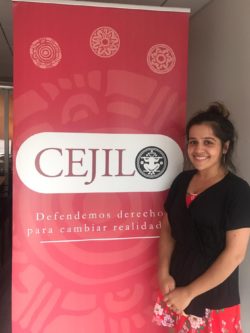
Host Organization: Center for Justice and International Law
What I did at my summer internship: During my summer at CEJIL, I largely worked on current cases in the Inter-American system, wrote ESAPs (Escritos de Solicitudes, argumentos, y pruebas) for new cases, conducted investigations and drafted reports to submit to the Court and Commission concerning State compliance on respective Court judgments and Commission recommendations, and helped draft the Protocolo La Esperanza which focuses on strengthening protection mechanisms for human rights defenders globally.
What I enjoyed the most? The thing I enjoyed most about my internship with CEJIL is the passion and dedication that everyone around me had to pursuing justice, helping protect the most vulnerable, and fighting for the right to acknowledgement and truth in the face of some of the worst atrocities one human being can commit against another.
My background: I’m from South Milwaukee, Wisconsin and grew up as the fifth of nine kids to a single mom, and I was the first in my family to go to college. I’ve always been empathetic and sensitive to the feelings and struggles of others, and I came to law school with a clear directive and intent to work in the public domain and strive to protect some of the world’s most vulnerable and use my relative privilege and opportunities to work with others in helping to protect and better the lives of such vulnerable groups.
Plans for the future: In the future, I hope to be doing similar work to what I was able to do with CEJIL: project the voices of the downtrodden, fight for justice and recognition of human rights abuses, and work to strengthen protective mechanisms to prevent something similar from happening again. I am currently more active in strategic litigation—particularly in the context of transitional justice, but I am excited about the many different avenues available in pursuing this cause.
Final Thoughts: Interning at CEJIL was both an inspiring and life-affirming opportunity. I got to work with some of the most amazing advocates and collectively strive for justice in the face of egregious human acts; I am incredibly grateful for the opportunity, and I’m excited for the fight to continue.
Lisa Muloma, JD '21
Host Organization: Office of the Federal Public Defender, Northern District of California (San Francisco, CA)
What I did at my summer internship: The Office of the Federal Public Defender is a cohort of passionate, creative advocates who are court-appointed to represent indigent criminal defendants. As one of three summer law clerks, I worked with several attorneys, drafting legal memos, getting very familiar with Westlaw, and writing motions that were filed in the United States District Court in the Northern District of California. I joined a trial team and helped with everything from legal writing, to prepping witnesses, to keeping the client informed and entertained during trial (we ended up with a very rare acquittal!). Every week, clerks would also assist with the petty offense docket, poring over citations to make sure that officers had met their burden to show probable cause, and negotiating with prosecutors to get fines reduced or dismissed. I also worked on a long-term project which involved creating a police officer database pursuant to the disclosure requirements of California statute SB1421.
What I enjoyed the most? I enjoyed the moments where I got to interact with clients –where the connection between my legal writing and actual, flesh-and-blood human beings became very clear. These moments were a keen reminder of why I came to law school, and why the job of the public defender is so important. During the trial in particular, I got to help the attorneys prep their opening and closing arguments, even bringing in a literary allusion from a book I’d read as an undergraduate English major. There was nothing better than seeing the look on our client’s face as she watched the attorneys zealously advocate for her; it was clear that regardless of the final outcome, she felt seen and known and cared for –not pigeonholed because of mistakes she had made.
My background: I came to law school because as a creative writer and as a person concerned with the way our nation’s criminal justice system has been weaponized against people of color, I saw criminal defense as a sort of high-stakes story telling endeavor, with tangible impacts on clients’ lives. My idea was a bit more whimsy than reality, but not by much.
Plans for the future: I think I’d like to lean into criminal defense, perhaps trying out a holistic county or state public defenders’ office to see whether I prefer those offices to federal practice.
Final Thoughts: So much of 1L year felt attenuated from my initial reasons for coming to law school, and this summer at the Federal Public Defender was crucial in reaffirming my commitment to legal work. Without the Levin Center’s generosity, it would have been plainly impossible for me to live in the Bay Area and work pro bono while also eating meals every day.
Daniel Rubin, JD '20
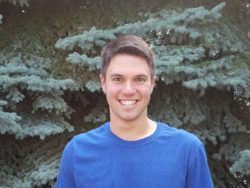
Host Organization: Shriver Center on Poverty Law
What I did at my summer internship: At the Shriver Center on Poverty Law I worked on a number of policy projects, splitting my time between federal litigation and state and local legislation. In the realm of federal litigation, I helped the organization put together a complaint suing the federal government over its immigration regulations. Specifically, I performed legal research and wrote a memo on the viability of a disability discrimination claim under Section 504 of the Rehabilitation Act. Additionally, I designed a systematic approach to Public Comment review and managed six interns and volunteers as they reviewed and sorted arguments from over one-hundred public comments submitted when the challenged regulation was first proposed. In the realm of state and local legislation, I performed policy research to support our attorneys in negotiations with lobbyists at the Chicago City Council and the Illinois State Legislature. In particular, my research buttressed bills supporting survivors of gender-based violence in schools, free and public health clinics, paid family leave, and an increased minimum wage.
What I enjoyed the most? My experience at the Shriver Center on Poverty Law provided tremendous elucidation surrounding my career goals. Heading into the summer, I was torn between two realms of public interest work: progressing public-interest policies through legislation and challenging oppressive policies through litigation. My internship at the Shriver Center provided me with the opportunity to engage in work from both realms simultaneously. Similarly, the attorneys were proactive in pushing me towards opportunities to attend both litigation strategy meetings and negotiation sessions for state and local bills. By the end of the summer, I felt confident I had discovered the career-path I would like to pursue: one centered around public-interest litigation rather than legislation. Without the help of Shriver’s attorneys and the work they exposed me to, I couldn’t have reached the state of clarity surrounding my career that I achieved by the end of this summer.
My background: I grew up in Buffalo, New York before attending college at Vanderbilt University in Nashville, Tennessee. While at Vanderbilt, I took on leadership roles with a variety of community-oriented organization such as Vanderbilt’s chapters of Habitat for Humanity and Partners in Health. Additionally, I spent a year working with the Fundraising Department of The Contributor: Nashville’s Homelessness Street Newspaper. I decided to come to law school after my experiences at these community-oriented organizations helped me understand the power of the law as a tool for social change. Since coming to Stanford Law School, I have continued to pursue my dream of a career in public-interest lawyering. During the school-year, I have worked with the Prisoner Legal Services Pro Bono Project and helped found the Community Health Access Project. Over my 1L summer, I provided pro bono eviction defense for low-income renters at the Lawyers Committee for Better Housing in Chicago. In the remainder of my time at Stanford Law School, I hope to do everything I can to continue to add to my public-interest-lawyering toolkit.
Plans for the future: After graduating law school, I will spend a year clerking for Chief Judge Rebecca Pallmeyer in the Northern District of Illinois. I then hope to leverage the skills I develop while clerking by pursuing a job focusing on public-interest litigation at the federal level. Moving forward, I remain steadfastly devoted to continuing my pursuit of a career in public-interest lawyering.
Final Thoughts: My time at the Shriver Center on Poverty Law helped elucidate my path forward: one focused on public-interest litigation rather than legislation. The attorneys at the Shriver Center were tremendous in helping me understand why this career-path was right for me.
Phil Wilkinson, JD '21
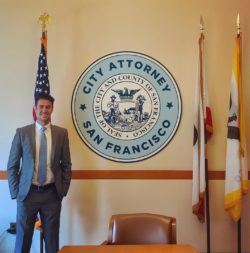
Host Organization: San Francisco City Attorney’s Office (San Francisco, CA)
What I did at my summer internship: I joined the Construction and Public Contracting team. My supervisors and I were involved in three main matters this summer. The first was a §1983 discrimination in contracting claim. The second was the Millennium Tower litigation, which is one of the largest, most complex pieces of litigation in San Francisco at the moment. The third related to the PG&E bankruptcy. I was asked to research and provide advice on legal issues that might arise should the City pursue a purchase or acquisition of PG&E’s electrical infrastructure. This research covered a range of questions related to constitutional law and statutory interpretation. I was also asked to advise on whether the City could use eminent domain during a bankruptcy proceeding.
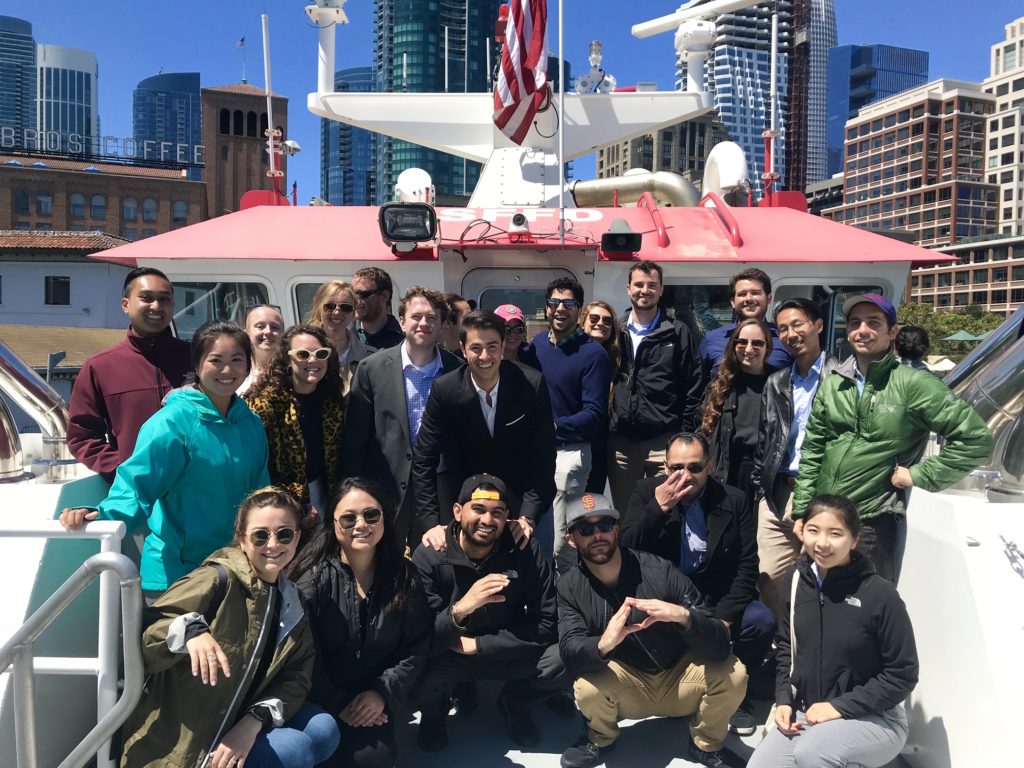
What I enjoyed the most? I enjoyed making a commitment of time and energy to San Francisco and in turn feeling completely at home in the City. The research projects I was assigned were substantive and exposed me to new areas of law. I learned how to synthesize local, state, and federal law in my writing. The internship coordinators also organized tours of a variety of City institutions, arts venues, and public safety entities.
My background: I grew up in Albuquerque, New Mexico. I took time off during my undergraduate years at Yale to work full-time at Hillary’s 2016 campaign headquarters in Brooklyn on the Latino Vote Team. Between undergrad and law school, I completed an MPhil degree at the University of Cambridge where I wrote a dissertation on Supreme Court privacy jurisprudence. I have interned in Washington D.C. at the Council of the Americas; in Santa Fe, NM at a public policy think tank called Think New Mexico; in the Los Angeles Controller’s office;and most recently in the San Francisco City Attorney’s Office. At Stanford, I am a member of SLLSA, Outlaw, Stanford Law & Policy Review, Stanford National Security & the Law Society, the Social Security Disability Benefits pro bono project, and the SLS Musical. I am an avid cellist, singer, and swimmer.
Plans for the future: I hope to use my law degree to advance sound government policy in the future, especially in the realms of civil rights and privacy rights. I could envision myself doing this work both from the legislative and impact litigation side. I hope to have the opportunity to clerk and work in other areas of state and federal government.
Two sentences that encapsulates your final thoughts about your summer internship this past summer: I felt embraced by the beautifully diverse community in San Francisco. It was an honor to work on issues that impact the City and the communities I love.