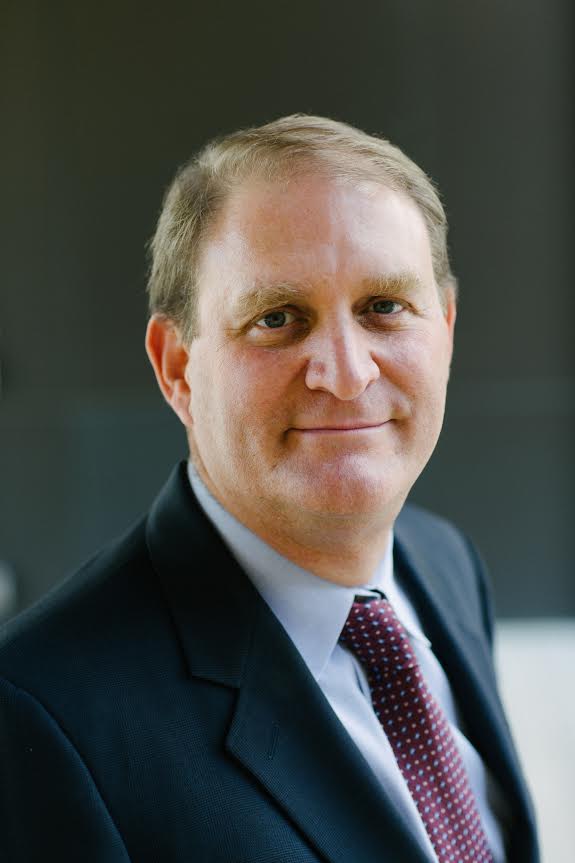
Nathaniel Persily

- James B. McClatchy Professor of Law
- Co-Chair Stanford Law AI Initiative
- Senior Fellow, Freeman Spogli Institute for International Studies
- Professor, by courtesy, Political Science
- Professor, by courtesy, Communications
- Room N230, Neukom Building
Expertise
- Artificial Intelligence (AI)
- Constitutional Law
- Equal Protection
- Federalism
- Free Speech & Free Press
- Public Policy & Empirical Studies
- Voting Rights & Election Law
Biography
Nate Persily is the James B. McClatchy Professor of Law at Stanford Law School and the Co-Director of the Stanford Law AI Initiative. He also holds appointments in the departments of Political Science, Communication, and the Freeman Spogli Institute of International Studies. Professor Persily’s work focuses on two distinct areas: the Law of Democracy and Governance of Technology. He is coauthor with Samuel Issacharoff, Pamela Karlan, Richard Pildes and Franita Tolson of the casebook, The Law of Democracy (Foundation Press, 6th ed., 2020), which address issues such as voting rights, political party regulation, campaign finance, redistricting, and election administration. He has served as a special master or court-appointed expert to craft congressional or legislative districting plans for Georgia, Maryland, Connecticut, New Hampshire, New York, North Carolina, and Pennsylvania. He also served as the nonpartisan Senior Research Director for the Presidential Commission on Election Administration. His current work, for which he has been honored as a Guggenheim Fellow, Andrew Carnegie Fellow, and a Fellow at the Center for Advanced Study in the Behavioral Sciences, examines the governance of technology and technology’s impact on democracy. He is coeditor, with Joshua Tucker, of Social Media and Democracy: The State of the Field and Prospects for Reform (Cambridge Press, 2020). He is also co-editor of the Digitalist Papers: Artificial Intelligence and Democracy in America (2024) with Erik Brynjolfsson, Alex Pentland and Condoleeza Rice. Professor Persily cochairs the Presidential Task Force on Artificial Intelligence of the American Political Science Association. He is a member of the American Academy of Arts and Sciences. He received a B.A. and M.A. in political science from Yale (1992); a J.D. from Stanford (1998) where he was President of the Stanford Law Review, and a Ph.D. in political science from U.C. Berkeley in 2002.
Education
- PhD University of California-Berkeley, 2002
- JD Stanford Law School, 1998
- MA University of California-Berkeley, 1994
- BA and MA Yale University, 1992
Courses
- Directed Research
- Discussion (1L): Introduction to Election Law
- Discussion (1L): Topics in Election Law
- Governance of the Internet
- Governing Artificial Intelligence: Law, Policy, and Institutions
- Introduction to Content Moderation
- Law of Democracy
- SPILS Masters Thesis
- The First Amendment: Freedom of Speech and Press
Key Works
Law of Democracy Supplemental Videos
Trump vows voter ID requirements for the midterms, ‘whether approved by Congress or not
NBC News
Nate Persily, a law professor at Stanford University, said that an executive order mandating changes to elections would be unconstitutional. “The Constitution is clear on this. There are a lot of things where it’s ambiguous, but it doesn’t give unilateral regulatory authority for election to the president,” Persily said. Persily…
Read More : Trump vows voter ID requirements for the midterms, ‘whether approved by Congress or notTrump is trying to change how the midterm elections are conducted
Thousands of mail-in ballots could be discounted under new post office policy
Election Administration, 2024 to 2026: Lessons Learned and Causes for Concern
Redistricting Battles, Set Off by Trump, Have Few Parallels in U.S. History
Ford Foundation’s New Leader Vows to Protect Elections and the Rule of Law
Policy Practicums
Senate Testimony
Faculty on Point | Professor Nathaniel Persily on Election Law: One Person, One Vote