
News & Media
Media Coverage
SLS News & Announcements
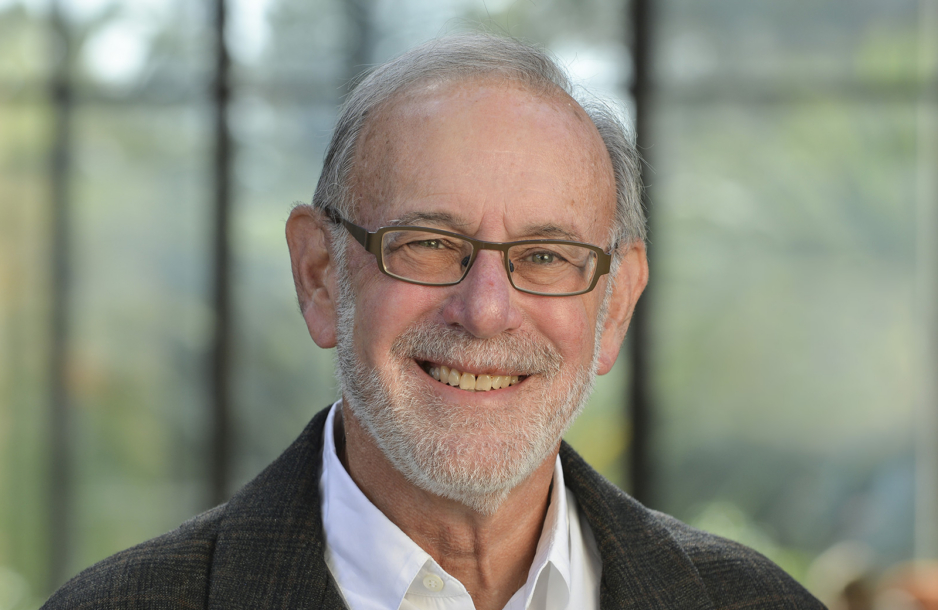
In Memoriam: Ronald J. Gilson, Pioneering Corporate Law Scholar
Ronald J. Gilson, the Charles J. Meyers Professor of Law and Business, Emeritus, and one of the pioneering scholars of modern corporate law and governance, died October 12, 2026. He was 80. Gilson joined the Stanford Law faculty in 1979 and took emeritus status in 2014. Over a scholarly career…
Read More : In Memoriam: Ronald J. Gilson, Pioneering Corporate Law ScholarContacts

Need photos, videos, podcasts or research articles?
Send an email to communications@law.stanford.edu.

For institutional matters:
Please contact communications@law.stanford.edu.
Legal Aggregate
On November 5, 2009, Major Nidal Hasan, an Army psychiatrist stationed at Fort Hood, brought a handgun to the U.S.…
Learn moreStanford’s John Donohue on the Proposed Livestreamed Execution of Major Nidal Hasan
Shortly before a bipartisan group of U.S. Senators released their bipartisan infrastructure permitting reform legislation—the Bipartisan American Affordability and Jobs…
Learn morePressure Testing Proposed Infrastructure Permitting Reforms: Part II
Building the infrastructure needed for the clean energy transition has renewed a long-running debate: How can the United States build…
Learn moreCan Environmental Law Deliver on Abundance and Democracy? Professor Deborah Sivas on Environmental Law’s Next Chapter
Podcasts


Stanford Lawyer Magazine
Social Media



Stanford RegLab has been selected for the second round of the Public Benefit Innovation Fund.
With support from the Center for Civic Futures, Stanford RegLab will develop, pilot and test a tool to streamline unemployment insurance enrollment. In partnership with Maryland and Colorado, the Read moreproject will assess whether AI can identify missing or unclear information as people apply for benefits.
The goal: Help applicants and agencies navigate the unemployment insurance process more effectively, fairly and quickly.
Learn more: https://brnw.ch/21x6CTq

What does racial justice work look like for law students? At the Stanford Center for Racial Justice open house, students connected with peers, alumni and faculty members to find out.
The evening gave attendees an opportunity to learn about SCRJ’s internships, fellowships and policy labs Read more— and to discuss the issues that matter most to them. Students proposed research and policy solutions addressing racial coalition-building, algorithmic bias in the criminal legal system, prison accountability, educational equity and disability access.
“Students seem to be aware that our nation is at an inflection point, in which race figures centrally,” said Professor Ralph Richard Banks, SCRJ founder and faculty director. “It is heartening to see so much interest in maintaining and bolstering the health of our democracy.”
Read more: https://brnw.ch/21x6BgU

Stanford Law School leaders helped drive discussions on some of AI’s most pressing legal and societal challenges at the recent 2026 Marshall Forum on Artificial Intelligence, held over two days at the law school.
The public gathering brought together leading voices from law, technology, Read morebusiness, journalism, and government.
Dean George Triantis and professors Nate Persily and Julian Nyarko joined a panel on AI Research and the Legal Profession, exploring the intersection of emerging technologies, legal scholarship, and practice. Professor David Freeman Engstrom and liftlab Executive Director Megan Ma participated in a panel on AI for Legal Services: New Models of Value and Delivery.
Thank you to the Association of Marshall Scholars, our speakers, and everyone who joined us for these important conversations.
As part of the recent Stanford Law School Alumni Reunions festivities on campus, Paul R. Williams, JD ’90, received Stanford University’s Award for the Advancement of the Common Good, while Leslie T. Hatamiya, JD ’97 (BA ’90), Shirin Sinnar, JD ’03, and Sunshine S. Sykes, JD ’01 (BA Read more’97), were inducted into the university’s CECL Alumni Hall of Fame.
Congratulations to these four outstanding alumni on their well-deserved recognition! Read more:

Stanford University’s recent Reunion Homecoming was a time to celebrate alumni whose contributions are making a difference on campus and around the
brnw.ch