
Professor-Student Team from Stanford Law School’s Rhode Center Wins 2026 Civil Justice Scholarship Award
Until the #MeToo movement catalyzed change, many civil cases involving sexual harassment or abuse ended in settlements that required confidentiality.
A recent award-winning paper by a professor–student research team from Stanford Law School’s Deborah L. Rhode Center on the Legal Profession examines what has happened since California started limiting those “secret settlements.”
“Shedding Light on Secret Settlements: An Empirical Study of California’s STAND Act” (92 University of Chicago Law Review 103 (2025)) earned a 2026 Civil Justice Scholarship Award from the National Civil Justice Institute (NCJI) for its “groundbreaking” examination of how the relatively new limits on secrecy operate in practice.
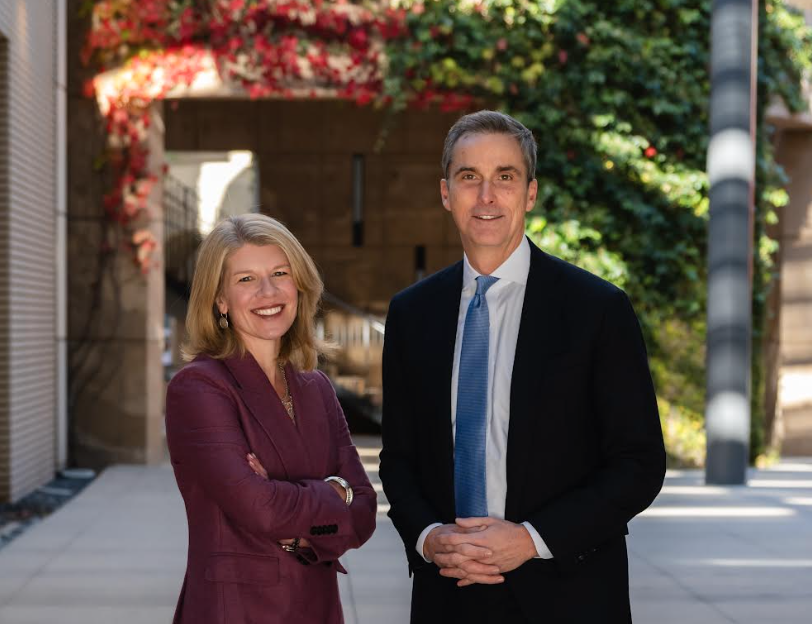
The article was authored by the Rhode Center’s faculty co-directors, David Freeman Engstrom, the LSVF Professor in Law, and Nora Freeman Engstrom, the Ernest W. McFarland Professor of Law, together with Austin Peters, JD ’22, and Garrett Wen, JD ’24, as well as UC Berkeley Law Professor Jonah B. Gelbach. With a strong emphasis on faculty–student collaboration, the Rhode Center works across research, policy, and education to advance equity, access, and transparency in the civil justice system.
The Real-world Impact of California’s STAND Act
The research team took a deep and empirical dive into how California’s Stand Together Against Non-Disclosure (STAND) Act has operated since it took effect on January 1, 2019. The law limits the use of non-disclosure agreements (NDAs) in settlements of sex discrimination, harassment, and abuse cases, allowing factual information about alleged wrongdoing to be publicly disclosed—an approach that more than a dozen states have since adopted.
To assess the Act’s real-world effects, the researchers leveraged large datasets and employed machine learning techniques to analyze more than a quarter-million case filings from the Los Angeles County Superior Court. They also conducted in-depth interviews with almost two dozen practitioners, comparing litigation patterns before and after the law took effect.
The NCJI called the research “groundbreaking” and “a sweeping empirical and qualitative analysis,” noting that the team showed “that critics’ dire predictions—skyrocketing filings, prolonged litigation, and collapsing settlement rates—did not come to pass, while meaningful benefits for survivors did.” The study, the NCJI said, “provides an essential, evidence-based roadmap for policymakers, demonstrating how transparency reforms can promote accountability, preserve efficient dispute resolution, while helping victims achieve justice.”
“For years, there has been a concern that transparency in civil litigation will undermine efficiency,” said Nora Freeman Engstrom. “Folks assumed you couldn’t have both. Our research shows you can. Well-designed transparency reforms can preserve efficient dispute resolution while strengthening accountability and improving outcomes for people who have been harmed.”
In Engstrom’s view, the study’s most surprising finding was what the authors dub “the liberation effect.” “We show that secret settlements can impose significant psychic harm on sexual assault survivors. By freeing survivors from the long shadow of an oppressive NDA, legislation like the STAND Act can improve survivors’ lives.”
Student Collaboration
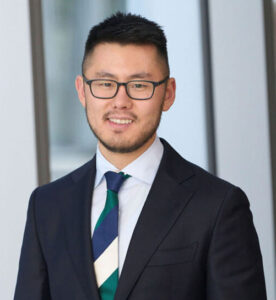
David Freeman Engstrom said the project reflected the Rhode Center’s student-centered approach to research and teaching. “We involve students as full partners in serious, policy-relevant scholarship. In this project, we worked shoulder-to-shoulder with students to produce work that speaks directly to courts and lawmakers grappling with how transparency reforms affect settlement, litigation, and accountability.”
“As a student, it was incredibly meaningful to be trusted with work at this scale,” said Wen, a former Rhode Center Civil Justice Fellow who is now a law clerk at the U.S. Court of Appeals for the District of Columbia Circuit. “We weren’t just assisting with research. We were deeply involved in building the datasets, shaping the analysis, and thinking through how our findings could impact the broader debate about transparency.”
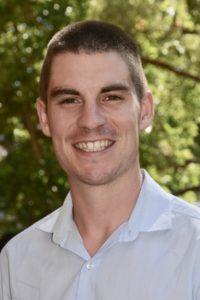
“There has been a lot of confident speculation about what would happen if states limited secret settlements, but there was little data to back that up,” said Austin Peters, JD ’22, now a Bigelow Fellow at the University of Chicago. “We were able to test those assumptions and bring much-needed evidence to a debate that has been driven by pure conjecture rather than facts.”
The Civil Justice Scholarship Award recognizes current, scholarly legal research and writing focused on topics in civil justice, including access to justice and the benefits of the U.S. civil justice system, as well as the right to trial by jury in civil cases.
Read a related student essay from Stanford Lawyer magazine
More on the Rhode Center’s transparency work
About the Deborah L. Rhode Center on the Legal Profession
Through a multidisciplinary approach to teaching, research, and policy, the Rhode Center works to make civil justice more equitable, accessible, and transparent and to promote the legal profession’s commitment to the public interest.
The Rhode Center’s current work focuses on: reforming legal services regulation to increase innovation and access to justice; understanding and shaping the role of technology in law and the courts; protecting consumers and clients in civil litigation; and legal education in the 21st century.
About Stanford Law School
Stanford Law School is one of the world’s leading institutions for legal scholarship and education. Its alumni are among the most influential decision makers in law, politics, business, and high technology. Faculty members argue before the Supreme Court, testify before Congress, produce outstanding legal scholarship and empirical analysis, and contribute regularly to the nation’s press as legal and policy experts. Stanford Law School has established a model for legal education that provides rigorous interdisciplinary training, hands-on experience, global perspective and a focus on public service.