
Ralston Prize Awarded to Fatou Bensouda for Leadership in International Justice
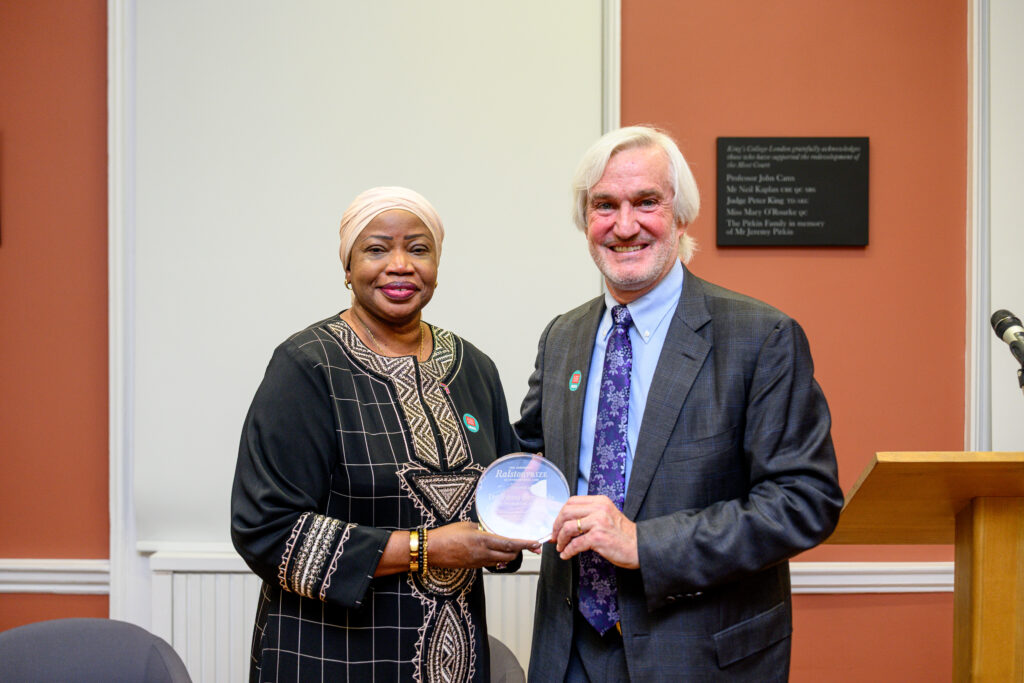
Dr. Fatou Bensouda, former Chief Prosecutor of the International Criminal Court (ICC) and now The Gambia’s High Commissioner to the United Kingdom, received Stanford Law School’s Jackson H. Ralston Prize in International Law on December 8, 2025, at The Dickson Poon School of Law, King’s College London. The prize recognizes original and distinguished contributions to the development of international law and the advancement of international peace and justice
As the first woman, and the first African, to lead the ICC as its Chief Prosecutor, Bensouda guided some of the ICC’s most consequential investigations and prosecutions over the course of nearly a decade. Before that, she served the ICC as its first Deputy Prosecutor. She introduced foundational prosecutorial policies including on sexual and gender-based violence, crimes against children, and the protection of cultural heritage, and steered the ICC Office of the Prosecutor with an emphasis on independence, professionalism, ethics and integrity. Before joining the ICC, she served as Attorney General and Minister of Justice of The Gambia and later as a senior legal adviser and head of the Legal Advisory Unit of the UN International Criminal Tribunal for Rwanda. Her global leadership in the pursuit of accountability for atrocity crimes has earned broad international recognition, including a nomination for the Nobel Peace Prize.
Challenges Facing International Justice
Bensouda delivered the Ralston Lecture to an audience of senior diplomats, leaders of British educational institutions, Stanford Law School alumni, as well as faculty and students from host institution King’s College London. Her remarks were framed within the legacy of Jackson H. Ralston, a lifelong advocate for peaceful dispute resolution and international arbitration. Ralston, who died in 1945, was an international law lecturer at Stanford Law School who was deeply committed to the rule of law in international relations.
Bensouda emphasized that the international legal order, though it faces many challenges, remains one of humanity’s most significant achievements.
“Over the past century, international law has contributed to the reduction of armed conflict, the promotion of human rights, and the establishment of mechanisms for dispute resolution,” she said. “Notable achievements include the proliferation of multilateral treaties—such as the Geneva Conventions—and the creation of institutions like the ICC.”
Bensouda assessed both the historic progress of international law and the profound strains now testing the global commitment to human rights, accountability, and the rule of law. She also traced the evolution of international justice from the post–World War II tribunals to the creation of the ICC, highlighting how these institutions established the principle that individuals who commit genocide, war crimes, or crimes against humanity can be held personally accountable.
She warned, however, that the durability of these gains is far from guaranteed.
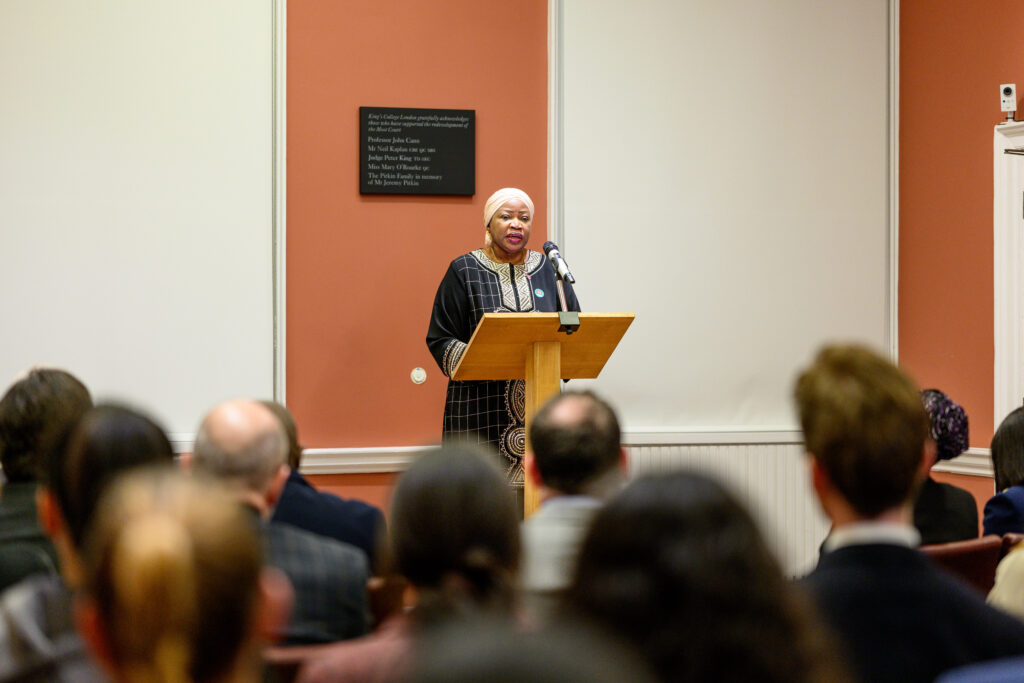
Drawing on her time as ICC Prosecutor, Bensouda spoke about the pressures facing international accountability mechanisms, including political interference, threats to prosecutorial independence, and attempts to instrumentalize justice for political ends. She emphasized that ethical leadership is essential to the legitimacy of any international criminal justice institution.
“Justice must not only be done, but must be manifestly seen to be done,” she said, underscoring that the future of the ICC and similar mechanisms depends on principled support from states, civil society, and academic institutions. She urged the next generation of legal professionals to resist selective application of efforts to pursue accountability and instead champion a consistent, universal commitment to human dignity.
Bensouda closed on a note of cautious optimism, arguing that while the challenges are formidable, the international community must “stay the course” in the pursuit of justice. “Our collective dignity and a brighter future for humanity demand that we do so,” she said.
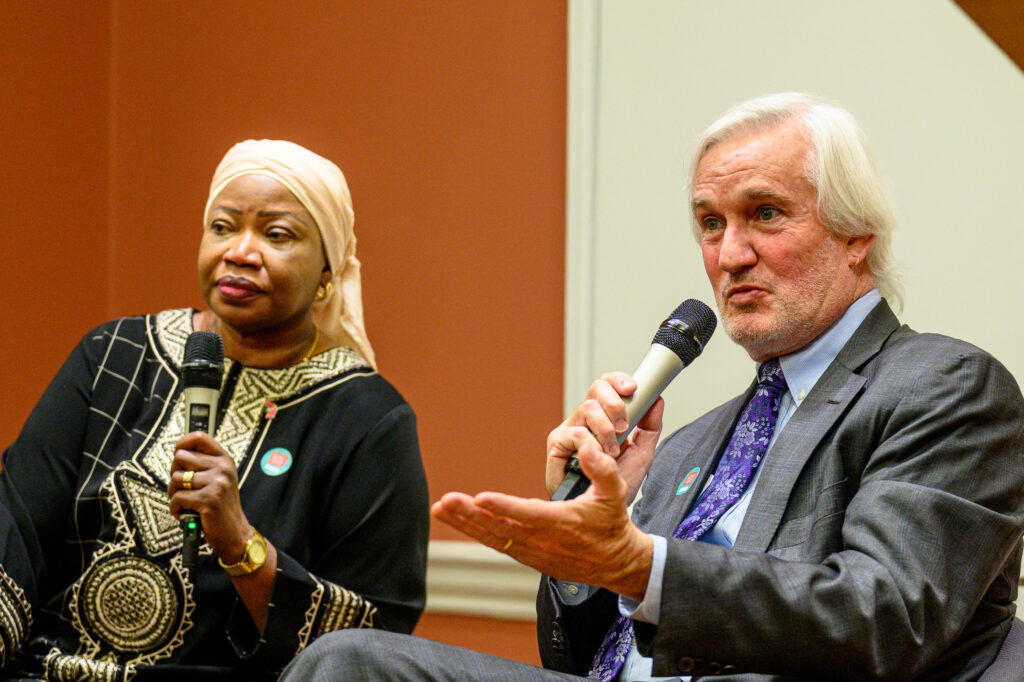
“Dr. Bensouda remarks were a perfect reflection of her wisdom, her deep commitment to international justice, and her personal integrity,” said Allen Weiner, director of the Stanford Program in International and Comparative Law and the Stanford Humanitarian Program. “She addressed the challenges currently facing international justice with honesty and moral clarity, while grounding her reflections in both her own rich experience as well as the values that animated Jackson Ralston’s own work. Her commitment to impartiality and the rule of law embodies exactly what this prize was created to honor.”
Other Ralston Prize winners have included former Chief Prosecutor of the International Criminal Tribunal for the Former Yugoslavia Louise Arbour, former U.S. President Jimmy Carter, and former U.S. Secretary of State Warren Christopher, JD ’49, and Nobel Peace Prize Laureates Shirin Ebadi and Oscar Arias. The first recipient of the Ralston prize was Olaf J. Palme, former Prime Minister of Sweden, in 1977. The 2024 recipient was Zeid Ra’ad Al Hussein, former United Nations High Commissioner for Human Rights.
About the Ralston Prize in International Law
The Jackson H. Ralston Prize in International Law recognizes original and distinguished contributions to the development of the role of law in international relations and in promoting peace and justice. The prize honors Jackson H. Ralston, a Washington, D.C., lawyer and international law lecturer at Stanford Law School whose work advanced arbitration and peaceful dispute settlement. Recipients deliver the annual Ralston Lecture, which has addressed topics ranging from social justice and individual freedom to negotiation, disarmament, and democratic transitions. Established in 1972 by Opal Ralston and later enhanced by gifts from the Ralston family, the prize is awarded only when the committee determines that the candidate’s contributions meet the highest standards of professional excellence.
About Stanford Law School
Stanford Law School is one of the world’s leading institutions for legal scholarship and education. Its alumni are among the most influential decision makers in law, politics, business, and high technology. Faculty members argue before the Supreme Court, testify before Congress, produce outstanding legal scholarship and empirical analysis, and contribute regularly to the nation’s press as legal and policy experts. Stanford Law School has established a model for legal education that provides rigorous interdisciplinary training, hands-on experience, global perspective and a focus on public service.