
Stanford Law Faculty Helping to Guide Hoover Institution’s Project on Democracy, Law, and Global Change
Stanford Law School faculty are playing key roles in a major Hoover Institution initiative aimed at addressing what it describes as a “generational moment” for American democracy and the global order.
Announced in late April, the Hoover Institution’s Economic and Security Commons brings together experts from across Stanford University and beyond to examine how the United States and other free societies can respond to sweeping geopolitical shifts, rapid technological change, and declining confidence in democratic institutions.
The Commons, chaired by Hoover Institution Director Condoleezza Rice, is framed around a call for scholars to act not only as researchers, but as citizens. A key tenet of the initiative is that the challenges of the era are solvable. “The United States can play a crucial role in uniting free nations around the world, but it must first address its challenges at home,” according to the Hoover Institution’s press release.
For Stanford Law School, that charge translates into leadership on questions at the heart of democratic governance, including the rule of law, constitutional order, election integrity, executive power, and economic security.
“Legal institutions are essential pillars on which a nation’s freedom and democracy rest,” said George Triantis, JSD ’89, the Richard E. Lang Professor of Law and Dean of Stanford Law School. “So, I am pleased that Stanford Law faculty members bring their expertise to work with Hoover to address the stress on our social fabric, at home and abroad. The Economics and Security Commons project aligns closely with ongoing work across the Law School’s centers and programs.”
Stanford Law’s Role Across the Commons
The initiative is organized around five broad areas of focus—what Hoover calls “commons”—each of which includes multiple research teams working on specific topics. Stanford Law faculty are contributing across these efforts.
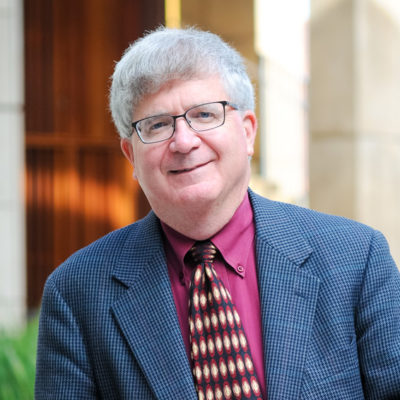
The Justice, Rule of Law, and the Constitutional Order team is co-led by two Stanford Law professors: Michael McConnell, the Richard and Frances Mallery Professor of Law, faculty director of the Stanford Constitutional Law Center, and a senior fellow at the Hoover Institution; and Professor Diego Zambrano, faculty director of Stanford Law School’s Neukom Center for the Rule of Law. The group will focus on reforms to strengthen constitutional governance, including issues of executive power, the administration of justice, public corruption and accountability, and civil disorder.
“The strength of a constitutional system depends not only on its formal structures, but on the institutions and practices that sustain it over time,” said McConnell, a former judge on the United States Court of Appeals for the Tenth Circuit. “This initiative creates an opportunity to step back and think seriously about how those foundations can be reinforced in a democracy that is 250 years old.”
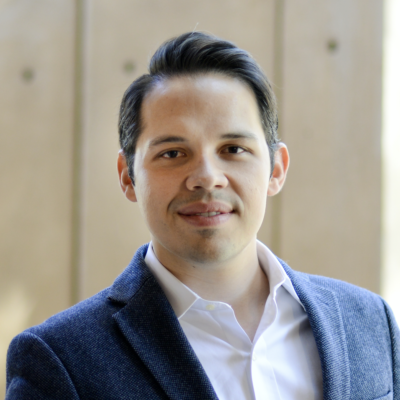
“We need clear thinking about what the rule of law should look like in the next decade,” said Zambrano. “The goal is to figure out potential reforms that could address many of the problems facing modern governance.”
The Justice, Rule of Law, and the Constitutional Order team includes Mila Sohoni, professor of law; Orin Kerr, professor of law and a senior Hoover fellow; as well as Eugene Volokh, the Thomas M. Siebel Senior Fellow at the Hoover Institution and a UCLA emeritus law professor. Other members of the group include Lucy Ricca, executive director of the Neukom Center for the Rule of Law; Bella Ryb, executive director of the Stanford Constitutional Law Center; and Duncan Hosie, a fellow at the Stanford Constitutional Law Center.
Kerr is also a member of the Integrity of Elections team, which will examine both near-term and long-term ways to strengthen confidence in American elections at a time when public trust has come under sustained pressure.
Professor Alan Sykes, the Warren Christopher Professor in the Practice of International Law and Diplomacy, is part of the Trade, Economic Security, and Standard Setting team, which examines how trade, economic security, and international standard-setting can help the United States and its partners adapt to a changing global landscape.
Framework for Cooperation
The Commons builds on a vision articulated by the late George P. Shultz, former U.S. Secretary of State, who once described the need for an “economic and security commons”—a framework for cooperation among free societies facing shared challenges. Shultz was a distinguished fellow at the Hoover Institution from 1989 until his passing in 2021.
The research teams will present at a plenary conference hosted at the Hoover Institution from September 22–26, 2026. A second major convening is planned for May 2027, where more developed ideas are expected to shape broader public and policy discussions about the future of democratic governance.
The Commons unfolds as the United States marks its 250th anniversary, a moment that has prompted reflection across Stanford on the durability and future of the American constitutional experiment. Hoover is separately marking that milestone through its USA @ 250 programming, which examines the nation’s founding, development, and continuing challenges.