
Stanford Law School Announces New Cohort of Sallyanne Payton Fellows
Three Stanford Law School students recently were named Sallyanne Payton Fellows following a competitive application process. The annual fellowship is awarded to students interested in pursuing careers in legal academia and is named for Sallyanne Payton, LLB ’68 (BA ’64), the first African American graduate of Stanford Law School.
“The Sallyanne Payton Fellowship reflects our commitment both to honoring Payton’s extraordinary legacy and to investing in the future of legal scholarship,” said Dean George Triantis, JSD ’89, the Richard E. Lang Professor of Law and Dean of Stanford Law School. “By providing students with meaningful mentorship and support, the fellowship helps open pathways into legal academia and advances our broader goal of fostering a scholarly community shaped by a wide range of perspectives and experiences.”

After a trailblazing legal career, holding posts in both Democratic and Republican administrations in Washington D.C., Payton went on to become a professor at the University of Michigan School of Law, where she held the L. Bates Lea Chair until her retirement in 2013.
In 2021, the inaugural year of the fellowship, Payton said: “What I cherish the most about my Stanford experience is that its network has created opportunities that may have never occurred to me elsewhere. My hope is that this fellowship will help open doors for other people, and the existence of it will help make Stanford Law School students aware of the breadth of their career possibilities.”
Payton Fellows commit to drafting three papers for publication during their JD studies. In addition to individual mentorship and guidance, fellows convene with sponsoring faculty to discuss research methods, research design, interdisciplinary approaches to legal thought, present work in progress, and engage in other supportive programming. They are mentored by Greg Ablavsky, Marion Rice Kirkwood Professor of Law, and Bernadette Meyler, Carl and Sheila Spaeth Professor of Law and Associate Dean for Research and Intellectual Life, as well as other faculty and alumni.
“The Payton Fellowship is designed to give students a real, early experience of what it means to do legal scholarship,” Meyler said. “By focusing on sustained research, writing, and mentorship, the fellowship helps demystify the path to academia and equips students with the tools they need to pursue it.”
Ablavsky said the fellowship annually draws “an extraordinary pool of applicants” and this year’s cohort “stands out for both the ambition of their ideas and the seriousness of their scholarly commitments. Their work reflects the intellectual rigor and sense of purpose that defined Sallyanne Payton’s career.”
The Payton Fellowship is one of two Stanford Law-sponsored programs that honor historic firsts at the law school. The other is a teaching prize recognizing inclusive pedagogy in 1L teaching in honor of the late Professor Barbara Allen Babcock, the first woman member of the law school faculty.
The 2025-26 Payton Fellows:

Mary Rose Fetter, JD ’27 (BS ’23)
Mary’s research interests lie at the intersection of constitutional law and technology law, with a focus on the First and Fourth Amendments, digital platforms, and emerging technologies. These interests are informed by her work as a Dave Kennedy Fellow at the Institute for Justice and by her upcoming summer as a legal intern with the Alaska Public Defender Agency. At Stanford Law, Mary is involved in the Supreme Court Litigation Clinic and in First Amendment research under Professor Eugene Volokh. She has also served as a Teaching Assistant for Ethics, Public Policy, and Technological Change and Torts, and participates in the Election Law Project, the ePluribus Project, and the Stanford Law and Technology Association. Before law school, Mary earned a BS in Engineering Physics from Stanford University.
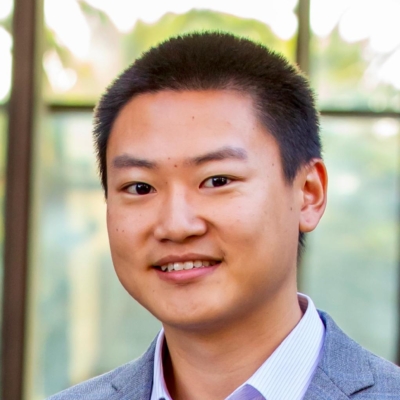
Zehua Li, JD ’26
Zehua Li is also a PhD student in government and social policy at Harvard University. His research lies at the intersection of law, AI, and local governance, where he uses computational methods to trace how national elite messaging shapes grassroots democratic discourse. At Professor Dan Ho’s Regulation, Evaluation, and Governance Lab, he applies machine learning to evaluate and strengthen government agencies, including the federal EPA. Zehua is a John M. Olin Fellow in Law and Economics and a Justice John Paul Stevens Public Interest Fellow. Prior to law school, he was a Law and NLP research fellow at Stanford University. He graduated from the University of Michigan in 2021 with highest distinction in computer science.
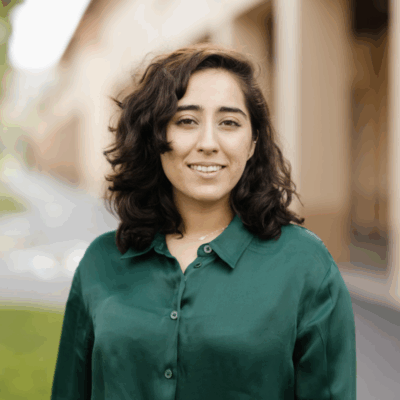
Frishta Qaderi, JD ’26
Frishta Qaderi is a Knight-Hennessy Scholar. She earned her B.A. from Brown University and her M.Phil. from the University of Oxford, where she was a Marshall Scholar. Trained as a historian and legal geographer, her work engages how legal and institutional frameworks structure recognition and invisibility, particularly within environmental governance and international justice systems. Frishta writes in both the law and social sciences, with publications in the Stanford Journal of International Law, the Stanford Environmental Law Journal, and Water Alternatives. Her work extends to human rights investigations and public-facing scholarship, most recently through the Stanford Humanitarian Program and the More Than Human Life Project at NYU Law. At Stanford Law, she received the Salzburg Cutler Fellowship in International Law, the Genes Fellowship in Water Law, and the 2025 Olaus & Adolf Murie Award for Best Paper in Environmental Law, and was recently named by the Levin Center to the 2025 Association of American Law Schools Pro Bono Honor Roll for public service leadership.
About Stanford Law School
Stanford Law School is one of the world’s leading institutions for legal scholarship and education. Its alumni are among the most influential decision makers in law, politics, business, and high technology. Faculty members argue before the Supreme Court, testify before Congress, produce outstanding legal scholarship and empirical analysis, and contribute regularly to the nation’s press as legal and policy experts. Stanford Law School has established a model for legal education that provides rigorous interdisciplinary training, hands-on experience, global perspective and a focus on public service.