
Stanford Law’s Levin Center Honors Public Interest Leaders at Annual Awards Reception
The John and Terry Levin Center for Public Service and Public Interest Law honored Stanford Law School students, a faculty member, and an alumna at its annual Spring Public Interest Awards Reception on May 20, celebrating their contributions to public interest law, public service, and pro bono work.
The reception highlighted a record year for pro bono engagement at Stanford Law School, with 196 incoming students joining one or more pro bono projects, the highest number of new participants in law school history. It also celebrated more than 30 graduates who will begin entry-level public interest or public sector jobs this fall.
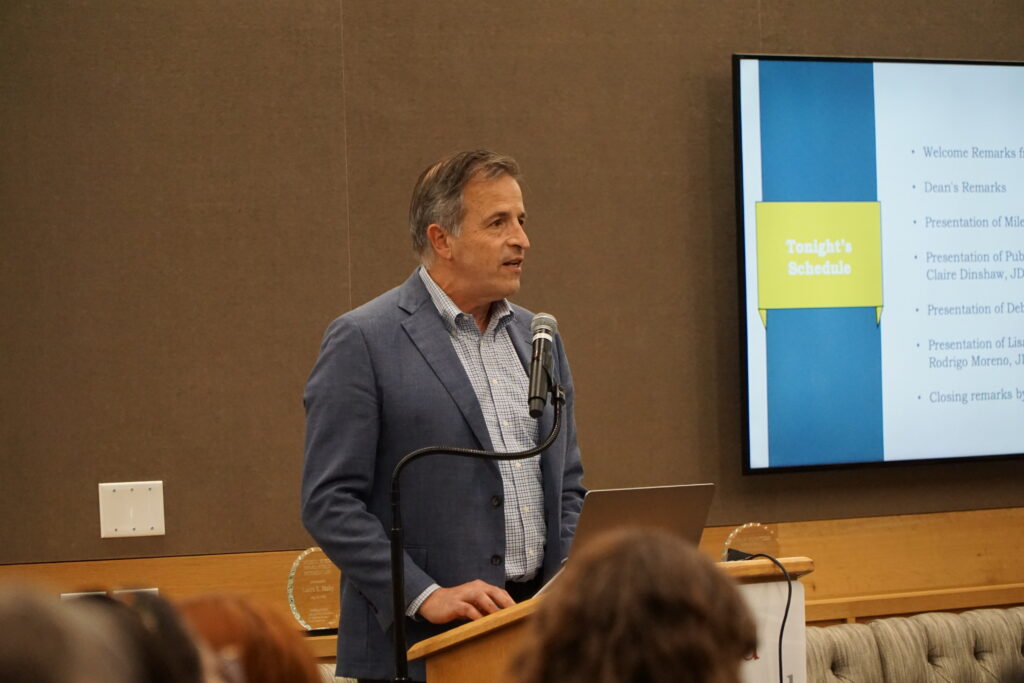
Dean George Triantis, JSD ’89, Richard E. Lang Professor of Law, welcomed attendees and praised the breadth of public service across the Stanford Law community. He noted that students’ work extended well beyond campus, including more than 40 students who participated in the Levin Center’s Alternative Spring Break. These week-long service trips included assisting Yurok Tribe members in Northern California with estate planning and supporting public defenders and their clients in New Orleans.
Triantis also recognized graduating students for their pro bono contributions during the record-breaking year. Although final numbers were still being tallied, at least 22 graduating students completed 300 or more hours of pro bono work, at least 11 completed between 150 and 299 hours, and at least 78 completed between 50 and 149 hours. Those students will be honored with Pro Bono Distinction during the law school’s commencement ceremony on June 14.
“Carrying out a passion to service is best accomplished with the institutional commitment and supportive culture of the Levin Center,” Triantis said, thanking the staff of the Levin Center and members of the Faculty Public Interest Committee for their support of students and alumni pursuing public service.
Shafaq Khan, executive director of the Levin Center, pointed to the strength and resilience of Stanford Law’s public interest community, noting that despite the increasingly intense pressure of private-sector recruitment, the number of students in the Class of 2026 pursuing full-time public interest work remained steady. Graduates are headed to fellowships, legal services organizations, public defender offices, international human rights organizations, attorneys general offices, public interest firms, and impact nonprofits, she said.
Khan also framed public interest and public service lawyers as essential voices in a rapidly changing world. “What I find great hope and comfort in is the public interest and public service attorneys, all of you, who will help shape this transition, responsibly, ethically,” she said, adding that they will help ensure “that the dignity of humans and the protections and rights enshrined in our laws remain a reality in our lives.”
Award Winners
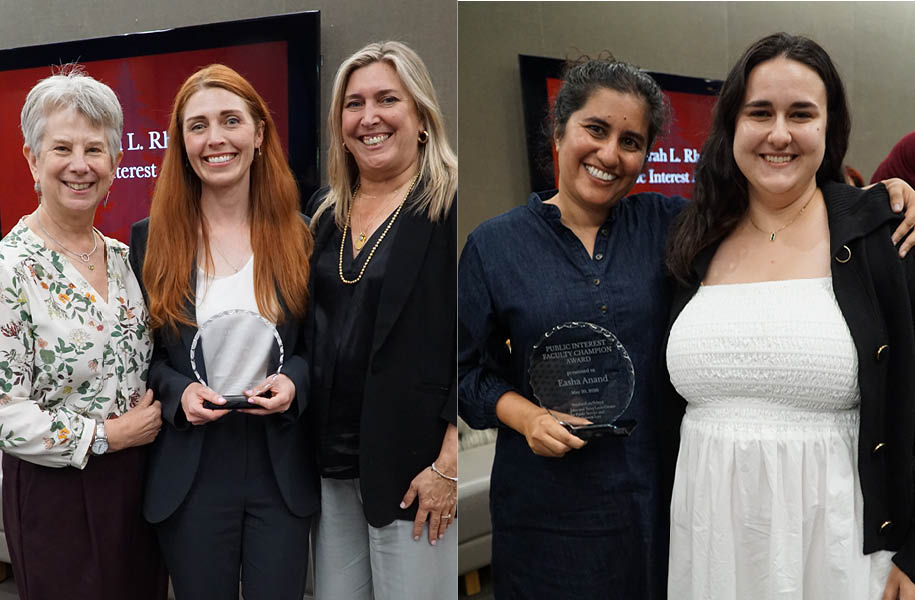
Laura Bixby, JD ’14, senior staff attorney and clinical supervisor in the Housing Unit at East Bay Community Law Center, received the Miles L. Rubin Public Interest Award. The award is given annually to a Stanford Law School alum who has engaged in public service and had a significant impact at the community, national, or international level.
Professor Easha Anand, co-director of Stanford Law School’s Supreme Court Litigation Clinic, received the Public Interest Faculty Champion Award. Created in 2025, the award honors a faculty member who has been an outstanding advocate for public interest and public service at SLS, including by mentoring students and encouraging their public interest and public service pursuits and career paths.
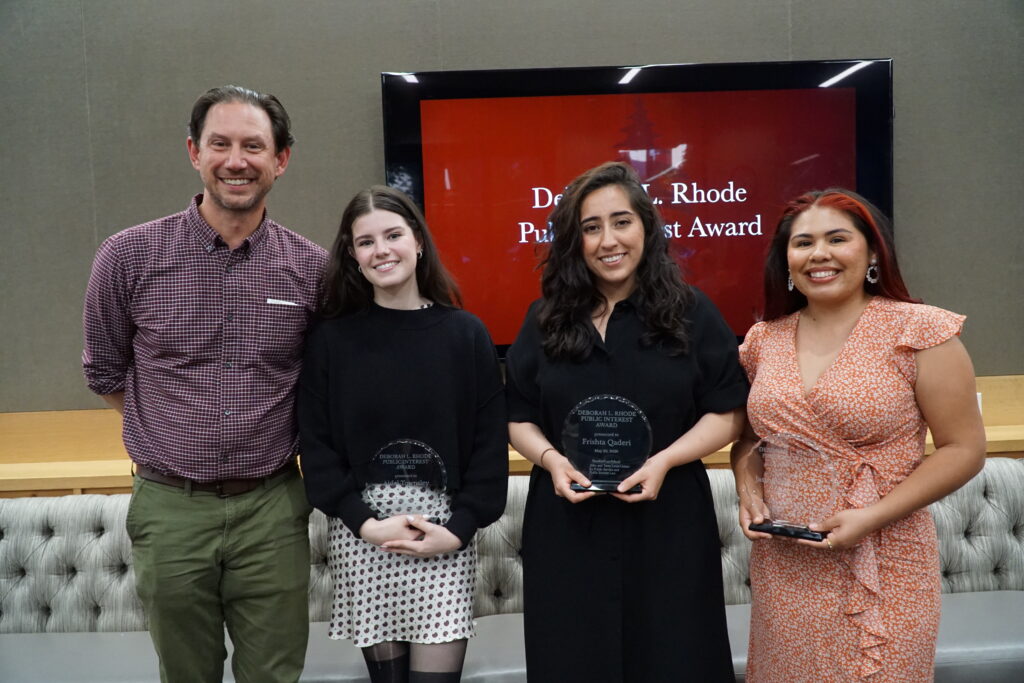
Jasmine Betancourt, JD ’26; Frishta Qaderi, JD ’26; and Aidel Townsley, JD ’26, received the Deborah L. Rhode Public Interest Award. The award, established by Deborah L. Rhode, the late Ernest W. McFarland Professor of Law and former director of the Center on the Legal Profession, recognizes graduating students who have demonstrated outstanding nonacademic public service during law school, including contributions to underrepresented groups or public interest causes outside the law school and/or in public service at the law school.
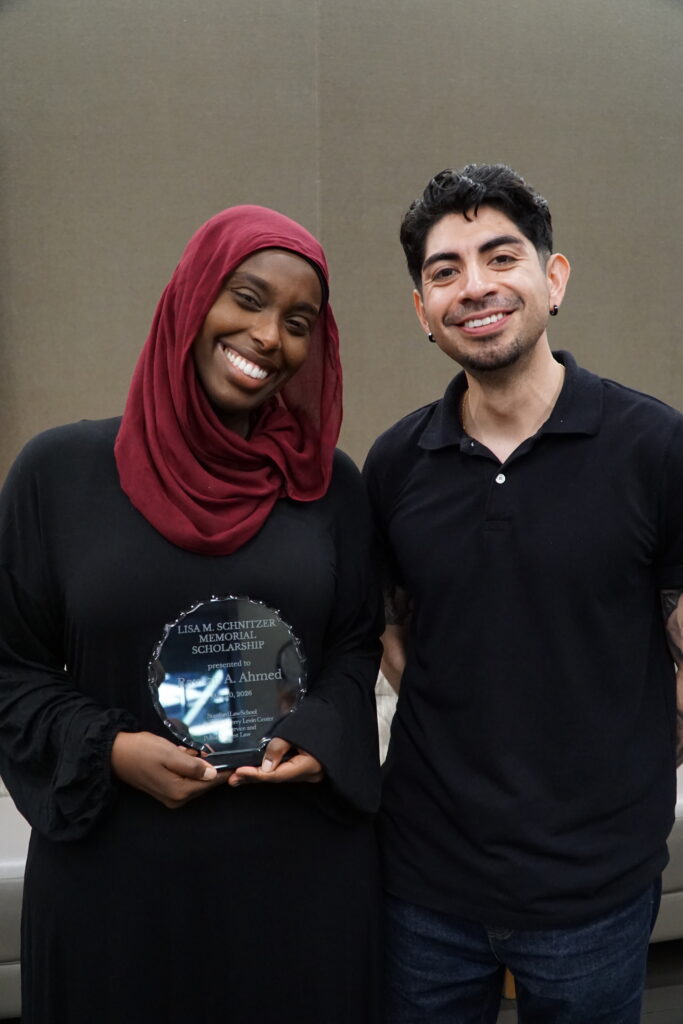
Rayaan A. Ahmed, JD ’28, received the Lisa M. Schnitzer Memorial Scholarship. Established by the family and friends of Lisa M. Schnitzer, a first-year Stanford Law School student who died in a car accident in 1987, the scholarship honors a first-year student who has demonstrated a strong commitment to helping the disadvantaged, meets the Office of Financial Aid’s criteria of financial need, and will work for a nonprofit organization or government agency during the summer following the first year.
About the John and Terry Levin Center for Public Service and Public Interest Law
The John and Terry Levin Center for Public Service and Public Interest Law works to make public service an integral part of every student’s legal education. Through courses, research, pro bono projects, public lectures, academic conferences, funding opportunities, and career development support, the Center helps shape the values students carry into their professional lives. It also advances programming and scholarship that strengthen the public interest legal community and promote broader access to justice.
About Stanford Law School
Stanford Law School is one of the world’s leading institutions for legal scholarship and education. Its alumni are among the most influential decision makers in law, politics, business, and high technology. Faculty members argue before the Supreme Court, testify before Congress, produce outstanding legal scholarship and empirical analysis, and contribute regularly to the nation’s press as legal and policy experts. Stanford Law School has established a model for legal education that provides rigorous interdisciplinary training, hands-on experience, global perspective and a focus on public service.