
Stanford Law’s Neukom Center for the Rule of Law Examines the Constitutional Implications of New Administrative Policies
The Neukom Center for the Rule of Law at Stanford Law School recently hosted two academic events as part of a larger academic discussion program examining the constitutional and legal implications of President Donald Trump’s executive orders and other administrative changes. As part of this ongoing series on the new administration’s policy measures, these two events brought together leading scholars to review the evolving legal landscape and assess the challenges posed to the rule of law. Both discussions were moderated by Diego Zambrano, Faculty Director of the Neukom Center and Professor of Law, and were attended by members of the Stanford community.
Executive Orders and the Constitution
The first event took place in late February and was attended by a packed house of Stanford Law and university faculty, students and staff. The speaker panel featured Stanford Law professors Pamela Karlan, Michael McConnell, Bernadette Meyler, and Alan Sykes. The panel explored various constitutional questions arising from President Trump’s recent executive actions, including the separation of powers, the president’s authority over independent agencies, and the extent of executive power.
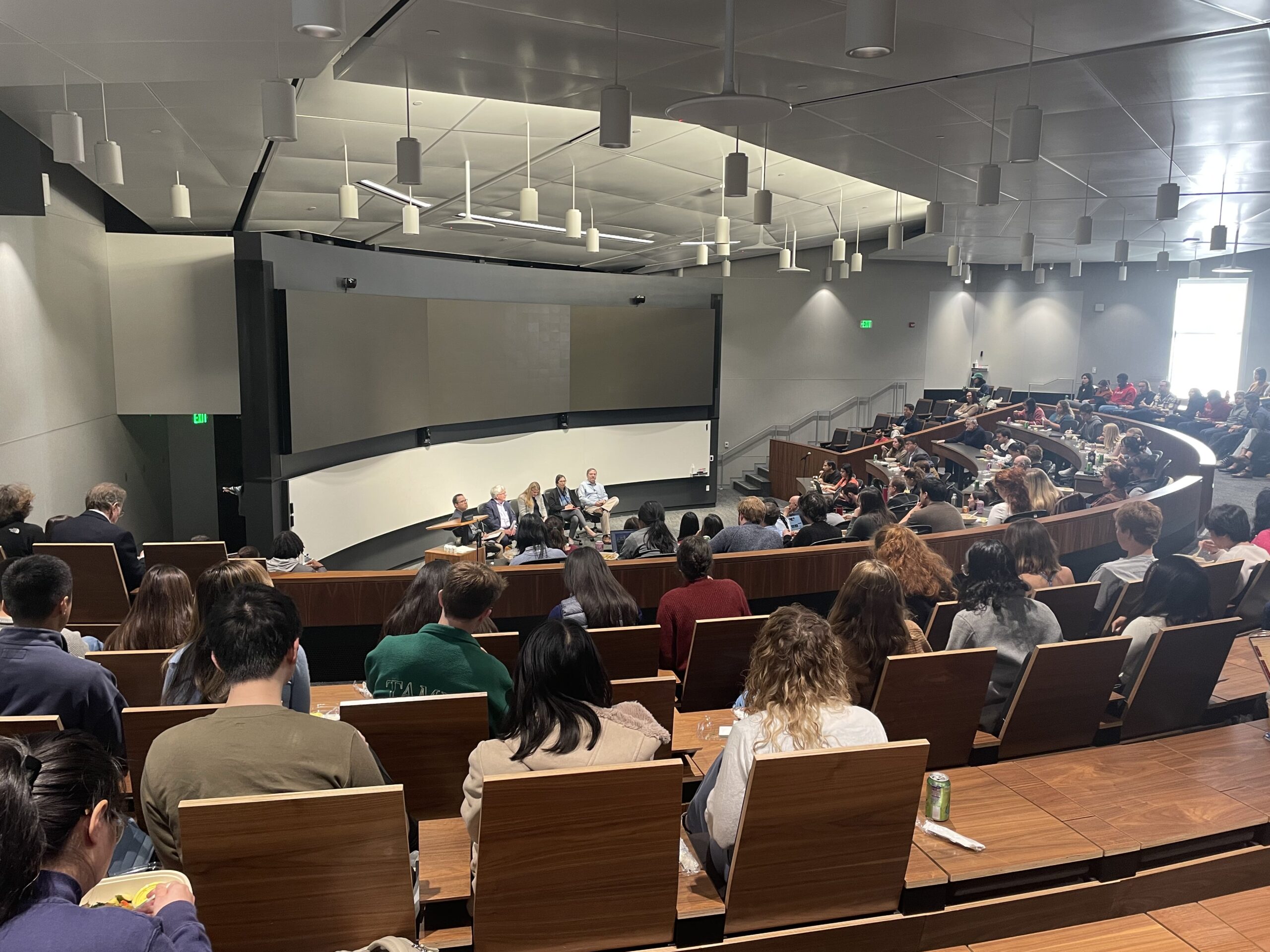
Meyler discussed how President Trump’s orders have attempted “to rein in independent agencies” and move the constitutional system closer to the idea of a Unitary Executive.
In response, McConnell noted, “I think there’s been a great deal of alarmism… I think some of them are clearly unconstitutional and illegal. I think some of them are pretty clearly lawful.” He emphasized that while some actions raise constitutional questions, “the courts are open for business… checks and balances are working so far.”
Karlan, on the other hand, argued that the president’s approach to executive authority represents a constitutional crisis. “[The administration is] getting rid of people in the Department of Justice who might have a difference in viewpoint about what the Constitution commands or what the Constitution forbids. And that’s why I think this is a constitutional crisis. But, at the end of the day, he may well obey the Supreme Court’s orders…I’m hoping that he will,” said Karlan.
Sykes provided an international law perspective, emphasizing the implications of President Trump’s trade policies and tariff measures on global economic governance. The panelists also engaged with questions from students in the audience about various points raised during the discussion.

Impact on Civil Service
The second Rule of Law event examined ongoing litigation and the administration’s measures affecting the civil service. The panel of academic speakers included Stanford political scientist Francis Fukuyama, UC Law San Francisco professor Zachary Price, and Stanford Law professor Mark Lemley. The discussion focused on President Trump’s attempts to assert greater control over the federal bureaucracy, including efforts to remove career officials and alter the enforcement of key federal laws. Fukuyama warned that such actions could significantly erode the professional integrity of the civil service.
Price discussed constitutional issues related to impoundment, removal, and executive power, elucidating the legal framework surrounding these contentious measures. Lemley contributed to the discussion by describing some of the ongoing litigation challenging the president’s executive orders, highlighting key cases that may shape the legal landscape. The conversation also addressed broader questions about the long-term institutional effects of these policies and the extent to which the courts may intervene.
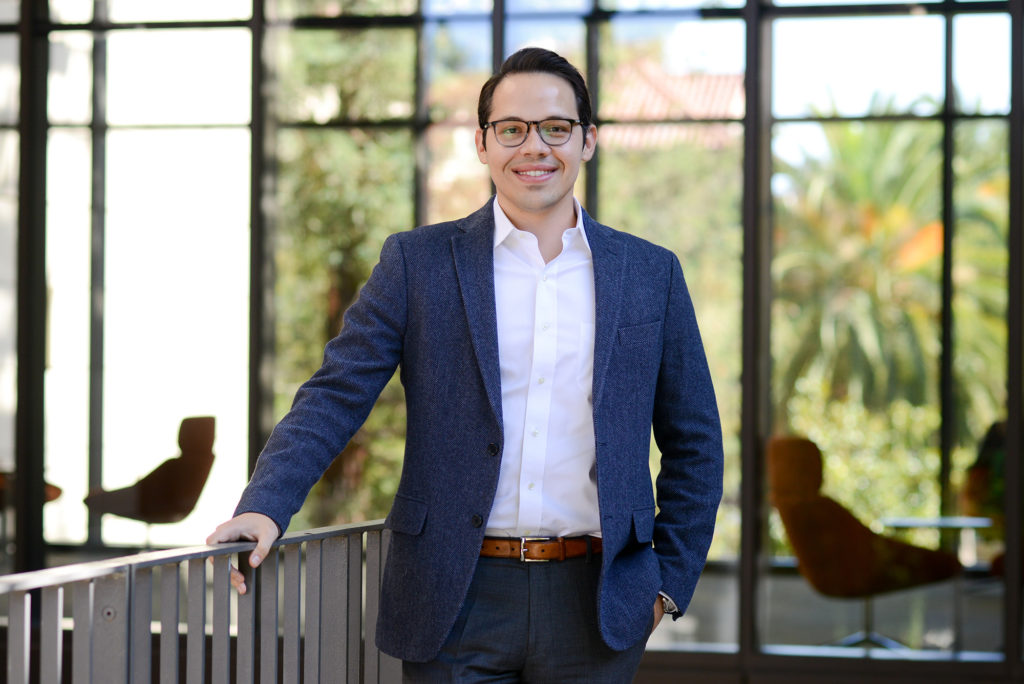
The two recent events reflect the Neukom Center’s mission to encourage academic discourse on the rule of law and governance. The discussions featured a range of viewpoints, from concerns about a constitutional crisis to more specific constitutional challenges. Zambrano closed the most recent event by emphasizing the importance of continued engagement with these issues and their implications for democratic governance.
The Neukom Center’s series on President Trump’s policy measures will continue with future discussions on executive power, legal challenges, and the broader implications for the rule of law, including an upcoming conference on May 2 in partnership with the Stanford Law Review that will feature scholars and practitioners from Stanford and across the country. In conjunction with the event, the Stanford Law Review will publish an online symposium issue covering the topics discussed during the conference. Those interested in attending upcoming panels can find registration details through the Neukom Center’s website.