
Trump’s First 100 Days: Stanford Law Symposium Tackles Executive Power, Legal Norms, and Constitutional Questions
The Stanford Neukom Center for the Rule of Law, Stanford Law Review, and Deborah L. Rhode Center on the Legal Profession co-hosted a May 2 symposium, “The First 100 Days of the Trump Administration,” featuring panel discussions with legal scholars and former federal government lawyers. During the event, held at Stanford Law School, panelists examined the constitutional questions and rule-of-law tensions sparked by the Trump administration’s expansive and boundary-testing use of executive power.
The speakers addressed three interconnected themes over the course of the day: executive authority over agencies, judicial oversight of executive actions, and the independence of the legal profession. The symposium generated insights and analysis slated for eventual publication in the Stanford Law Review Online. Approximately 300 people attended the event in person and via livestream.
“The law school’s core missions are research and education. We have the corresponding responsibility not just to react to the headlines, but to provide the depth, clarity, and constitutional grounding that complex moments demand,” said Stanford Law School Dean George Triantis, the Richard E. Lang Professor of Law. “This symposium brought top legal minds together to engage in an informed and reasoned manner with current issues that go to the heart of the rule of law and democracy.”
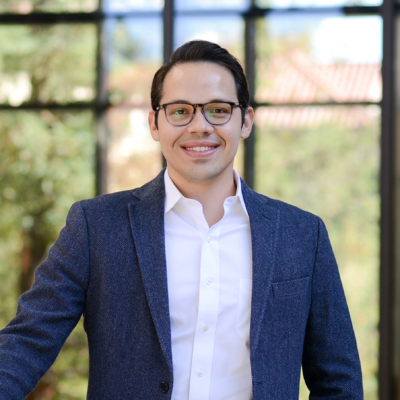
In his opening remarks, Stanford Law Professor Diego Zambrano, faculty director of the Neukom Center for the Rule of Law and a symposium panelist, stressed that the event would endeavor to highlight where scholars disagree with each other and where scholars and the judiciary disagree.
Panel 1: Executive Power Over Agencies and Funding
Moderated by Bernadette Meyler, Carl and Sheila Spaeth Professor of Law, the first panel of the day provided a scholarly and historical examination of presidential authority over executive branch agencies, removal power, and the impoundment doctrine (the question of whether a president can refuse to spend funds Congress has appropriated). In addition to Meyler, the panelists were:
- Professor Aditya Bamzai, University of Virginia School of Law
- Professor Zachary S. Price, UC Law San Francisco
- Distinguished scholar and adjunct professor Peter M. Shane, New York University School of Law
Bamzai traced the long-running scholarly debate over the president’s power to remove executive officials, highlighting early historical disputes as central to understanding whether the Constitution implies an unfettered removal authority. He noted that many early commentators—including James Madison—believed the Constitution’s vesting of executive power implied an inherent presidential removal power. Historically, though, others disagreed, arguing instead that the matter was either shared with the Senate or left entirely to Congress.
Shane pushed back against the unitary executive theory, arguing that the Constitution, properly interpreted, grants the president unrestricted removal power only over officials carrying out the president’s exclusive Article II duties.
Price addressed the president’s power—or lack thereof—to unilaterally decline to spend appropriated funds, concluding that both statutory and constitutional law strongly constrain such executive authority.
Meyler continued the discussion of executive power over spending, focusing on how Trump has “maximized the use of spending power as a tool of executive authority.”
Watch a video of the panel:

Panel 2: Judicial Power and Checks on the Executive
Stanford Law Professor Mila Sohoni moderated the second panel, a scholarly exploration of the judiciary’s role in checking executive power, including a discussion of legal versus equitable remedies, the universal injunction, and a focus on democratic backsliding abroad. In addition to Sohoni, the panelists were:
- Professor Samuel Bray, Notre Dame Law School
- Melissa Hooper, senior fellow at the German Marshall Fund and a former USAID senior advisor
- Professor Marty Lederman, Georgetown Law School
- Professor James Pfander, Northwestern Pritzker School of Law
Bray opened by examining how courts have recently relied on equitable remedies like nationwide injunctions and temporary restraining orders, and the value of preserving traditional limits on equitable power. He emphasized that in the current moment, “there’s a lot of value to remedial forms that let the courts say what the law is while carefully picking their battles on when they are going to give direct orders to the executive branch.”
Pfander pushed back on drawing firm lines between legal and equitable remedies. He suggested that modern civil litigation has absorbed older remedies like mandamus, rendering equity “the only game in town,” while also stressing that “mandamus tradition informs modern injunctive relief.”
Lederman struck a different tone, warning that a purely doctrinal focus risks missing the urgency of the moment. “The world is on fire,” he said bluntly, urging the judiciary to recognize the existential threat posed by an administration willing to defy norms and weaponize government authority. He predicted the courts would rule against many of the administration’s more aggressive actions—but cautioned that the remedies the courts can provide may not be the only answer. The country will need to rely on other democratic strategies and solutions, not just judicial corrections.
Hooper, a former USAID advisor, connected the U.S. experience with democratic backsliding abroad. Drawing on cases in Hungary and Poland, she described how courts have gradually widened their lens to assess the institutional consequences of executive overreach. She pointed to recent U.S. court decisions that reflect a similar shift—from narrow rights-based reasoning to broader concerns about preserving the rule of law.
Watch a video of the panel:

Panel 3: The Independence of the Legal Profession, DOJ, and Law Firms
Nora Freeman Engstrom, Ernest W. McFarland Professor of Law and co-director of the Rhode Center, moderated the third panel of the symposium, titled “The Independence of the Legal Profession, DOJ, and Law Firms.” The panel’s other speakers were:
- Professor Bob Bauer, New York University School of Law
- Pam Karlan, Kenneth and Harle Montgomery Professor of Public Interest Law and co-director the Supreme Court Litigation Clinic
- Sonia Mittal, a former assistant U.S. attorney in the District of Columbia and current visiting researcher at Georgetown
Karlan discussed what she called a three-pronged campaign by the Trump administration against the legal profession. The first, and most high-profile, she said, involves the executive orders targeting large law firms for past representations, public opposition to the president, or other perceived actions with which the president disagrees. These orders have demanded disclosure of client lists, sought to restrict lawyers’ access to federal buildings, revoked security clearances, and in some cases extracted free legal services for causes aligned with the administration.
Karlan also touched on a March 22 presidential memorandum, “Preventing Abuses of the Legal System in the Federal Courts,” which targets smaller law firms, for example those representing immigrants or handling election law cases. Karlan also noted the administration’s moves against what she called “the greatest law firm in America: the United States Department of Justice, and in particular, the attack on the most important civil rights law firm in America, the Civil Rights Division of the Department of Justice.”
Engstrom offered an idea for a path forward for law firms in the administration’s sights. Law firms are facing a textbook collective action problem, she said: resisting alone carries reputational and commercial risk, while coordinated resistance has so far proven elusive. She proposed that firms unite to bring a class action under Federal Rule of Civil Procedure 23(b)(2) to seek injunctive relief against unconstitutional retaliation. Such an approach, she contended, could unify firms under a common legal framework. She also noted that early litigation by firms like Perkins Coie and Jenner & Block has resulted in favorable rulings from both Democratic- and Republican-appointed judges.
Bauer situated the administration’s strategy with regard to law firms within a broader political context. The goal is not merely legal compliance, he said, but symbolic subjugation, casting elite law firms as corrupt instruments of the elite establishment. The law firms, he argued, have been forced into agreements with the administration through a process that echoes the president’s transactional vision of law as deal-making rather than principled adjudication.
Mittal added a government lawyer perspective, drawing on her prior work as an assistant U.S. attorney handling January 6-related cases. She described a pattern of political retaliation against DOJ attorneys that she said reflects broader institutional vulnerability. Her remarks emphasized the personal and professional risks facing federal prosecutors operating under sustained executive pressure.
Recording of Panel 3 Not Available.
Panel 4: Governing Under Pressure – Law, Norms, and the Future of American Democracy
The final panel zoomed out from legal doctrine and specific issues to focus more broadly on democratic governance. Stanford Law Professor Diego Zambrano, faculty director of the Neukom Center for the Rule of Law, moderated the panel. The other speakers were:
- Professor Francis Fukuyama, the Olivier Nomellini Senior Fellow at Stanford University’s Freeman Spogli Institute for International Studies
- Professor Marty Lederman, Georgetown Law School
- Melissa Hooper, senior fellow at the German Marshall Fund and a former USAID senior advisor
Fukuyama opened the discussion by identifying what he called a pattern of poor governance rather than outright illegality. He argued that efforts to overhaul the federal civil service and reallocate agency funding reflect a deeper intention to weaken state capacity, rather than improve it. In his view, these moves signal an abandonment of deliberative, evidence-based policymaking in favor of loyalty-driven and opaque decision-making.
Lederman focused on the erosion of legal norms, the system of checks and balances, and institutional safeguards within the executive branch. He described how traditional guardrails like the Office of Legal Counsel (OLC) and civil service protections have been undermined, making it easier for presidents to act unilaterally. He noted that this trend is not simply about the Trump administration, but reflects a broader shift in the presidency’s relationship to law and governance. Lederman warned of a growing culture where career lawyers feel silenced and agencies fail to serve as internal checks.
Hooper emphasized the role lawyers and civil society can play in defending democratic norms. Drawing from global examples, she urged the legal community to step beyond traditional roles and engage in public education and symbolic advocacy. “Trump knows the value of a signal,” she said, encouraging efforts to reframe rule of law principles in terms that resonate more broadly.
Recording of Panel 4 Not Available.
About Stanford Law School
Stanford Law School is one of the nation’s leading institutions for legal scholarship and education. Its alumni are among the most influential decision makers in law, politics, business, and high technology. Faculty members argue before the Supreme Court, testify before Congress, produce outstanding legal scholarship and empirical analysis, and contribute regularly to the nation’s press as legal and policy experts. Stanford Law School has established a model for legal education that provides rigorous interdisciplinary training, hands-on experience, global perspective and a focus on public service.