

Three Strikes Project
Litigation

We represent people serving the longest and most unjust prison terms in the country. Most of our clients are serving life sentences under the “Three Strikes” law for minor crimes. We also pursue civil rights impact cases in federal court, challenging mandatory minimum sentences and unfair prison conditions and policies.
Reform

Over a decade ago, we pioneered “second look” re-sentencing reform, leading to early release of thousands of people unnecessarily incarcerated—and we continue to develop, enact, and implement innovative criminal law reforms to repeal and amend the harshest and least effective criminal laws across the country. In total, over 30,000 people have had sentences reduced under legislation we wrote and developed.
Legal Training

Stanford Law School students participate in every aspect of our work. Students receive hands-on experience studying mass incarceration, criminal law reform, and post-conviction litigation up close and in real time. Coursework covers constitutional doctrine, advanced criminal procedure, and litigation skills and strategies.
Re-entry

Our “Ride Home” re-entry program was developed in partnership with the White House and U.S. Dept. of Justice in 2014 to provide intensive support to people immediately upon their release from prison. The program employs formerly incarcerated re-entry counselors to greet freed inmates at the prison gates when they are most vulnerable to relapse and recidivism, safely transferring them to a pre-screened long-term residential reentry program.
Research

We leverage expertise and resources at the world’s leading research institutions to evaluate what works (and doesn’t work) in the criminal legal system. Our research leads to new scholarship and policy proposals addressing efficacy of long prison sentences, disparities among racial groups and people with mental illness, legislative reform implementation, addiction, and recidivism mitigation.
Partnerships
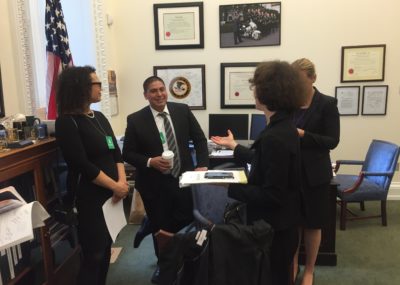
We collaborate closely with California Governor Gavin Newsom, the California Committee on the Revision of the Penal Code, local and state officials to develop criminal law policies that improve public safety and reduce unnecessary incarceration at the same time. We are also proud of our past work with the Obama administration and our longtime relationship with the NAACP Legal Defense and Educational Fund as we continue to work with civil rights groups, law enforcement leaders, and other stakeholders.
Publications & Reports
 |
A Different Kind Of Sentencing Commission: A Model For Prison Downsizing Across The Country read more |
|
|
Striking Back: Using Death Penalty Law to Fight Disproportionate Sentences Imposed Under California’s Three Strikes Law read more |
|
|
Justice That Heals: Promoting Behavioral Health, Safeguarding the Public, and Ending Our Overreliance on Jails read more |
|
|
The Prevalence and Severity of Mental Illness Among California Prisoners on the Rise read more |
|
|
Law Enforcement is on the Front Lines of Race War read more |
|
|
Proposition 47 Progress Report: Year One Implementation read more |
|
|
When Did Prisons Become Acceptable Mental Healthcare Facilities? read more |
|
|
Proposition 36 Progress Report: Over 1,500 Prisoners Released; Historically Low Recidivism Rate read more |
|
|
Progress Report: Three Strikes Reform (Proposition 36); 1,000 Prisoners Released read more |
In the News
The Three Strikes Project’s work has been praised as “a voice for the forsaken” by The Economist, “a proven path to clearing out overcrowded prisons” by The New York Times, and a “champion of change” by the Obama White House.
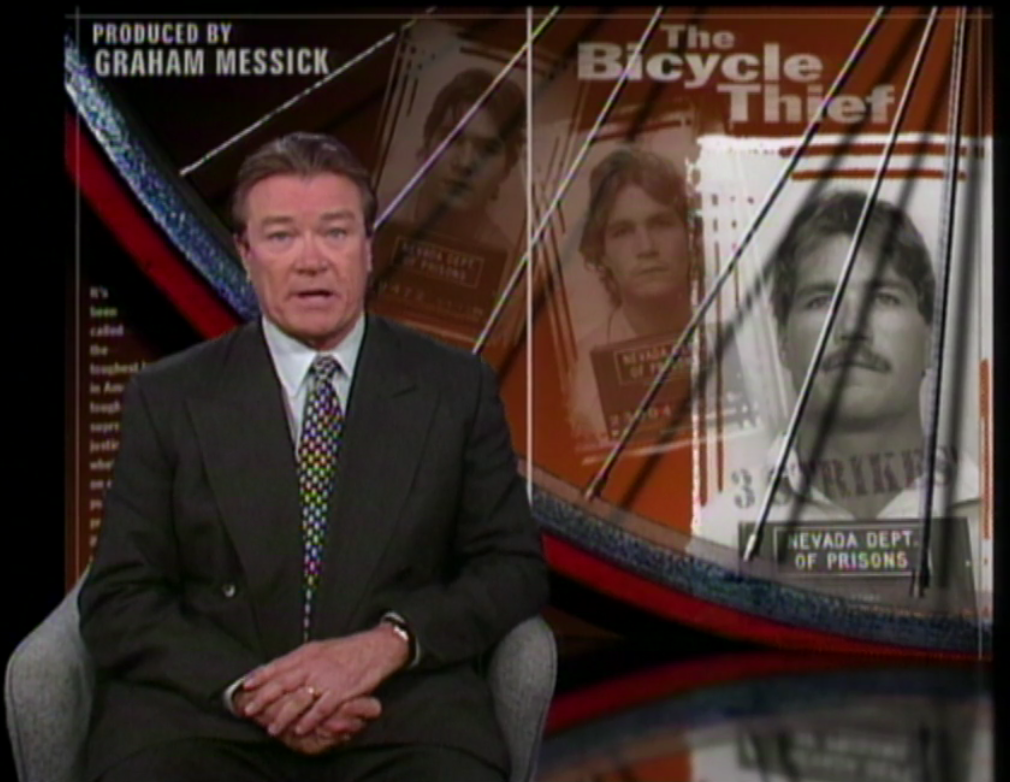
The Bicycle Thief. Over twenty years ago, 60 Minutes profiled our client Steven Bell, who was sentenced to life under the Three Strikes law for stealing a bicycle. In this update, they describe his release, thanks to advocacy from our students.

PBS/POV feature documentary follows the first year implementing California’s Three Strikes Reform Act (Proposition 36).
You Just Got Out of Prison. Now What?
New York Times Magazine
A Voice For the Forsaken
The Economist
Law Students Help Free Three-Strikes Offenders
The Los Angeles Times
The Stupidest Law Ever
Rolling Stone
Out of Prison, and Staying Out, After 3rd Strike in California
The New York Times
Coming Together on Crime
National Law Journal
Staff
Please note: we cannot accept or return unsolicited mail.