
A Labor of Love
William B. Gould IV Reflects on His Life and More Than Half a Century as a Leading Scholar and Practitioner of Labor, Sports, and Discrimination Law
Early in the Great Depression, William B. Gould III, an electrical engineer who was working as a radioman for the U.S. Navy, wrote to W. E. B. Du Bois asking about employment opportunities with the “Government of Abyssinia,” a sovereign nation composed of the territories known as the Ethiopian Empire.
The famed intellectual and civil rights activist replied, promising to pass along any leads, but ultimately that wasn’t necessary. Gould, who had recently been fired after his employer learned that he was Black, secured other work and went on to a distinguished career, including 29 years with the U.S. Army, where he helped to develop the first radar systems.
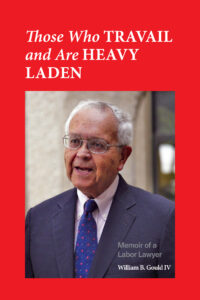
The letter to Du Bois was shared with Gould’s son, Stanford Law School Professor William B. Gould IV, Charles A. Beardsley Professor of Law, Emeritus, while researching his new memoir, Those Who Travail and Are Heavy Laden: Memoir of a Labor Lawyer. (It had been discovered by an archivist at Worchester Polytechnic Institute, which Gould III attended.) Gould said the letter was among “real stunners” of family history he encountered in writing the book, which chronicles his personal and professional life as one of the country’s leading scholars of labor and discrimination law, the first Black professor at Stanford Law School, and the first Black chairman of the National Labor Relations Board (NLRB).
Gould has written extensively about labor, discrimination, sports law, baseball, and his family history. His work includes a book based on the diary of his great-grandfather, who escaped from slavery, joined the U.S. Navy, and became a leader of his Massachusetts community. Those Who Travail is Gould’s second memoir. His first, Labored Relations: Law, Politics, and the NLRB, focuses on his tenure at the NLRB.
But the new book includes more of his own story than any previous work. In it, Gould says, he wanted to “articulate the challenges and opportunities that came my way in becoming a lawyer, a labor lawyer, and a law professor.”
Along the way, he gained a deeper appreciation for his family, especially his father. “The book has made me feel fortunate and lucky, notwithstanding all the upheavals and hurt and setbacks,” he says. “My father was the greatest man I ever met, and he was hobbled with horrible, hurtful discrimination. He didn’t have the kind of chances I’ve had, but he left his mark.”
The book’s title is taken from the Bible. Gould says the Episcopal Church traditions in which he was raised are still “emblazoned” on his mind. But, in his view, the words also describe his professional efforts, often on behalf of laborers, in a legal career that spans his first job with the United Auto Workers to his service on the NLRB and California’s Agricultural Labor Relations Board, among other positions.
Connecting civil rights and labor law
Gould graduated from Cornell Law School in 1961, before passage of the Civil Rights Act of 1964. He decided labor law was the best way to address inequality in the United States and “took to it like a fish takes to water.”
“His passion for his work, both as an intellectual endeavor and a means of pursuing justice, was inspiring and infectious.”
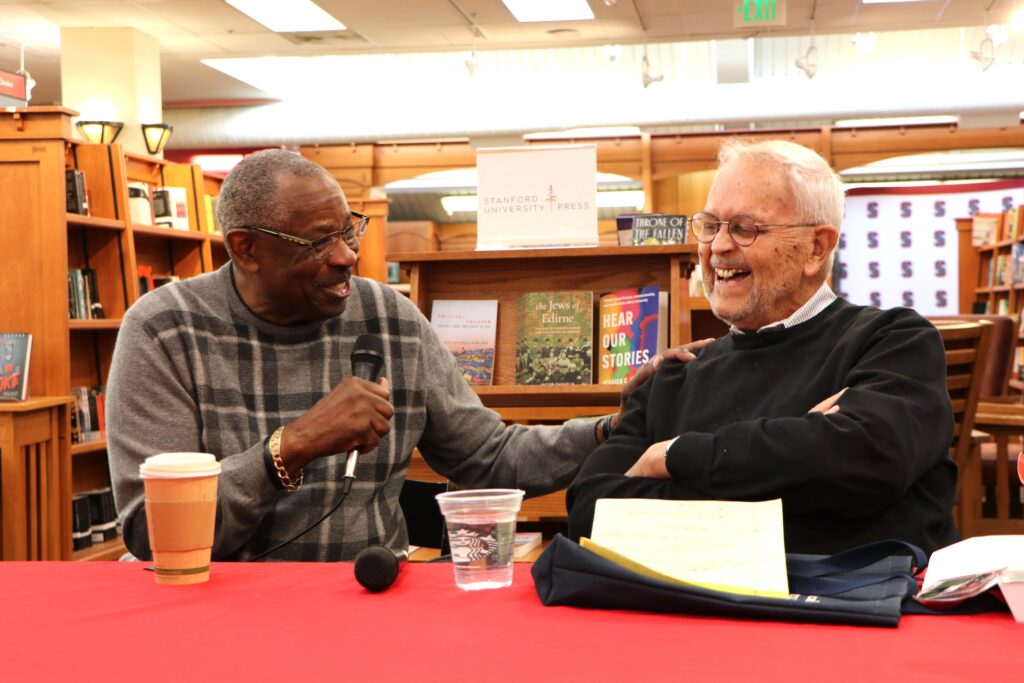
He traveled the South as a consultant for the newly created Equal Employment Opportunity Commission, which was investigating complaints that Black people were being hired into lower-paying jobs in violation of the Civil Rights Act. Over nearly a decade, he represented Black Detroit Edison workers who had been discriminated against in a landmark case brought under Title VII of the Civil Rights Act. He also made several trips to South Africa, researching labor relations during and after apartheid and, more recently, assessed racial inequities in the San Francisco municipal workforce. He wrote A Primer on American Labor Law, which is in its sixth edition, and he taught one of the first sports law courses in the country. (Dusty Baker, a former MLB player and manager, was often a guest speaker in Gould’s classes.) During his time at the NLRB, he was best known for helping resolve the Major League Baseball strike that wiped out the 1994 World Series.
As a law student, Jeremiah Collins, JD ’76, worked as a research assistant for Gould, helping with Gould’s first book, Black Workers in White Unions: Job Discrimination in the United States, which was published in 1977.
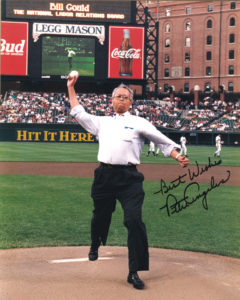
“His passion for his work, both as an intellectual endeavor and a means of pursuing justice, was inspiring and infectious,” says Collins, senior counsel at Bredhoff & Kaiser, a firm Gould helped connect him to. “It is what led me to become a union-side labor lawyer.”
Reflecting on a career spanning more than half a century at a time when many of the causes he fought for, including racial equality, are under attack, Gould tries to maintain a measured view. From that perspective, he believes the law is only one tool in the toolbox.
There have been “hostility and discouragement” in the past, he says, and the law has not always been a viable remedy. When he started his career as a lawyer, he points out, there was no Civil Rights Act or EEOC.
“We were hoping we would get it,” says Gould. “Most of the organizing took place outside the law. So, I retain a view—less rooted in the law than it was in the past—that there can be some improvement nonetheless.” SL