
Center for Racial Justice Students Help Illuminate Wong Kim Ark’s Enduring Legacy
New public art project connects constitutional doctrine, Chinese American history, and renewed debate over birthright citizenship
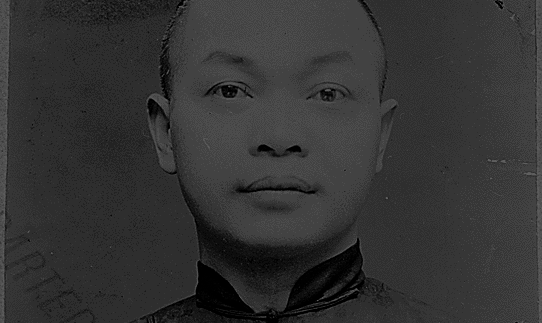
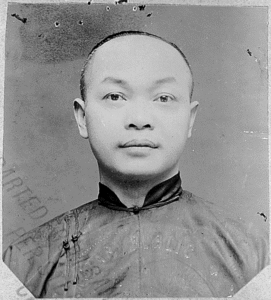
In 1895, Wong Kim Ark returned by steamship to San Francisco, the city where he had been born to immigrants from China. He was denied entry. The Supreme Court case that eventually followed, United States v. Wong Kim Ark, would establish that virtually all children born on U.S. soil are citizens under the Fourteenth Amendment.
More than 125 years later, with the scope of birthright citizenship again before the Supreme Court in Trump v. Barbara, students from Stanford Law School’s Center for Racial Justice recently helped bring Wong’s story to life through a Bay Area public-history project that joins law, art, and community memory.
The project began with San Francisco sculptor Alicia N. Ponzio, who is creating a bronze bust of Wong Kim Ark to be displayed in his native city. Ponzio reached out to the center because she wanted the sculpture, and the public exhibit surrounding it, to be grounded in the legal and historical context that made Wong’s case both a product of the anti-Chinese exclusion era and a landmark in constitutional law.
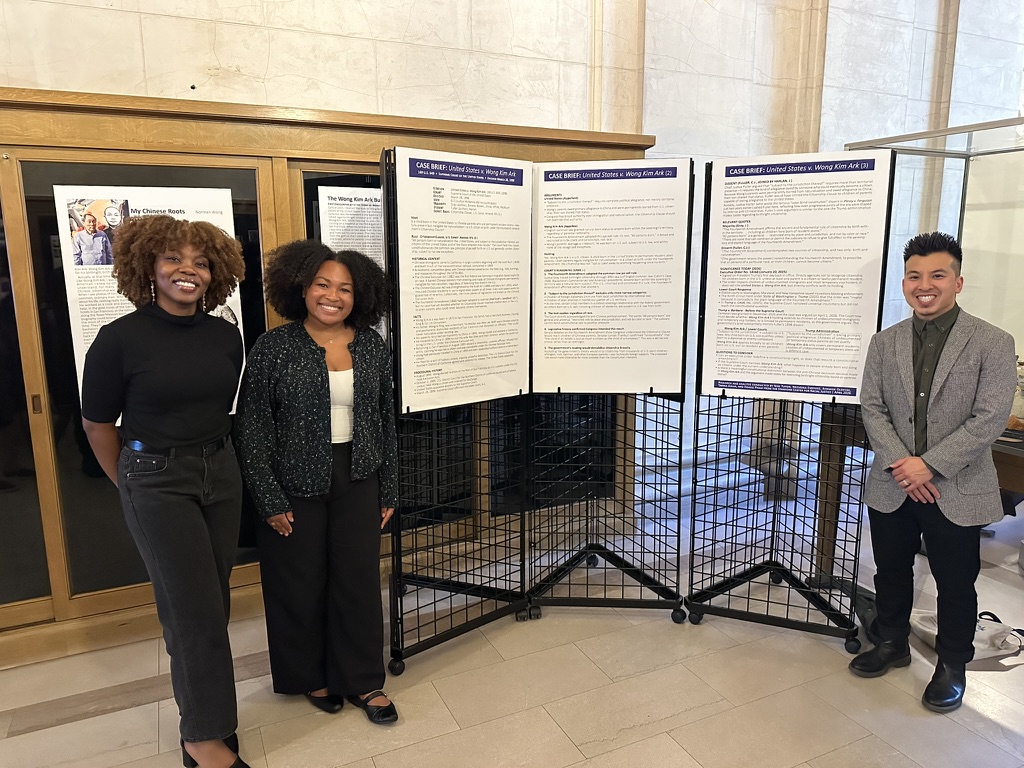
Hoang Pham, director of education and opportunity at the center, worked with center interns Tarina Ahuja, Nkemjika Emenike, Ayomide Oloyede, Nini Tufon (all JD ’28) to create a public-facing legal and historical case brief—in the form of three large posters—to accompany a half-scale model of the bust displayed at the Veterans Gallery in San Francisco during AAPI Heritage Month.
At a May 26 reception, presented by American Legion Cathay Post 384, the Center for Racial Justice group joined the sculptor, members of the Chinese American veterans community, and Wong Kim Ark’s great-grandchildren, Norman and Sandra Wong, for an unveiling of the half-scale model. During the event, Tufon and Emenike moderated a discussion with Wong’s great-grandchildren.
The project offered both a lesson in constitutional history and an exercise in public legal education.
“Law students can play a distinctive role in helping communities understand the connection between history, legal doctrine, and the present moment,” said Ralph Richard Banks, the Jackson Eli Reynolds Professor of Law and founder and faculty director of the Stanford Center for Racial Justice. “This project showed how legal education can move beyond the classroom. The students used their training to illuminate a landmark case, honor a community’s history, and help people see why constitutional principles continue to matter in everyday life.”
Connecting Doctrine, History, and Community Memory
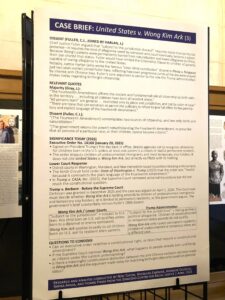
The students’ research traced Wong Kim Ark’s life and litigation against the backdrop of the Chinese Exclusion Act, anti-Chinese violence in the West, and the unsettled meaning of the Fourteenth Amendment’s Citizenship Clause in the decades after Reconstruction. Their display explained the 1898 decision in accessible terms, including the majority’s holding that a child born in the United States to resident alien parents was a citizen at birth, and the dissent’s narrower view of who was “subject to the jurisdiction” of the United States.
“One thing that stayed with me from the research we did was how long it took for the promise of the decision to really fall into place,” says Tufon. “You would think that once the Supreme Court decided the case, that was the law. But Wong Kim Ark himself continued to face detention and scrutiny, and so did many others who had birthright citizenship. Although the decision may seem clear on paper, what people experienced afterward tells a more complicated story.”
The students worked collaboratively to shape the material for a public audience. Tufon and Emenike focused on the research and presentation, while Oloyede and Ahuja helped refine the language and make the legal and historical material concise, accessible, and suitable for a gallery setting.
Law and History
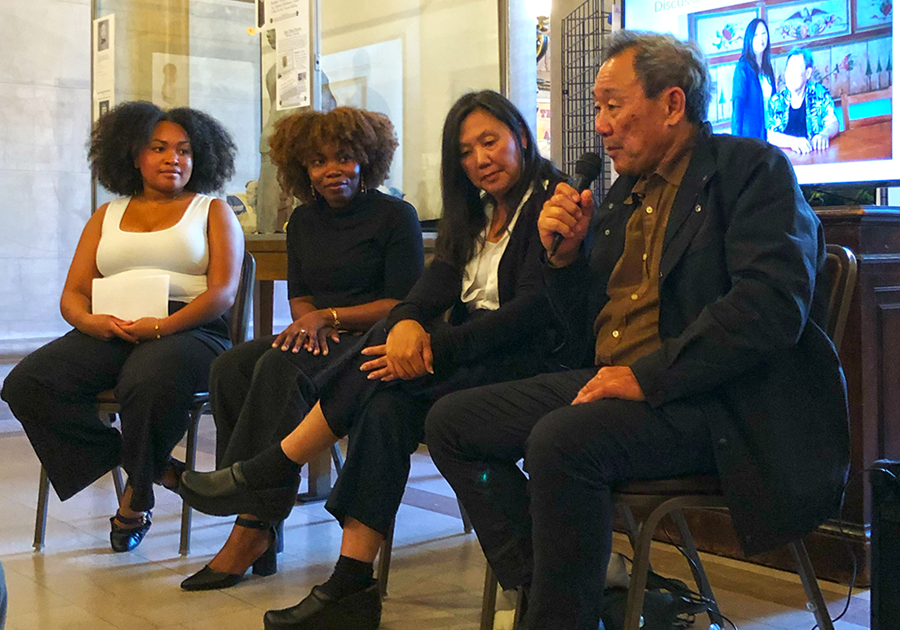
For Emenike, who studied history as an undergraduate and will begin a joint master’s program in history at Stanford next year, the project required showing the case as part of a much larger American story.
“It’s easy to learn about one event as if it happened in isolation,” she said. “But this was happening at the same time as Reconstruction, the building of the railroads, anti-Chinese violence, and new efforts to define race and belonging in America. I wanted people to see what made this case possible, and why it happened the way it did.”
The students also had to translate legal doctrine for a general audience, many of whom were encountering the case for the first time. That, Pham says, was fundamental to the project.
“We were trying to help the public navigate complex legal issues in a way that was rigorous but accessible,” he said. “Attendees came up afterward asking for the presentation slides because they wanted to learn more about cases and arguments they had never heard before.”
The experience took on another dimension when Tufon and Emenike were asked, shortly before the event, to moderate the conversation with Wong’s descendants. The students asked Sandra and Norman Wong about learning late in life that they were related to Wong Kim Ark and how they came to understand the significance of his legacy.
“Both Sandra and Norman grew up in the Bay Area,” Emenike says. “Like many Americans, they grew up taking for granted birthright citizenship, but they take pride in their newfound knowledge that this right was established by someone in their own family.”
For the Center for Racial Justice, the project reflected the kind of interdisciplinary, community-engaged work the center aims to foster, Pham underscores.
“I feel really grateful to be considered for opportunities like this,” Tufon says. “Working with the Center for Racial Justice has been one of the highlights of my law school experience so far.”
Emenike said the project also affirmed one of the reasons she came to Stanford Law.
“I chose Stanford in part because of the opportunity to work across disciplines,” she says. “This was a chance to do that outside the classroom, with law, history, art, and community all coming together.”