
Guidance to the Next Generation of Prosecutors
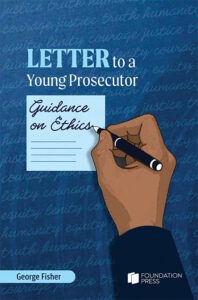
Excerpts from newly published book Letter to a Young Prosecutor: Guidance on Ethics
The criminal standard of proof—beyond a reasonable doubt—is supposed to be hard to satisfy. American trial procedure deliberately tilts the courtroom contest against the government. You must bear the burden of proof; you must overcome the presumption of innocence; you must disclose exculpatory evidence; you must not discredit truthful witnesses; you must not comment on the defendant’s silence; you must persuade every juror of every element of every charged crime beyond a reasonable doubt; and you bear the risk of reversal on appeal. This uneven contest reflects Blackstone’s injunction (repeated by many others) “that it is better that ten guilty persons escape than that one innocent suffer.”
Prosecutors sometimes cast the criminal standard of proof in terms that lower the hurdle to conviction. Doing so is both unfair and unwise—unfair because the law intends the beyond-reasonable-doubt standard to be hard to satisfy and unwise because meddling with the standard of proof can be a prosecutorial third rail, dooming whatever conviction you might win to reversal on appeal. Some things you may safely say. If the court gives counsel a copy of the judge’s charge, you may quote it. You may say that “proof beyond a reasonable doubt does not mean proof beyond all doubt.” And you may argue that your evidence has proved your case beyond a reasonable doubt. Unless guided by clear case law, you ought not drift outside these safe harbors.
One form of argument is particularly foolhardy. Do not try to specify a percentage of certainty demanded by the criminal standard of proof. Advising jurors that if they are, say, 85 percent certain of the defendant’s guilt, they should or must convict is a fast path to reversal.
Another way to prevent falsehoods is not to reward them. Take special care when offering cooperating witnesses lenity in their own cases. The bigger the break you promise, the more you tempt a witness to lie on your behalf. Avoid dangling a reward so great that even a witness with nothing truthful to offer promises you damning testimony. It’s wise to demand—in writing—truthful testimony and to specify that lying under oath will expose the witness to a perjury prosecution and will nullify your promise of lenity. Such provisions are worthy and essential but not enough. You must impress on cooperating witnesses your determination to scrutinize their testimony and seek sanctions for falsehoods.
Still, it’s not improper to reward cooperating witnesses. They often incur enormous risks in testifying against ruthless associates—and the more depraved their associates, the more society benefits from assistance in prosecuting them. Your goal is to offer a reward large enough to secure truthful testimony without tempting lies. That this balance is delicate and difficult to achieve is no excuse for failing to seek it. If you set out determined to avoid falsehoods, you will have started on the right path.
One day during my second or third year on the job, I was working late after everyone else had gone home. A man walked into the D.A.’s office and said he had gotten a traffic ticket he wanted fixed. As he started telling me what happened, we looked at each other and realized we had been high school classmates. We began catching up when, suddenly, he stopped and gazed around the room—at the battered steel desks and yellowed ceiling and spotted green carpeting. Then he looked at me and said, “You know, somehow, I thought you’d be further along than this by now.”
I think of my classmate’s remark whenever I hear someone say good persons should not be prosecutors. Very few young lawyers become prosecutors to get a fancy office. Even fewer do so seeking money or prestige. I suppose a few crave power, but they are not the best prosecutors. The best prosecutors hope to advance the public good—to protect community members in their homes and schools and on the streets while combating police misconduct and treating every defendant fairly and humanely. Yes, the post confers power, often to young people just out of law school. That power can be used for good or ill. So it’s essential that prosecutors be good persons.
The costs of conviction extend beyond confinement, fines, and terms of probation. Conviction triggers a raft of consequences that could include deportation, eviction, job loss, sex offender registration, inability to secure federal or state assistance for housing or education or food, disqualification from military service and from working as a teacher or childcare provider, and temporary or permanent loss of voting rights. Then, too, there are serious extralegal consequences of conviction—the risk of assault, rape, or violent death in prison and of contracting HIV and other infectious diseases, often aggravated by poor prison healthcare. Even after release from prison, convicts may suffer social ostracism and isolation.
Whether legal or extralegal, these consequences may be very real components of any sentence you recommend. Simple justice compels that you weigh whether the defendant’s crimes warrant the official sanction together with these harms. It’s true you can’t assess with any accuracy the odds of prison rape or other violent assaults. Even the likelihood of deportation or loss of housing may be hard to calculate. But to ignore the potential of these consequences because it can’t be measured with precision may result in a sentence far graver than the defendant’s crimes fairly deserve.
It’s the job of any good defense lawyer to advise you and the court of the risk of such consequences and to offer evidence showing their likelihood. But as I’ve said before, a defense lawyer’s failure to advocate zealously should not deprive the defendant of the right to a fair and lawful prosecution. Rather it imposes on you a greater duty to safeguard that right.
Let me tell you about a conversation I overheard in my old office. One of our senior homicide prosecutors, a man revered by his peers and regarded with awe by us junior lawyers, was trying a high-profile murder case. The defendant, a middle-aged man who lived with his elderly mother, had grown obsessed with the young woman next door. He would peer over the fence separating their yards and snap pictures of her. Then one day he scaled the fence and bludgeoned her to death with his camera. His mother, despite her infirmity and the press’s unwelcome fixation, attended every day of his trial. One afternoon while the jury was deliberating, a colleague asked the trial prosecutor if he had gotten a verdict. “Not yet,” he said. Then he added, “I just want to see the look on his mother’s face when the jury comes back guilty.”
That remark taught me a fundamental principle of just prosecution: All prosecutors must recognize and respect the humanity of every person caught in our system’s churning gears. Once a prosecutor begins to draw satisfaction from the misery our system can inflict even on the innocent, it’s time to move on and let younger lawyers who still respect that humanity and regret that misery fill those ranks. If you are one of those young lawyers, you should be a prosecutor.
Skeptics may counter that however good-hearted you are and however devoted you may be to seeking justice, the system will break you. They think you’ll fold under pressure—that you’ll ignore inconvenient facts or conceal police wrongdoing or seek a headline-grabbing sentence because that’s what you think your boss wants.
It’s a devastating indictment. If I thought it described prosecuting as it must be, I would not have written you this letter. But I firmly believe good persons can do far more to fix our system’s flaws by working on the inside, where you can wield power in case after case, than by casting stones from without.
Not only should good persons be prosecutors, therefore, only good persons should be prosecutors. If you resolve to stand firm under pressure and pursue justice resolutely, you can bend the moral arc of the entire criminal apparatus, however slowly, toward justice. SL
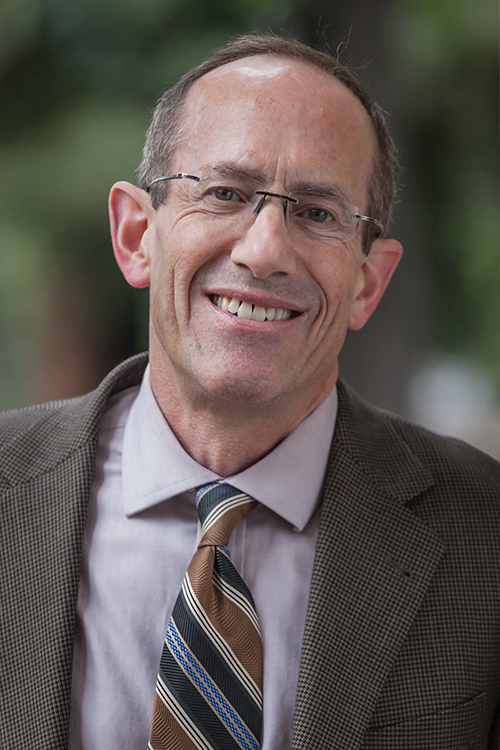
George Fisher is Judge John Crown Professor of Law and Criminal Prosecution Clinic Co-Director.