Looking for a good book or two to dig into during the summer? The Stanford Law School Faculty Summer Reading List offers up some of our professors’ favorite reads.
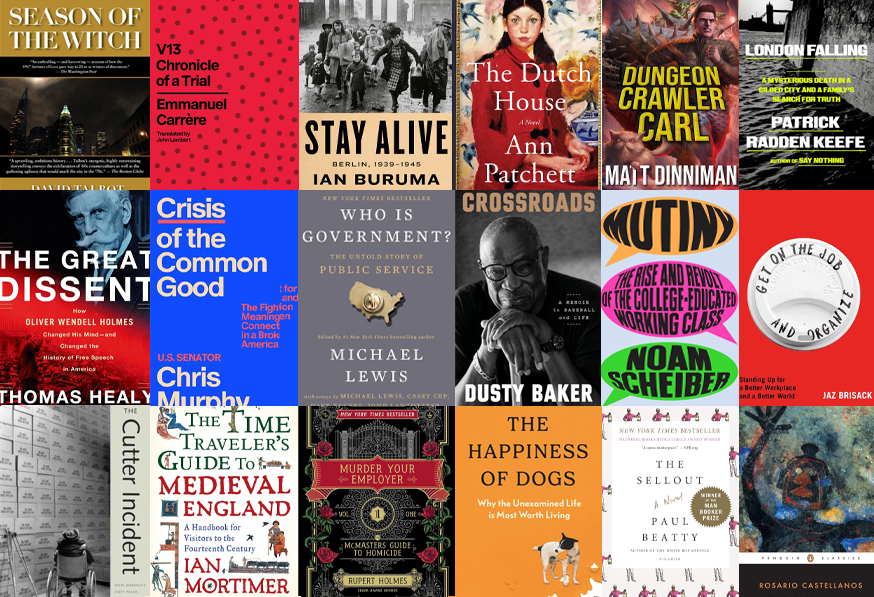
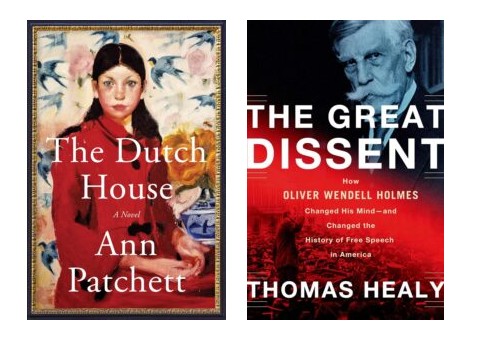
This year I (way too belatedly) discovered Ann Patchett and devoured much of her back catalogue. My favorite is still the first I read though—The Dutch House. Patchett writes with real compassion for her characters, which is a lovely thing to spend time with these days.
I also read and loved The Great Dissent: How Oliver Wendell Holmes Changed His Mind–and Changed the History of Free Speech in Americaby Thomas Healy. It tells the story of how Justice Holmes changed his mind about free speech and, with it, the course of history and the First Amendment. This had been on my list for a long time, and while I was expecting to learn a lot, I was not expecting to find it such a page turner. It’s a great time to be reminded why and how the modern free speech tradition was forged.
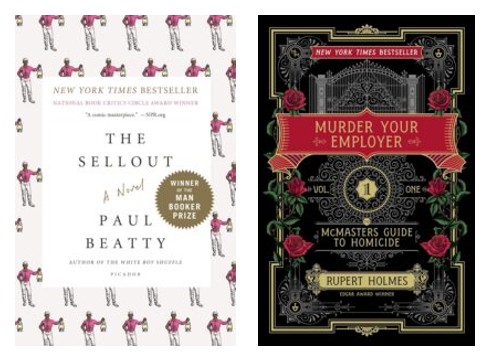
The Sellout: A Novel by Paul Beatty. Okay, I’m reluctant to recommend this one. It’s brilliant, hilarious, insightful, gut-wrenching, and the winner of the Booker Prize. But it’s not for everyone: this is some raw stuff. The plot involves a black man who winds up in front of the Supreme Court defending slavery. If you are easily offended or a fan of Clarence Thomas—well, you’ve been warned.
Murder Your Employer: The McMasters Guide to Homicide by Rupert Holmes. This is almost the opposite: fun, frothy, and lighthearted comedy. It centers on the McMasters Conservatory for the Applied Arts, a Tim Burton- meets-J.K. Rowling institute for people with righteous grudges against appalling soon-to-be-deceased enemies. Expect a Broadway musical soon: the author is the playwright behind the Broadway musical, The Mystery of Edwin Drood—and those of a
certain age might remember his Top 40 hit “Escape (The The Piña Colada Song).”
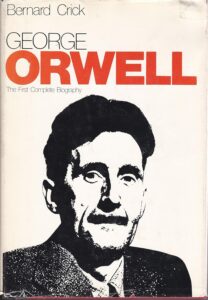
I bought this book 40 years ago but never read it until just now, and had to read it straight through—it’s so good. Crick is a well-known British political scientist and Labour Party stalwart. I got to know him a bit when I was a Harvard undergraduate and he was a visiting professor. He entertained students in his Adams House room with irreverent Labour songs, like “We’ll make Winston Churchill smoke a Woodbine* every day…We’ll auction Lady Astor at her own church bazaar, When the Red Revolution comes.” (*The first cheap cigar mass-produced for working-class consumers.)
This massive biography is wonderfully clear and acute, especially on how experience formed Orwell’s political views. His schooling and work as a British imperial policeman in Burma gave Orwell his distaste for autocracy; his reporting on lower-class and working-class life (The Road to Wigan Pier, 1937) his socialist convictions; his stint as a soldier in a left-wing militia in the Spanish Civil War – betrayed and attacked by Soviet Communists for deviationism–his hatred for totalitarianism of both Fascist and Communist varieties. He lived most of his life on the edge of poverty, having to sell hundreds of essays and reviews to pay the bills, achieving prosperity from sales of 1984 and Animal Farm(initially rejected by most publishers) only as he was dying. Some of those occasional essays on politics and literature are among the finest prose works in the English language.
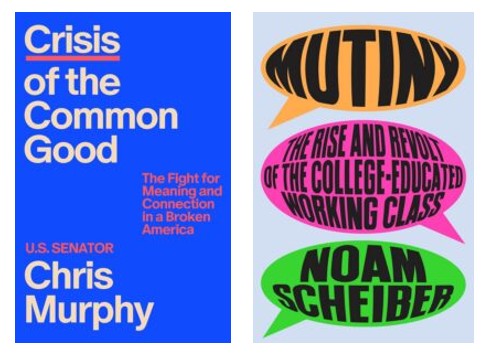
The books that I’m reading fall into three categories, and the first is political: Crisis of the Common Good: The Fight for Meaning and Connection in a Broken America lays out a public and personal philosophy which are dear to me. The author, U.S. Senator Chris Murphy of Connecticut, is one of those special people we are lucky to have in public service. He speaks in the tone that I remember emanating from Adlai Stevenson, and based upon the thoughtfulness, good sense, and compassion, I’m hopeful that the country will have the chance to hear him more in ’28, along with the governors of Kentucky and Illinois.
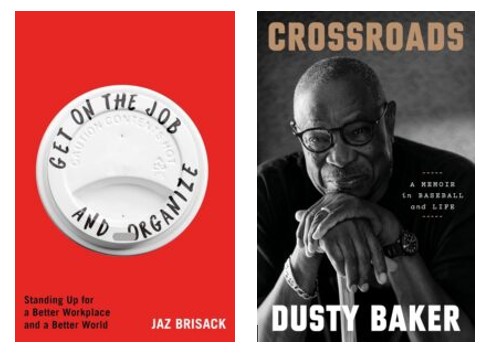
I’ve also enjoyed Noam Scheiber’s Mutiny: The Rise and Revolt of the College-Educated Working Class, the story of a working class, college-educated union organizational campaign at Starbucks, the plight of diminishing opportunities for college graduates, and the ability of a major employer to flout (thus far) American labor law. In this connection, I’ve just started Jaz Brisack’s Get on the Job and Organize: Standing Up for a Better Workplace and a Better World, which is a firsthand examination of some of the same events with the same employer.
Finally, I’ve begun the very readable Crossroads: A Memoir in Baseball and Life by my friend of 35 years, Dusty Baker, former outfielder for the Los Angeles Dodgers and the Atlanta Braves, and former San Francisco Giants manager (and manager for four other teams). You won’t put this memoir down without a sense of this larger-than-life personality and his friendship with people of all backgrounds. It’s a good, fluid, and easy read that provides the reader (including even non-baseball fans) with some of the awe that I’ve always felt for this principled, charismatic guy.
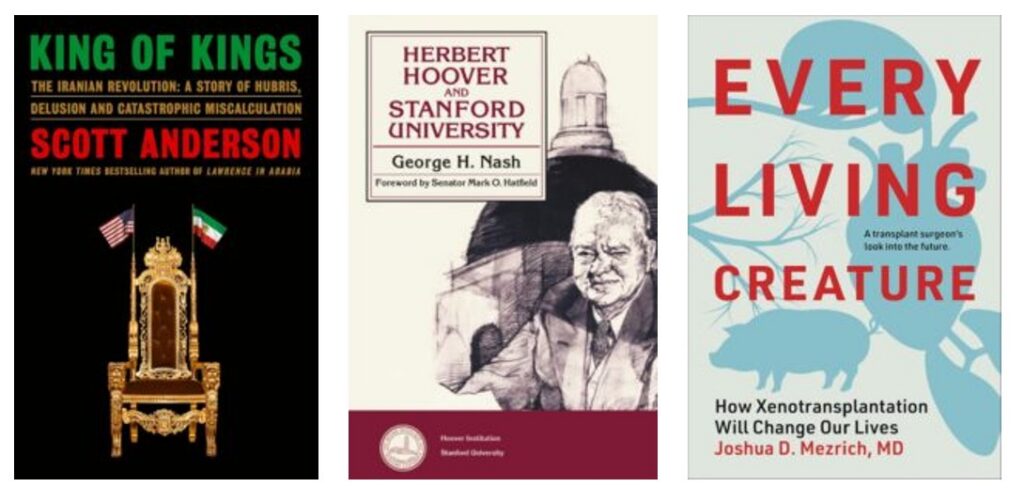
I’m recommending five books I read in the last six months. In January, I read Scott Anderson’s history, King of Kings: The Iranian Revolution. Its subtitle is “A Story of Hubris, Delusion, and Catastrophic Miscalculation”—the book was unexpectedly timely. I’ve been reading a lot about Stanford history lately and was quite taken with a short monograph by George H. Nash called Herbert Hoover and Stanford University. It taught me a lot about Hoover’s many roles with the University, for good and for ill, but always with commitment. In my scholarly field, I greatly enjoyed Joshua D. Mezrich’s Every Living Creature: How Xenotransplantation Will Change Our Lives. This explains, through engaging stories about people, how organs from genetically edited pigs will be in many of our futures.
And I’ll end with two novels, one old and one new. By chance, I fell into the first mystery novel ever written in English, Wilkie Collins’s The Moonstone. I was surprised how much I liked it, and by its modern voice. And, last but not least, I recommend Notes on Infinity: A Novelby Austin Taylor. This first novel, set about a decade ago in a biotech start-up, seems very loosely based on the rise and fall of Theranos. I found it gripping—and enjoyed the chance to chat with its author, who has just completed her first year as our J.D. student. (I’m happy to report that she liked it.)
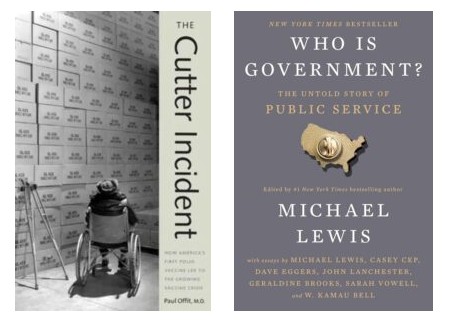
The Cutter Incident: How America’s First Polio Vaccine Led to the Growing Vaccine Crisis by Paul Offit. One of the great things about being at Stanford is our colleagues from across the university. Steve Goodman, from Stanford School of Medicine, recommended this book as we were discussing the public’s declining trust in science and the government in preparation for Steve’s coming to the class I was co-teaching on “America at 250.” It’s an amazing story about the development of the polio vaccine, how 200,000 people were inadvertently injected with live, virulent polio virus during the first wave of vaccinations, and how that tragedy and the lawsuits that followed shaped U.S. vaccination policy. And I learned why Franklin Roosevelt is on the dime!
Who Is Government?: The Untold Story of Public Service edited by Michael Lewis. A wonderful reminder of all the wonderful things the government does, told through the stories of an astonishing range of public servants—everything from the superintendent of the National Cemetery Administration to the chief innovation officer of the National Archives to a recently arrived paralegal at the Antitrust Division. The book inspired me with how these folks strive to make the United States, as one chapter quotes from the Constitution, a “more perfect Union,” and angered me with how the current administration is waging war on the career civil service.
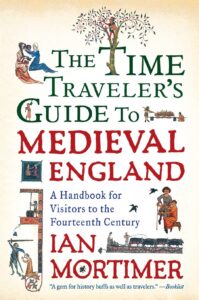
It brings medieval England to life by imagining what you would experience if you suddenly found yourself there (and then). It covers things like the culture, what people wore, how they traveled, their views of health and hygiene—and of course, the legal system. It’s a great read.
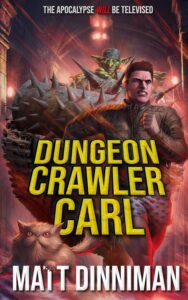
The premise is ridiculous (a major character is a talking cat named Princess Donut), but this series is entertaining even for people who don’t do fantasy or swords and sorcery. It will draw you in and you will be left wanting more.
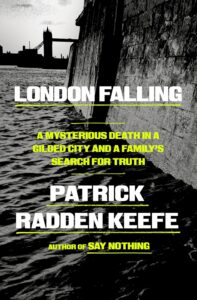
True crime thriller meets travelogue on London’s dark side and the characters who inhabit it, by a renowned investigative journalist. A great summer read for Londonphiles.
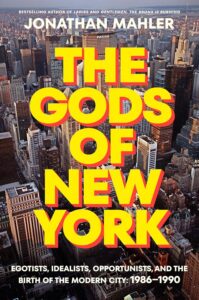
This spring, I thoroughly enjoyed Jonathan Mahler’s The Gods of New York: Egotists, Idealists, Opportunists, and the Birth of the Modern City: 1986-1990. Mahler is a journalist who weaves together some of the stories that transformed New York City in the late 1980s—including through personalities like Al Sharpton, Spike Lee, Donald Trump, and Rudy Giuliani—in ways that feel very relevant to current debates over issues ranging from policing to housing to public health.
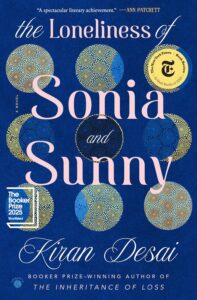
I also highly recommend Kiran Desai’s Booker-shortlisted The Loneliness of Sonia and Sunny. This multigenerational saga and love story primarily follows two young Indians across India, New York City, and other places as they deal with family expectations, artistic aspirations, and different forms of loneliness. At nearly 700 pages, it isn’t a quick read, but I savored every bit of it—it manages to be both laugh-out-loud funny and deeply moving.
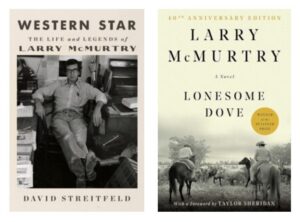
I recently read and loved Western Star: The Life and Legends of Larry McMurtryby David Streitfeld.McMurtry is one of my favorite authors, and I think his masterpiece Lonesome Dove ranks along with Huckleberry Finn as a Great American Novel. McMurtry has incredible range, having written other books that were turned into the iconic movies—The Last Picture Show, Hud, and Terms of Endearment. He also co-wrote the screenplay for the acclaimed movie Brokeback Mountain. If you like books and movies—who doesn’t!—Streitfeld’s biography is a really enjoyable read.
To all the nerds who play video games and/or tabletop RPGs: This is a book with a contrived and ridiculous premise, but that is executed so brilliantly, hilariously, and beautifully that you will laugh, cry, and have deep thoughts about morality by the time you’re halfway through this series. The audiobooks are also truly incredible. #PrincessPosse4Life
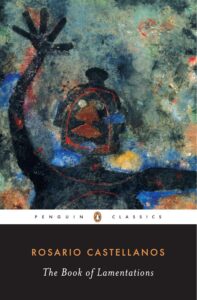
I read this book back when I was in college and preparing to study for an off-campus term in Mexico. I almost never read books twice, but this one warranted an exception, and I discovered it was even better on the second read-through. It’s a powerful and lasting exploration of colonialism and power, studied through a fictionalized Mayan uprising and ethereal prose.
V13: Chronicle of a Trialby Emmanuel Carrère. V13—for vendredi 13—is shorthand in France for November 13, 2015, a Friday, when coordinated terrorist attacks in Paris killed 130 people and left hundreds more wounded. Six years later, 14 of the perpetrators went on trial. The proceedings stretched over 11 months, and Emmanuel Carrère came every day. His account of the trial is about many things: the horror of the attacks, the backgrounds of the defendants, and the meaning of justice. This may be the most gripping and most moving book about a trial I’ve ever read. It’s a particularly good book for lawyers and law students to read because among Carrère’s themes are legal professionalism and its connection to human decency.
Stay Alive: Berlin, 1939-1945 by Ian Buruma. To reconstruct what it was like to live in Berlin under the Nazis, Ian Buruma draws on diaries, memoirs, interviews, and the letters and recollections of his father, who was forced to work in the German capital during the war. What emerges is a spectrum of reactions to living in a criminal state. Some people were heroes, many were villains, and most were somewhere in between—trying to survive, compromising themselves to a greater or lesser extent, and all too often looking away. Buruma is a vivid storyteller, and his assessments are sober and balanced. He says the book is in part a love letter to modern Berlin, which he admires for “looking history in the face without flinching.” His book does this too.
The Happiness of Dogs: Why the Unexamined Life is Most Worth Living by Mark Rowlands. Mark Rowlands is an Oxford-trained philosopher who currently teaches at the University of Miami. He also really likes dogs. For many years, he lived with a wolf, and he sometimes brought the animal to class. He wrote a good memoir about those years, called The Philosopher and the Wolf: Lessons from the Wild on Love, Death, and Happiness. This new book, though, is even better. It’s a wide-ranging and surprisingly sophisticated exploration of philosophy of mind, ethics, and cognitive science, using dogs to lead the way. Rowlands is a gifted teacher and a terrifically entertaining writer, so you don’t have to like dogs to enjoy the book. But it will help.
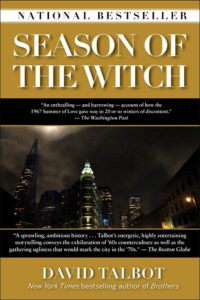
I love nonfiction books that read like novels, and this is one of my favorites. Talbot tells the story of San Francisco and the Bay Area through the social movements, cultural transformations, political upheavals, and tragedies of the 1960s, 1970s, and early 1980s. It is a fascinating, often wild, and deeply readable account of the recent history of the Bay Area, and a must-read for anyone who lives here or wants to better understand this place.