
The Sacred Place That Is Sáttítla
The Environmental Law Clinic’s first case representing the Pit River Tribe spanned generations of students, ends with national monument designation for Medicine Lake Highlands


Most attorneys remember their first case. For some 80 Stanford Law alumni, their first case was Pit River Tribe v. Bureau of Land Management, their first client, actually four, including the 11 autonomous bands that make up the Native American tribes grouped under the umbrella of Pit River Tribe; the broader Native Coalition for Medicine Lake Highlands Defense; the nonprofit Mount Shasta Bioregional Ecology Center; and an association representing a dozen or so cabin owners in the Medicine Lake Highlands area known as Sáttítla.
At stake was protection of a pristine area in the Shasta-Trinity, Klamath, and Modoc National Forests encompassing hundreds of thousands of acres of lush forests and barren landscapes, with unique volcanic formations, including parts of one of the longest-known lava tube systems in the world and the massive Medicine Lake Volcano.
The case came to Stanford in 1997 by way of the Environmental Law Clinic’s (ELC) director, Deborah Sivas, JD ’87, an environmental law expert with a national reputation who had been lured back to the law school to design and launch the clinic—one of the first in the country.
Sivas had represented the Pit River Tribe in another matter when she was an associate at Heller, Ehrman, White & McAuliffe and then as a partner at Gunther, Sivas & Walthall. A tribal elder, Floyd Buckskin, trusted her and asked if he could come to Stanford to talk through a new case.
“He told me about two imminent proposals to develop industrial-scale geothermal production facilities on federal public land in the Medicine Lake Highlands. Tribes have considered this landscape sacred since time immemorial. The federal government had issued geothermal leases and then approved development without consulting the tribes or undertaking full environmental review,” recalls Sivas, Luke W. Cole Professor of Environmental Law and director of the Stanford Environmental and Natural Resources Law and Policy Program. “Floyd asked if the new clinic could help prevent development. I ran it by my very first group of clinic students, and they were all in.”
And so, the ELC had its first case. Little did any of them know that it would include the work of generations of Stanford Law students and end 28 years later with the establishment of Sáttítla Highlands National Monument—a big win for their clients, for the tribe, and for conservation.
Justin Pidot, JD ’06, considered Pit River Tribe v. Bureau of Land Management a “legacy” case when he was an Environmental Law Clinic student. After all, the clinic had already been working on it for nearly 10 years.
He recalls the adrenaline rush of being a law student—and arguing the case before the Ninth Circuit Court of Appeals. He describes the courthouse in San Francisco as an austere building, with huge, metal eagles peering down from the top.
“Tribal members attended. And one came up to me and said that eagles were important to their tribe. She felt their spirit present and that they were going to assist me in my argument,” he remembers.
At the time, the litigation focused on the failure of the U.S. Bureau of Land Management (BLM) to conduct an environmental review under the National Environmental Policy Act (NEPA) and to consult with the local tribes under the National Historic Preservation Act (NHPA) prior to granting geothermal leases. That tribal consultation was required because the Keeper of the National Register of Historic Places determined that tens of thousands of acres in the Medicine Lake Highlands were eligible for protection as a Traditional Cultural Property District.
For Pidot, who served as general counsel for the White House Council on Environmental Quality during the Biden administration before returning to his position as a professor of law and co-director of the Environmental Law, Science & Policy Program at the University of Arizona, what stands out about the clinic was the intense preparation.
“I think we did a moot court every day for two weeks—far more preparation than any appeal I ever handled in practice,” he says.
The ELC prevailed, and BLM was required to perform NEPA review and tribal consultation before it could renew the set of leases challenged in the lawsuit. And while the students learned valuable legal skills, Sivas also let them take the spotlight.
“It was an exceptional experience,” Pidot says. “I went on to become an appellate lawyer at the Department of Justice. I have no doubt that my clinic work and that argument helped my application for the DOJ Honors Program and then the appellate section.”
But, as Sivas and the team would soon discover, Pit River v. BLM was not just about learning valuable legal skills—it was learning to play the long game as well.

Learn more about the feature artist Frank Buffalo Hyde
Leases Granted Without Review
The Pit River saga began in the 1980s, when BLM awarded more than three dozen leases for geothermal exploration and potential development beneath the Medicine Lake Highlands, known as Sáttítla to the Native American people. These lands, now part of the National Forest System, have been used by Indigenous people for over 10,000 years for spiritual ceremonies and a wealth of other cultural practices. Over the next 20 years, a succession of companies held these leases until they were eventually consolidated with the energy company Calpine Corp. And despite the long-held and contested leases, the search for a commercially viable geothermal resource in the highlands proved elusive—and no energy production has ever taken place there.
Michelle Berditschevsky, founder and former executive director of the Mount Shasta Bioregional Ecology Center, first started collaborating with Buckskin and the tribe around the time the original 10-year geothermal leases were extended in the 1990s.
“Mount Shasta and Medicine Lake Highlands are part of one sacred landscape. There’s a profound connection in the tribal stories, with the waters underneath these volcanoes mingling as headwaters of the Sacramento River,” Berditschevsky says. When BLM proposed in 1997 to approve two large industrial geothermal production facilities that would spread across several of the leases, her organization joined forces with the tribes and local homeowners to fight the geothermal lease renewals—and enlisted the clinic to represent them.
The heart of the matter was that BLM had handed out leases for geothermal exploration before consulting the tribes.
“It wasn’t until the environmental impact statement for the first two proposed developments came out in 1997 that the tribe was even advised about this,” says Berditschevsky, who also served as the director of the Pit River Tribe’s Environmental Programs Office.
Tom Kuhnle, JD ’95 (MA ’88, BA ’87), was an associate at McCutchen Doyle Brown and Enersen in Palo Alto when the firm took on pro bono work for the matter in 1998. Now a judge in the California Superior Court, Santa Clara, Kuhnle was active in the Environmental Law Society as a law student. Neither he nor Sivas remembers how they connected—though they agree it was likely through Buzz Thompson, JD/MBA ’76 (BA ’72), Robert E. Paradise Professor of Natural Resources Law, who raised the initial funding for the clinic and taught both Sivas and Kuhnle when they were law students. Kuhnle jumped at the chance to work with the nascent clinic—and help the Pit River Tribe and Medicine Lake community in challenging the extension of the geothermal leases.
Creative Strategy
The legal team encountered setbacks when BLM granted a five-year extension on the geothermal leases in 1998, just as the clinic was starting to build its case, and again in 2002 when BLM took the bold move of extending them for 40 years. The case became one of endurance, with the young, energetic clinic team prepared to try new strategies and see it through.
Early work on the case involved administrative appeals—and then litigation focused on the government’s failure to comply with NEPA and its NHPA tribal consultation obligations.
The team’s first court appearance was in 2002 when it sought to invalidate the geothermal leases on NEPA grounds before the U.S. District Court for the Eastern District of California. The trial court ruled against the plaintiffs, and the clinic appealed to the U.S. Court of Appeals for the Ninth Circuit. With Pidot arguing, the clinic won a major victory in 2006 at the appellate court, which reversed the lower court ruling and rejected as unlawful BLM’s decision to renew the leases without environmental review or tribal consultation. That was one volley. Three more would follow.
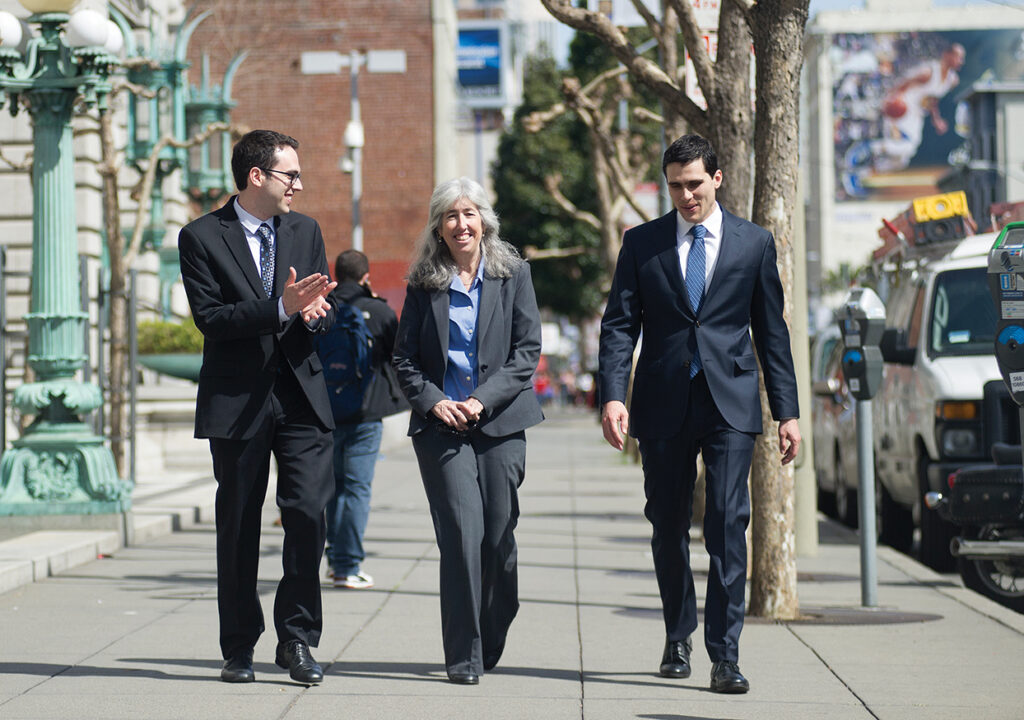
When James Williams, JD ’10, now the Santa Clara County executive, took the clinic in 2010, he argued a follow-up appeal before the Ninth Circuit over the proper remedy for the 2006 victory. The government’s side was daunting.
“The opposing side had something like a combined 65 years of experience between the two very seasoned attorneys—one from the Department of Justice, the other formerly at Justice and now in private practice working on behalf of Calpine. And I think the Calpine attorney had argued more than 100 cases. They were certainly formidable,” said Williams, in a 2010 Stanford Lawyer profile.
As to why the clinic was back for a second appearance before the Ninth Circuit on the question of whether leases that expired in 1998 could be extended, it came down to technicalities.
“This was a very narrow issue: Did the district court err in interpreting and applying the Ninth Circuit Court’s 2006 decision? While the larger issue is about environmental preservation and development, this particular hearing was all about procedure and jurisdiction,” Williams says. Fortunately, Williams was taking Administrative Law with Daniel E. Ho, William Benjamin Scott and Luna M. Scott Professor of Law, at the same time as the clinic and had the benefit of Ho’s expertise as he prepared. “It’s a perfect illustration of how law school should work: the practical skills from the clinic complemented by classroom lessons,” he says.
Looking back now, the lessons still resonate. “Representing the Pit River Tribe and arguing before the Ninth Circuit in law school are two things that I keep coming back to, in the seven years I was the county counsel and even as recently as a few months ago in my role as the county executive. You never know just how the dots will connect in the years ahead,” says Williams.
“The upside of interim losses was to get all of us fired up to vindicate our clients’ interests.”
Deborah Sivas, JD ’87, Luke W. Cole Professor of Environmental Law
Legal Hat-Trick and the Geothermal Steam Act
As the team would learn again and again, every victory brings new challenges—and new rounds of strategizing. The first two trips to the Ninth Circuit forced the government to reconsider its decision for some of the leases. But other leases had followed a different path to renewal, prompting Sivas to explore alternate legal theories for challenging them. The answer was unexpected: Invoke the Geothermal Steam Act, a statute rarely applied in this context.
“Debbie was able to use a statute unfamiliar in the environmental community to achieve the goals of the clients,” says Kuhnle. “We knew how to work with NEPA, and that was the focus of the work initially. Using the Geothermal Steam Act was more novel.”
Radley Davis, a Pit River tribal citizen and advisor involved in the case for nearly two decades, says that he hears from other tribes about their legal journey.
“Tribes and Indigenous peoples from other parts of the country and world have asked us about our successes, and it’s interesting. We all agree that strategy is key and the use of the American Indian Religious Freedom Act is weak with no teeth, but we were successful with Debbie’s strategy,” he says. “I started to learn that many laws and regulations may not be as defensible as many of us thought they could be.”
Joel Minor, JD/MS ’14, who took the clinic twice, in 2012 and again in 2013, praises Sivas for recognizing the sacredness of the land while marshalling the most effective legal arguments.
“The religious freedom legal argument is tied to the importance of the place to the tribe, but unfortunately that’s just not recognized in our legal system,” says Minor. “Debbie instead made the case about the tribe, including factual information about their ties to the land in the intro to the brief, and she centered that in the argument presentation. But the legal argument was actually focused on NEPA and the Geothermal Steam Act.”
The clinic team learned the importance of legal creativity—and mentoring.
“Debbie mentored multiple generations of environmental law attorneys, including me,” says Minor, who devoted a decade to environmental work, including running the Colorado Office of Environmental Justice. “She models the best way of being a lawyer—being calm, not overreacting to the latest terrible turn in a case. She teaches that you have to play the long game. And she’s really client-centric by taking an environmental justice approach and centering the voice of the tribe on everything we did.”
Legal Standing on Sacred Grounds
At a 2013 hearing before the district court in Sacramento, the first question was whether the ELC’s clients had standing to pursue a claim under the Geothermal Steam Act. According to the district court: No.
“The court said that our clients did not have prudential standing, that they were not within the zone of interest of that statute,” explains Sivas.
Winning two prior rounds in the Ninth Circuit only to lose on the issue of standing was a blow for the team.
“The district court’s holding that the tribe lacked standing was extraordinary, particularly given the history of how tribes have been treated with respect to public lands, public lands management, and their lands in our history. That was hard for me as a lawyer to hear,” says Matt Sanders, JD ’02, acting deputy director of the ELC. Sanders, who was recently appointed to co-direct the ELC with Sivas, served as an appellate attorney in the Environment & Natural Resources Division of the U.S. Department of Justice, among other positions. Having worked as an ELC attorney from 2013 to 2015 before returning in 2019, he’s familiar with the Pit River case.
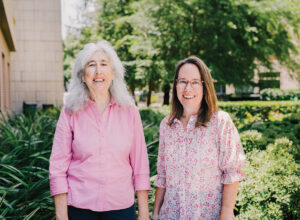
A fundamental lesson for students in any clinic is how to handle defeat and look for ways out of tough legal situations. This was especially true for the Pit River matter.
“Sometimes all we can get for a client under the statutes is more review or more process,” Sanders says. “These are important, teachable moments. Our cases, including Pit River, are complicated and the wheels turn slowly, but sometimes delay is a win. In Pit River, it set up things that might not have happened without that additional process and ultimately led to prevailing.”
By 2015, the clinic team was back at the Ninth Circuit, this time arguing that the tribe and other plaintiffs did have statutory standing to challenge the remaining geothermal leases in the Medicine Lake Highlands. The court ruled in the clinic’s clients’ favor and remanded the case back to the district court for further action.
“The upside of interim losses was to get all of us fired up to vindicate our clients’ interests,” says Sivas. “We knew the district court was wrong on the standing issue, so we went back to the Ninth Circuit and prevailed.”
Client-Centered Lawyering
The ELC, along with the other clinics that form Stanford Law’s Mills Legal Clinic, emphasizes client-centered lawyering. “It’s something the faculty spend a lot of time teaching and modeling, and the Pit River case offered ample opportunities to prioritize it,” says Sivas.
Tori Ballif Gibbons, JD ’12, took the clinic in 2010 and 2011. She and her clinic partner did a deep dive into federal laws around geothermal leasing, looking at time frames, due diligence requirements, and requirements for proving the value of leases.
“We were looking at our clients’ options, reviewing what a settlement might look like and what it would take to power through with litigation,” Gibbons recalls. “What were the government’s interests in a settlement? What would the barriers be? What would it take to resolve the issue for our clients?”
During one of the field trips Sivas organized to meet with their clients in Burney, California, Gibbons and her clinic partner presented their findings to the tribe and community members for their consideration. As she was describing factors that might make the government hesitant to reach a settlement, a tribal member asked a pointed question.
“I was explaining that Calpine could argue that the government was taking potential earnings from the company by terminating the leases, and this young man asked if the tribe could make a takings claim against the government for the value of their ancestral lands that they had never been compensated for,” says Gibbons, now a Native American law expert with Shute, Mihaly & Weinberger. “That presentation is one of my strongest law school memories, and it has stayed with me in my practice as an attorney—recognizing the inadequacy of the law to address wrongs against tribes and the frequent incompatibility of Western legal frameworks and ideas with Indigenous understandings of land and place.”
Gibbons recalls Sivas deferring to the clinic’s clients, offering the best options the team had come up with and then guiding but not pushing an agenda. “I’ve carried that with me—the importance of respect for and deference to my tribal clients as sovereign nations,” she says.
Stalemate Leads to Decisive Solution
In 2019, the clinic had a big win at the Ninth Circuit Court of Appeals when it affirmed the lower court’s summary judgment ruling in favor of the Pit River Tribe and the other clients. Clinic students Sam Lazerwitz, JD ’20, and Caleb Wright, JD ’20, traveled with Sivas to argue the appeal in Seattle. Dozens of tribal members and client representatives also made the journey from California, packing the courtroom.
In its subsequent decision, the court agreed that BLM’s 40-year extension of over two dozen leases in the Medicine Lake Highlands was unlawful under the Geothermal Steam Act because there had been no diligent exploration showing that any of those leases contained commercially viable resources.
“After that, Calpine was really ready to talk settlement,” says Sivas. “But then BLM was the challenge: The agency threatened to find another company to develop the leases if Calpine relinquished them. So, it became a catch-22 for Calpine. The company didn’t want to walk away from its prior investment in the leases only to have a competitor reap a windfall.”
Groundwork for a political solution—involving permanent conservation through a national monument—had already been laid by the clinic and the Pit River Tribe and community. But the team knew that political pressure would be necessary for the plan to succeed.
As a student in the clinic, Minor had worked with the tribe and community clients to lobby for conservation of the Medicine Lake Highlands, organizing meetings in Washington, D.C., with California senators and representatives. “Passing legislation is very challenging,” he says. “That’s why the national monument designation was such a big deal.”
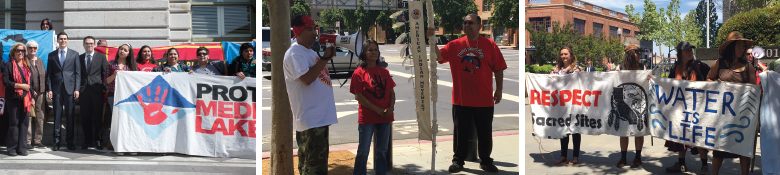
The Pit River Nation had long contemplated national monument status and raised the possibility with several administrations, even having former Tribal Chair Mickey Gemmill Jr. hand deliver a resolution to the Obama White House, according to Brandy McDaniels, a tribal citizen who was active in the community. “Our elders and leadership wanted a national monument, but I believe they just didn’t know the road map to get there,” she says.
But by 2023, all parties to the dispute were open to finding a solution—particularly with the legal wind at the clinic’s back after the last win at the Ninth Circuit. That’s when a number of ELC alumni began to surface to help the cause.
Serendipity and the Road to a National Monument
Matt Armsby, JD ’08, is the interim president of the Resources Legacy Fund (RLF), a conservation nonprofit that works on campaigns for water and land protections. One aspect of RLF’s work entails supporting tribal nations and grassroots organizations in strategizing and implementing campaigns to protect land by establishing permanent protections, including lobbying decision makers—something the clinic and its clients lacked the expertise and funds to accomplish. But as luck would have it, Armsby is also an ELC alum who worked extensively on the Pit River case during the three terms he took the clinic and as a postgraduate fellow for Sivas.
In 2022, Armsby’s organization became aware that the Pit River Nation had recently passed a resolution requesting a national monument designation. He had followed the Pit River case over the years, was familiar with the dynamics involved, and had built relationships with the tribe and local advocates in the community.
“It was very much a right place, right time situation in that I was in a position to offer advice to my colleagues about how they might engage with the clinic, as the representative of the tribe, and things went from there,” Armsby recalls. RLF facilitated introductions to and conversations with tribal leaders and groups that might be interested in supporting the effort. “My group supported the Pit River Nation in a variety of elements necessary to achieve a successful outcome.”
The Pit River Tribal Council and elders appointed McDaniels to represent the tribe in the campaign.
“It was a big effort, a lot of research and coordinating. And close communication with Debbie. I can’t say enough about her. She’s more than our counsel—she’s like a member of the family. I’m so thankful for having such a wonderful ally in her and the students in this fight, this journey to protect this really important place,” says McDaniels, the Sáttítla Highlands National Monument lead for the Pit River Nation.
“We were told numerous times that we couldn’t win. But we kept at it, fortunate to have the clinic for pro bono attorneys—and people from our community, who don’t have much, digging into their own pockets to get to court hearings. We had to. This is our life and our homeland.”
McDaniels says there’s still work to do—documenting the resource management plan for the monument and more—but “it’s good work.”
Berditschevsky sees justice in the national monument designation—and a campaign that was tribally led. “That brought the tribe much deserved respect and recognition,” she says.
Monument Ceremony
On January 7, 2025, Sivas traveled to California’s Eastern Coachella Valley to join McDaniels, Davis, and others for an anticipated announcement by President Biden concerning the creation of two new national monuments in California, including the Sáttítla Highlands National Monument.
But the skies were filled with dust, carried by gusts from the Santa Ana winds that would soon start the devastating Los Angeles fires. With the president’s plane grounded at LAX, the White House was forced to cancel the desert ceremony. A week later, on January 14, a rescheduled signing was held in Washington, D.C.
Sivas had been busy teaching—and tying up legal loose ends, including the one remaining geothermal lease that was still in active litigation on yet a third legal theory. Once the last, critical national monument piece was in place, all parties were able to ink a final settlement on January 16, bringing the nearly three-decades-long legal dispute to a close. With that, the celebration could proceed in earnest.
Armsby reflects on the marathon legal battle—and the lessons it imparted.
“In one semester, or two, you just get a snapshot of the case. It’s only in looking back that we can see how it flowed together, and it became clear that we were part of a long-term strategy.”
“This case shows you that with determination, you can achieve great things,” says Sivas. “You have to have the right mix of diligence and patience and strategic thinking.” SL