
Daniel E. Ho
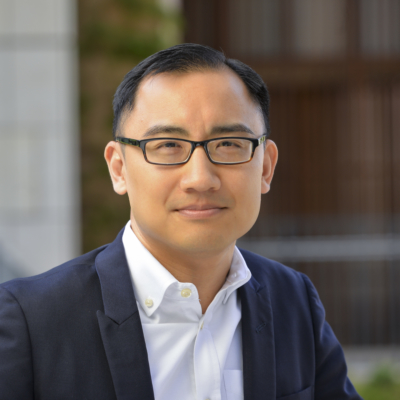
- William Benjamin Scott and Luna M. Scott Professor of Law
- Professor of Political Science
- Professor of Computer Science (by courtesy)
- Senior Fellow, Stanford Institute for Human-Centered Artificial Intelligence (HAI)
- Senior Fellow, Stanford Institute for Economic and Policy Research
- Director of the Regulation, Evaluation, and Governance Lab (RegLab)
- Room N222, Neukom Building
Expertise
- Administrative Law
- Artificial Intelligence (AI)
- Employment Discrimination
- Gender & Sexual Orientation Discrimination
- Judgment & Decision Making
- Law & Economics
- Law & Society
- Policy Analysis
- Public Policy & Empirical Studies
- Race & Ethnicity Discrimination
- Regulatory Policy
- Voting Rights & Election Law
Biography
Daniel E. Ho is the William Benjamin Scott and Luna M. Scott Professor of Law, Professor of Political Science, Professor of Computer Science (by courtesy), Senior Fellow at the Stanford Institute for Human-Centered Artificial Intelligence (HAI), Senior Fellow at the Stanford Institute for Economic Policy Research, Fellow at the Center for Advanced Study in the Behavioral Sciences, and Director of the Regulation, Evaluation, and Governance Lab (RegLab).
Ho serves on the California’s Gubernatorial Innovation Council and Emerging Technology Accelerator. He has also served on the National Artificial Intelligence Advisory Committee (NAIAC), advising the White House on artificial intelligence, as Senior Advisor on Responsible AI at the U.S. Department of Labor, on the Committee on National Statistics (CNSTAT) of the National Academies of Science, Engineering, and Medicine, and as a Public Member of the Administrative Conference of the United States (ACUS), and as Special Advisor to the ABA Task Force on Law and Artificial Intelligence. He is an elected member of the American Academy of Arts and Sciences.
His scholarship focuses on administrative law, regulatory policy, and antidiscrimination law. With the RegLab, his work has developed high-impact demonstration projects of data science and AI in public policy, through partnerships with a range of government agencies, including the Internal Revenue Service, the Treasury Department, the Environmental Protection Agency, the Department of Labor, the Colorado Department of Labor and Employment, the San Francisco City Attorney’s Office, and Santa Clara County.
He received his J.D. from Yale Law School and Ph.D. from Harvard University and clerked for Judge Stephen F. Williams on the U.S. Court of Appeals, District of Columbia Circuit. He is the recipient of numerous awards, including the Miriam Aaron Roland Volunteer Service Prize for integrating research, teaching and public service, the CodeX Prize for lasting contributions in computational law, the John Bingham Hurlbut Award for Excellence in Teaching at Stanford Law School, best paper awards at numerous conferences (ACL, FAccT, AIES, CS&Law, ICAIL), the SafeBench First Prize in AI Safety, the Best Empirical Paper Prize from the American Law and Economics Review, and the Warren Miller prize for the best paper published in Political Analysis.
Education
- BA, University of California - Berkeley, 2000
- AM, Harvard University, 2004
- PhD, Harvard University, 2004
- JD, Yale Law School, 2005