
Navigating Uncertainty and Unprecedented Shifts in Federal Health Policy
Stanford Law’s Michelle Mello discusses how sweeping changes in federal health policy are reshaping public health—and leading states to fill the void
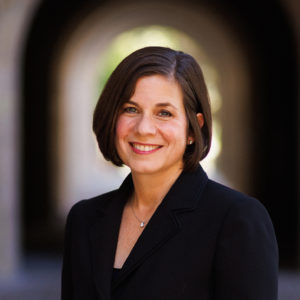
“The amount of chaos that’s been introduced into the federal health policy landscape is unprecedented,” says Michelle Mello, professor at Stanford Law School and the Stanford University School of Medicine.
That turmoil, she explains, has left major gaps in expertise, trust, and leadership—and states are rushing to fill the void. In this episode of Stanford Legal, host Pamela S. Karlan talks with Mello about what this moment means for the future of science, public health, research, and the law.
Mello describes how the hollowing out of career expertise at the U.S. Department of Health and Human Services has upended vaccine policy and research funding, forcing states into unfamiliar leadership roles. She and Karlan also unpack how shifting scientific guidance during the pandemic eroded public confidence, how politicized grant-making is reshaping the research ecosystem, and state governments’ growing role in creating what she calls a “shadow CDC.”
Despite the turmoil, Mello points to a few bright spots: state-level experimentation could generate valuable evidence of what works and what does not, and there are reassuring signs from the lower courts, she says, which she believes are capable of separating law from politics.
Earlier this year, Mello explored many of these themes in her JAMA Health Forum paper, “The Hard Road Ahead for State Public Health Departments.”
This episode originally aired on November 6, 2025.
Transcript
Michelle Mello: The way science works, of course, is through learning—the accretion of evidence, the study of evidence—which often leads us to change our conclusions about things like: How does a pathogen spread in the population? How dangerous is it? That is science working well, but particularly during an emergency like a pandemic, that is not really what people want to hear. They want to hear that somebody is taking care of things, knows what to do, and is doing it. Perhaps that is why pandemic-era health officials were very confident in their pronouncements about things like the efficacy of the COVID vaccine in preventing infection, or whether we did or didn’t need to mask. That made it difficult for them to later amend their recommendations when we learned more.
Pam Karlan: This is Stanford Legal, where we look at the cases, questions, conflicts, and legal stories that affect us all every day. I’m Pam Karlan. Please subscribe or follow this feed on your favorite podcast app. That way you’ll have access to all of our new episodes as soon as they’re available.
Probably no part of our lives is more touched by the federal government in some ways than our health. The federal government regulates the drugs we use, the federal government regulates insurance through the Affordable Care Act, and the federal government has all sorts of public health policies and the like. And we’re seeing a huge number of changes here.
We are incredibly lucky that today the guest on the podcast is my colleague Michelle Mello, who is a professor at both at the law school and at the medical school here at Stanford. Thanks so much for joining me, Michelle.
Michelle Mello: Thanks very much for having me.
Pam Karlan: We have had a lot of Secretaries of Health and Human Services over the course of that department since it split from the old Health, Education, and Welfare Department, but I don’t think we’ve ever had one quite like our current secretary. Can you give us a little bit of a sense of just how seismic the changes have been here?
Michelle Mello: It is early days, so it’s hard to say where we’re going to land, but the amount of chaos, I would say is the word, that has been introduced into the federal health policy landscape by the secretary in the first several months is unprecedented both in the types of things, substantively, that have been done, and in the way they have been done.
Pam Karlan: Sometimes it is said that “personnel is policy,” and here we’ve seen some really huge changes in personnel, not just political appointees like the secretary or the deputy secretary, or the various people who are presidential appointees, but also changes in personnel in at the career level as well. Can you give us a sense of what you’re seeing there?
Michelle Mello: Yes, this is one of the things that really makes me the saddest, when I think about what has changed in health policy over the last 9 or 10 months. The enormous well of expertise that has led the federal health response for decades in the civil service has been hollowed out. And these are career scientists, from the hard sciences as well as the social sciences. Folks who have deep subject matter expertise in really technical health policy issues like reimbursement for the Medicare program, or the way in which people layer on different kinds of subsidies to buy their health insurance, or the ways in which vaccines are procured and supplied to states—gone.
The remaining personnel are deeply demoralized. And when you think about the amount of expertise that is required to run these health programs efficiently and without waste, it makes me fairly despondent.
Pam Karlan: And we’re seeing this across the government. I see it obviously from the Department of Justice angle, which is the same kind of thing: There were people who were experts on all sorts of statutes you’ve never heard of, but they understood how the Federal Tort Claims Act worked or how the Vacancies Act worked or the like. Some of these people are being fired and others are resigning or taking these fork-in-the-road early retirements or the like. Do you have a sense of how much of the issue is the result of people leaving because they can’t do the work anymore that they came to do?
Michelle Mello: It’s not so much that, at least not yet. I think it is primarily people being laid off or fired, or told that their services are no longer required. And that goes for external experts like the professors and others who serve on the advisory committee on immunization practices, for example, as well as civil servants.
Pam Karlan: This immunization issue is one has been I’ve followed, in part because I’m at the age where you’re supposed to get the COVID vaccine, and I was nervous that I wouldn’t be able to go and get the vaccine because it wasn’t going to be available. I think it might be useful to our listeners for you to explain a little bit of why it matters what the vaccine committee says about which vaccines certain people can get, and the relationship to people’s insurance and the like.
Michelle Mello: This is an independent advisory committee. It is an advisor to the Centers for Disease Control and Prevention, the CDC, and it is composed of volunteers who historically have been deeply respected scientific experts, primarily from academia, and they give very generously of their time to evaluate issues about which vaccines and vaccinations should be recommended for children and adults in the United States. And that’s always been somewhat controversial work because there has always been a segment of the U.S. population, albeit a small one, that has resisted having vaccines required. But of course, during COVID, their work became very much more in the public eye and the subject of much resistance because they made decisions about who would have access to the COVID vaccine and, in some respects, which groups were important enough to receive it that states and employers ought to consider requiring it.
They don’t make decisions about vaccination mandates, but many states use their recommendations as the basis for the mandate decisions that they make. What’s really important from an access perspective is that [Advisory Committee on Immunization Practices]-recommended vaccines must, as a condition of the Affordable Care Act, be covered by insurers without a copayment. So, at the point of care, the patient is not billed for the vaccine. During COVID, that was not such a big deal because COVID vaccines were subsidized by a separate line of funding. But for childhood vaccines, which can get very expensive, it is really critical that insurance coverage be maintained.
The concern was that once ACIP changed its recommendations, insurance companies would start changing their coverage. Thankfully, if there is a silver lining to the fact that the new members of ACIP are not particularly well qualified, it is that the insurers have rejected the opportunity to stop covering vaccines based on that group’s new set of recommendations.
Pam Karlan: When I went to get my COVID vaccine, I asked them: “What’s going on?” And they said, “Look, we’re not requiring that people show they’re 65, we’re just giving this to anybody who’s got an insurance card and comes in.”
Michelle Mello: Yes, you’re pointing to a separate issue, which is who can access the vaccines, quite apart from whether you would be willing to pay a co-payment for them or not. For a while, there were real concerns that because a separate process of rolling back FDA coverage …. approval for vaccines was going on, that there might literally be difficulties for people showing up the pharmacies to get vaccines. Fortunately, one aspect of the current chaos has been that that seems to have dissipated a little bit—that fear. It seems to be the case that now the administration has defined this narrative that vaccines will be available subject to “shared decision making” broadly enough that includes just about anything, including probably what you experienced when you walked into your pharmacy, which is that the pharmacist said, “Do you have any questions?” And you say “No.” And they say, “Okay, Pam, here’s your vaccine.”
Pam Karlan: You’ve written recently that with all this chaos in Washington, and the falloff of professional expertise at HHS, state public health departments are going to have to step up in a bunch of ways if we’re going to continue to protect Americans’ health.
Michelle Mello: Yes, and vaccines are just one example of that. The way that it’s playing out now for vaccines is that we have this new ACIP whose findings, I think is fair to say, are not respected or regarded as evidence-based by people who know—by experts. And one thing that has been called into question is whether the CDC itself will continue to base its recommendations on the advice of this committee as it historically, nearly always has.
That question was what led to the firing of Dr. Susan Monarez the head of the…
Pam Karlan: She got fired a week or a month …
Michelle Mello: It was a little over a month on the job. She managed to go from being eminently well qualified in the view of the secretary to untrustworthy. One issue is whether the CDC will do what ACIP says, but then a separate issue is: will others follow the advice of the CDC?
Both during the Biden administration and during the first Trump administration, there were many in the United States who felt that they could no longer trust the advice of the CDC because it didn’t align with their own perceptions of what the right thing to do was, and they felt that the agency, under whatever leadership it was currently under, it was untrustworthy. It couldn’t be trusted to follow the science. So there had already been this, I think, destabilization of public trust in CDC. We have survey data that bear that out.
And so what does this all mean for states? It means, I think, that there is a wellspring of a demand for guidance from outside of Washington and Atlanta now, and states, to some extent, are starting to fill that gap. And in particular, many of the western states have now come together in an alliance to make their own recommendations about vaccinations as essentially a shadow CDC. They’re going to do what the CDC no longer seems to be able to do, which is to follow the evidence and make recommendations. Then, on the other hand, we have certain states going very much in the other direction and just saying: “Vaccines, no thank you.”
Pam Karlan: That was what I was going to ask you: There are reports that some states are going to get rid of vaccine mandates for kids in schools. And I would assume that will be followed relatively quickly thereafter with an outbreak of measles, or an outbreak of whatever else—chicken pox or whatever the kids aren’t being vaccinated against.
Michelle Mello: Yes, we will see. What has happened is that the Florida Surgeon General has said that Florida will be ditching requirements for school entry vaccines. Now, the Florida Surgeon General doesn’t have authority to do that, and that has to be…
Pam Karlan: So is it like each school district?
Michelle Mello: No. But there it is typically through legislation in Florida. I honestly don’t know how much of it is through legislation versus formal rulemaking, but it is not done by any one individual. It’s done through a process. But assuming that that process follows, then vaccines effect effectively become optional. It’s important to remember that, even in Florida, most parents understand that getting your kids vaccinated is a good idea. Even those who object to being required to do so may well come forward and do so, perhaps not fully or in the on the schedule that public health officials might like, but I don’t think we’re going to see plummeting rates of school entry vaccination. But to your point about measles, the difficulty is for some of these very highly infectious diseases, it doesn’t need to plummet, it just needs to dip a little bit, before we lose what’s called our herd immunity. There has to be a certain percentage of the population that has immunity, either through having been infected with the disease or through vaccination. And for measles, because it is so infectious, that number is very high, around 95%.
Pam Karlan: Wow. The more we see this dislike of science, or distrust of science, and the “MAHA Ha Ha Ha” movement and the like … what is driving his huge distrust of science? We’re seeing it even at this Supreme Court in a way. Last year in the Skrmetti case, there was a concurrence that said: why should we trust doctors at all on gender affirming care?—which is, I think, even more controversial in some ways than the vaccinations—we seem to have, across huge parts of society that used to have a great deal of respect for, or deference to scientific expertise, medical expertise—we are seeing a drop off there. What accounts for that?
Michelle Mello: I think we’re still trying to understand that fully, but the narrative that makes sense to me when I will look at the polling data, has to do with a misapprehension of the way scientific knowledge evolves and changes over time, coupled with, quite honestly, probably some degree of hubris on the part of Biden-era health officials about their own confidence in their pronouncements.
Let me unpack that a little bit. The way science works, of course, is through learning—the accretion of evidence, the study of evidence—which often leads us to change our conclusions about things like: How does a pathogen spread in the population? How dangerous is it? That is science working well, but particularly during an emergency like a pandemic, that is not really what people want to hear. They want to hear that somebody is taking care of things, knows what to do, and is doing it. Perhaps that is why pandemic-era health officials were very confident in their pronouncements about things like the efficacy of the COVID vaccine in preventing infection, or whether we did or didn’t need to mask. That made it difficult for them to later amend their recommendations when we learned more about the efficacy of the vaccines, what vaccines were really good for, and what they were less good at, and how we should think about risk/benefit overall. As well as things about transmissibility, which changed recommendations around masking, around social distancing and lots of other things.
But again, when you have come out hot with a lot of confidence in your pronouncements in response to the public’s demand that it looked like somebody’s taking care of things it’s hard to backtrack. And so I think this anger and fear around recommendations changing, permeates out into science generally, into a feeling that it can’t be trusted. Because if it was right yesterday, shouldn’t it be right tomorrow? And if people are “flip-flopping” on policy decisions, how do we really trust the science?
Maybe there’s something else going on, like maybe they’ve changed their minds due to political forces. It all serves to undercut the whole basis through which evidence-based policy is made, which is that you’re supposed to have this openness to learning that you were wrong.
Pam Karlan: I think also people’s scientific literacy has not been a focus of K-12 education in the last 20 years. The “teaching to the tests” of reading and just basic math, maybe have led people not to understand scientific methods. To not talk about the history of science or the history of medicine in some ways, that would give them more of a sense that changing your hypothesis after seeing what’s happened is not a sign that your original hypothesis was evil or stupid. It’s just a sign that we now know more than we did before.
Michelle Mello: That’s an interesting hypothesis. I think even if you did get that kind of messaging when you were 16, it may be hard to remember that.
Pam Karlan: Yes, it might be like, it might be like the vaccines themselves, it wears off after, after…
Michelle Mello: Particularly when you’re being bombarded with very different messaging from certain mainstream media outlets or from social media, which is very condemnatory of moves to change one’s mind about scientific matters.
And I think, to some extent, we see the same kind of reaction going on in the Supreme Court’s ruminations on when physicians change their minds about things. In both the Skrmetti case and the case this week about conversion therapy, there were concerns on how can we rely on medical consensus as the loadstar, because can’t we think of instances where the whole profession was just wrong in, in a really big way about something? And of course we can. And again, that I personally would want to live in a society where, when we’re wrong we change practice, we move to better evidence-based practice. But it does give people, policymakers, judges pause in announcing policies and rules that are pinned to the consensus of so-called experts because they acknowledge now that there’s instability even in things that are “evidence-based.”
Pam Karlan: Yes, it’s interesting because in addition to all of your expertise on law and medicine, you also teach torts. And there, the standard of care in medical malpractice cases changes over time and we don’t seem to have a problem with it changing over time. That is … the fact that 40 years ago a treatment was thought of as either something you had to do or something you should never do, and today we have a different view—we don’t have trouble there. A common law system seems to be capable of adjusting to changes in medical knowledge in a way that we seem not to be able to do when it comes to statutes.
Michelle Mello: I think that’s right. And I guess if there’s one advantage to litigating your issue in a courtroom, it’s that you only really need to convince six to 12 people that you’re right. You don’t have to deal with and be buffeted by all kinds of other information streams from outside and from the huge diversity of public concerns and experiences and biases that people bring to their assessment of different health threats.
Pam Karlan: Do you think this is a moment of any kind of opportunity, or is this just a moment of threat?
Michelle Mello: It’s hard to work in this field and see it as much more than a moment of threat for so many reasons, including reasons we haven’t talked about around, funding of science, but I think with this shift in leadership in public health, from the federal to state level, does come certain interesting opportunities around learning. This famous judicial quote about the states as “laboratories” really comes to mind when we see, for example, now states moving in very different directions with vaccination policy or other things. From a public health perspective that is bad as we think we know a few things about what is good for public health, and states are going in very different directions with respect to these things. From a research perspective, it’s great because what you want is a lot of variation in policy. That gives you things that you can statistically exploit for learning.
So, when we see things trending in Florida now in a very different way than in California, we will have a good hypothesis that it has something to do with vaccination policy. We’ll have much better data with which to study it. So, it’s possible that from this two tracking, I would say, of public health policy in red and blue states will come some better evidence about what really is working, and not just for vaccines, but for other things like fluoridated water. Not that we need necessarily another study tell us that fluoridated water is helpful, but…
Pam Karlan: Yes, if you’ve seen “Dr. Strangelove,” you know all about fluoridation of water…
Michelle Mello: It does give us an interesting opportunity to learn more about it. I think there are also interesting opportunities to strengthen regional compacts among states—that has long been a thing in public health, but not a big thing. The idea that states would form these alliances ahead of a crisis that would preposition them to be able to work together and collaborate during a crisis.
And we didn’t really see that working all that well during COVID. For example, states were not sharing resources or expertise across lines, but things like this Western States Alliance around vaccines, who knows, maybe these states will develop structures and information-sharing mechanisms that will make them better at combating other threats together in a way that makes them more successful than they would be individually.
Pam Karlan: I want to go back to something you said, which was about the funding and talk about the changes in science funding that we’ve seen since the new administration has come in. There’ve been a series of cutoffs to various universities, either targeting particular universities, or targeting particular kinds of science, particularly science that seems from the Trump administration’s perspective, to be too much about diversity, equity, and inclusion. Studies that are studying racial differences in take ups or or the like … How much of how much of a long-term effect is what the administration’s now doing going to have?
Michelle Mello: I think it’s going to have a very long-term effect in particular areas. So, areas where research has essentially been shut down, like MRNA vaccine research or really any research that has to do with differences in health outcomes among people of different races and ethnicities. I think it takes a long time to rebuild that. In talking about how he would like to have “pause” for eight years from certain lines of scientific research, the secretary seems to envision that you can just walk out of a science lab, turn the lights out, and come back eight years later, dust the machines off and boot everything back up. But of course, science doesn’t work that way. We will lose the talent, both our young trainees who would otherwise be coming to train here, in part because they could no longer get visas, even if they did have the funding. And we will lose faculty talent as well. For people who were in those lines of business, they will have to be in other lines of business, and they will continue to stay in those lines of business, or they may leave the country altogether. So, this is … we’re talking about a generational loss in our science talent pipeline in these particular areas.
In other areas I think it’s, it’s more of a dent. And I will say the research community is resilient. We are used to peaks and troughs in the availability of funding in different areas, and fortunately, there are other alternative funders that have stepped forward in certain areas to fill gaps. There is also the possibility of reconceiving or reframing research in ways that match the administration’s current priorities. But overall, it is a very bleak landscape and one again, that can’t be prepared overnight.
Pam Karlan: I was suggesting a moment ago: there’s the targeting of particular research or particular researchers, but then there’s also these attacks on universities more generally, in which science seems to be almost like collateral damage to the administration’s desire to punish particular universities, not because of the science they’re doing at all, but because of allegations, for example, about antisemitism in the failure to deal with some of the demonstrations that followed on the Hamas attack on Israel and Israel’s invasion Gaza.
Michelle Mello: In that respect, the science part is just the lever, it’s not the cause. Our dependence on the federal government for scientific research funding is the club that is being wielded to accomplish other policy goals, and it is a very powerful weapon. Our dependence is enormous. And it is generally thought that that investment produces huge returns for the public. So, the public will lose ultimately from this, this foray. But you’re quite right to point out that science is the victim of something that is being motivated by something else.
Pam Karlan: Also, going to court on these matters turns out not to be quick and decisive and easy at all. Some of the cutoff organizations are being told: You went to the wrong court. You should go to one court to argue that the rule is unconstitutional or violates the Administrative Procedure Act, but if you actually want to get your money, you should be going to the court of claims rather than to local district court.
I feel for the people who are trying to figure out how you challenge cutoffs of funds that were already given to people. That is, we’re not even talking about next year’s grants yet. We’re still talking about the grants that were already made and where people had every reason to expect that the money they’d been awarded was going to flow to them.
Michelle Mello: Yes, it does feel a little bit like trying to nail Jell-O to the wall. And that is honestly what it has felt like to come to work in a medical school for the last nine months. That is, every day seems to be some new twist on the previous days. Disappointment / horror. Yeah, there’s always some new iteration of the problem that has to be attacked in a slightly different way.
I will say, though, I do have optimism about the courts here. I don’t share the cynicism of some that judges can’t see the difference between legal and illegal conduct if they have a certain political valence. And I actually think that many of the signs from the lower courts are very encouraging and even reassuring as to how these battles will end up in the long run. The trouble is that universities are hemorrhaging money every day right now, and so waiting for that day to come is very painful.
Pam Karlan: And of course, one of the difficulties …. the Supreme Court issued a stay recently in one of these cases where they said: the problem is we have to keep the money from flowing out because we’re being told that once the money flows out, it’s not there for the government to seize back if the government ultimately wins, which seems almost, to me, to be getting things backwards, which is: there’s an irreparable injury to the researchers if the money is kept away from them and therefore they have to close down the research or the like. And there seems to be an awful lot of research that is in that kind of position where they need the money and they need the money now and if universities … obviously some universities have the money somewhere else and can reposition it, but that’s not true for every place.
Michelle Mello: I don’t honestly think that’s true for any place. Not at the scale that works …
Pam Karlan: Not at the scale, but in the short, in the very short term, they can say, keep going with this while we litigate, but some places can’t even do that.
Michelle Mello: Yes. So there, the “keep going” is, “We think we’ll get paid eventually and we’ll float you until that happens.” But for the grants that are gone, which is many of the grants—there are a lot of grants where it’s just because they’ve not yet been awarded, there’s really very little legal argument that it has to be provided. Universities cannot step in to fill that gap at the scale that we’re talking about.
Pam Karlan: And I assume that we’re now starting to think about the next round of grants, right? And the question of how those are going to be awarded. One of the things … I think you saw this last week, were these proposed compacts with some universities that said: If you agree to a bunch of fairly political things, we will give you preference in grants. And that’s unlike what we’ve seen in grant-making in the past.
Michelle Mello: Yes, it’s hard to think of an analog. This is another thing where it’s a little bit Jell-O-y because we have the broad strokes of this compact, but it’s not clear exactly how it would be operationalized, what it mean to have preference, for example, or for complying to things, or much less what it would mean to really comply with some of these quite vague terms.
But nevertheless, the government has long had quite a bit of latitude to award grants as it sees fit, subject to certain statutory criteria. It has had this latitude. What has protected us in part, as a scientific community, is that NIH and other agencies have long relied pretty heavily on the judgments of what we call “study sections.” These are groups of volunteer scientists who are asked to come together and read proposals and prioritize them for funding. And the agencies, the institutes, don’t have to follow these recommendations, but they typically do. One of the important changes that we’ve seen in the last few months, quite independent of this recent compact, is the announcement that the heads of these institutes that are responsible for reviewing these recommendations will be replaced by political appointees who will be presumably using criteria other than scientific merit to make award decisions. And that, to me, really upends a lot of settled understandings about the relationship between the merit of a proposal and the likelihood of funding.
Pam Karlan: It’s interesting. In the letter that the president of MIT sent back, saying they’re not interested in participating in this compact, one of the things she said is: We want to compete on the merits for the grant of the scientific grants and medical—in that case scientific—grants that we receive from the government. We don’t want preference because of something else we’re doing. Which I thought was a…
Michelle Mello: That’s an interesting take.
Pam Karlan: Gutsy move on their part.
This has been so interesting, Michelle. I always learn so much from you. It’s just a pleasure to have you back on the show, and I’m sure we’ll have you here again soon.
I want to thank our guest, Michelle Mello, who’s a professor, both at the law school and of health policy at the Stanford Medical School.
This is Stanford Legal, if you’re enjoying the show. Please tell a friend and leave us a rating or review on your favorite podcast app. Your feedback improves the show and helps new listeners to discover us.
I’m Pam Karlan. See you next time.