
In 11 Days: FutureLaw Conference 2015
This is the third of our previews of the upcoming FutureLaw Conference 2015 (April 30, presented at Paul Brest Hall on the Stanford campus). The event is organized by CodeX: The Stanford Center for Legal Informatics. Roland Vogl is the executive director and Michael Genesereth is the research director.
I am delighted to be the moderator of the second morning panel, following the keynote by Professor Oliver Goodenough (“The State of the Art of Legal Technology Circa 2015″) and the first panel, “The Latest Advances in Big Data Law and Analytics.”
Our topic title, “Regulators’ Responses to the Economic and Technological Forces Transforming the Legal Profession,” may sound bureaucratic, but is far from it. In fact, regulatory issues are absolutely crucial as we move forward with the evolution of legal services. Internationally, there has been dramatic change in the last few years—in who is allowed to provide legal services and how the organized bar and governments protect consumers from miscreant practitioners.
SPEAKERS
The panelists are stellar and the topic is dramatic—so it’s going to be a challenge to limit the discussion to 75 minutes!

• Ralph Baxter is Senior Advisor at Stanford Center for the Legal Profession and chair of Thomson Reuters Legal Executive Institute. He’s also an advisor at Harvard and Georgetown law schools, and serves on the board of Lex Machina. Baxter was Chairman and CEO (and then Chairman Emeritus) at San Francisco-based Orrick, Herrington & Sutcliffe from 1990 to 2014. In 2002, he initiated a bold move, that would be quickly copied by many Big Law firms: Orrick created a Global Operations Center and moved some of its back-office operations to West Virginia, significantly reducing costs.
• Karl Chapman is CEO of Riverview Law, based in London and Lincolnshire, U.K. The law firm, with the tagline “Legal input. Business output,” offers fixed price models for services. “We feel more like an in-house legal team than a private practice law firm,” the firm says on its website. Before joining Riverview Law in 2011, Chapman set up AdvisePlus Business Solutions in 2001 and CRT Group plc in 1989. He started his career at Guinness Mahon Investment Management in 1985.
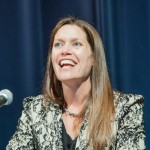
• Renee Newman Knake is a Professor at Michigan State University, where she is co-director, Kelley Institute of Ethics and the Legal Profession. During 2015 she has been on sabbatical leave, and is serving as a Scholar-in-Residence at Stanford Law School and as Visiting Scholar at the American Bar Foundation. She also is the Reporter for the American Bar Association Commission on the Future of Legal Services. (The ABA and Stanford Law School will hold a three-day conference, the National Summit on Innovation in Legal Services, shortly after our FutureLaw Conference, on May 2-4, also at Stanford Law School. Knake, Goodenough and I are participating in both conferences.)
• Paula Littlewood is Executive Director at the Washington State Bar Association, and serves on the ABA’s Commission on the Future of Legal Services. The Washington Supreme Court has approved “LLLT”s—limited license legal technicians, “who will be licensed by the state to provide legal advice and assistance to clients in certain areas of law without the supervision of a lawyer,” wrote Robert Ambrogi, in the ABA Journal. The WSBA administers the new program. See also, “New Washington Rule Allows Legal Techs to Become Minority Owners in Law Firms,” Bloomberg BNA.
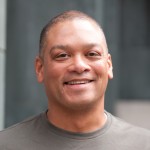
• Charley Moore, CEO of Rocket Lawyer, says 2015 will be a “pivotal year” for regulators to better understand the growing role of technology in the delivery of legal services. Rocket Lawyer combines free legal documents and information with access to affordable lawyers, helping both consumers and lawyers. In 2014, the ABA and San Francisco-based Rocket Lawyer agreed to a pilot project to explore the potential benefits of web-based technology-assisted legal services for both consumers and lawyers. As I wrote in my swan song cover story, “Trust Darwin: How Technology Will Disrupt, Transform and Save the Legal Profession,” in Law Technology News, “Even if the pilot goes nowhere, the partnership is an earthquake.”
• Chas Rampenthal General Counsel (since 2003) at LegalZoom, based in Los Angeles. Corporate Secretary was added to his title in 2007. LegalZoom says its founding vision was to create “an easy-to-use, online service that helped people create their own legal documents.” The company also offers access to attorneys, via business or personal options. This year, LegalZoom got the “green light to operate in in the United Kingdom as an alternative business structure, reported Martha Neil on AJAJournal.com. See also, “Pandora’s Box or Panacea? Lessons Learned From The U.K’s Liberalization of Law-Firm Ownership,” in Forbes, by James Peters, vice president at LegalZoom
CLICK
• Registration Info
• Agenda
• Speakers
CATCH UP
In 17 Days: Preview of opening keynote, “The State of the Art of Legal Technology Circa 2015,” which will be presented by Professor Oliver Goodenough.
In 20 Days: Preview of “The Latest Advances in Big Data Law and Analytics.”
Monica Bay recently retired from ALM, where she was Editor-in-Chief of Law Technology News in New York and senior editor at The Recorder in San Francisco. She is a member of the California bar. Email: mbay@stanford.edu Twitter: @MonicaBay