
In 6 Days: FutureLaw Conference 2015
This is the fifth of our previews of the upcoming CodeX FutureLaw Conference 2015 (April 30, presented at Paul Brest Hall on the Stanford campus). The event is organized by CodeX: The Stanford Center for Legal Informatics. Roland Vogl is the Executive Director and Michael Genesereth is the Research Director.
The conference is jam-packed with strong topics all day. At 3:15, the agenda will turn to “How Legal Tech is Furthering Human Rights and Access to Justice,” moderated by Claret Varga. Speakers include Jake Heller, Bonnie Rose Hough, Chris Jochnick, Alexa Koenig and Oren Yakobovich.
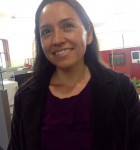
> Vargas is Executive Director at Stanford Law School’s Human Rights Center where she “focuses on business and human rights, the intersection of human rights and the environment, the inter-American system, labor conditions, prison conditions and ingenious rights,” Vargas says. She also is a Lecturer in Law.
> Heller is Co-Founder and CEO of Casetext, a “public legal research tool and online community,” the website says. Heller previously was an associate at Ropes & Gray. He was president of the Stanford Law Review.

> Hough (pronounced “Huff”) is Managing Attorney at the Centers for Families, Children and the Courts for The Judicial Counsel of California. Hough has been with the Judicial Counse since 1997. She oversees its Access to Justice, Self Help, Family Law, Domestic Violence and Tribal/State programs, she says. She received her B.A. in American Studies and Community Studies at the University of California Santa Cruz and her law degree at Hastings (U.C.) College of the Law.

> Jochnick is Director of Private Sector Department at Oxfam America, a global organization that works “to right the wrongs of poverty, hunger and injustice.” He is co-founder and former director of two nonprofit organizations devoted to economic and social rights, he says.
> Koenig is Lecturer in Residence; and Executive Director, Human Rights Center at the University of California Berkeley School of Law. She is an expert on U.S. detention and drone policies, “as well as the potential for technology to help bring war crimes suspects and human rights perpetrators to justice,” she says.

> Yakobovich is CEO of Videre Est Credere, a human rights organization that works “at the intersection of human rights and filmmaking.” He co-founded Videre in 2008; it equips “oppressed communities with customized technology to uncover information from places where media can’t or won’t go,” he says. Check out his TED Talk.
With this panel, we’re bound to get inspired and humbled by the dedication and work of these participants.
CLICK
• Registration Info
• Agenda
• Speakers
CATCH UP
In 8 Days: 3 Choices: A: Best Practices for Consumer Law Companies. B: Innovating from Within Law Firms: Technology Serving Law Firms in Delivering Value to Clients. C: The Adoption of Technology Within Corporate Legal Departments.
In 11 Days: Preview of “Regulators’ Responses to the Economic and Technological Forces Transforming the Legal Profession.”
In 17 Days: Preview of opening keynote, “The State of the Art of Legal Technology Circa 2015,” which will be presented by Professor Oliver Goodenough.
In 20 Days: Preview of “The Latest Advances in Big Data Law and Analytics.”
Monica Bay recently retired from ALM, where she was Editor-in-Chief of Law Technology News in New York and senior editor at The Recorder in San Francisco. She is a member of the California bar. Email: mbay@stanford.edu. Twitter: @MonicaBay.