
Will Tech Steal Judge Jobs?

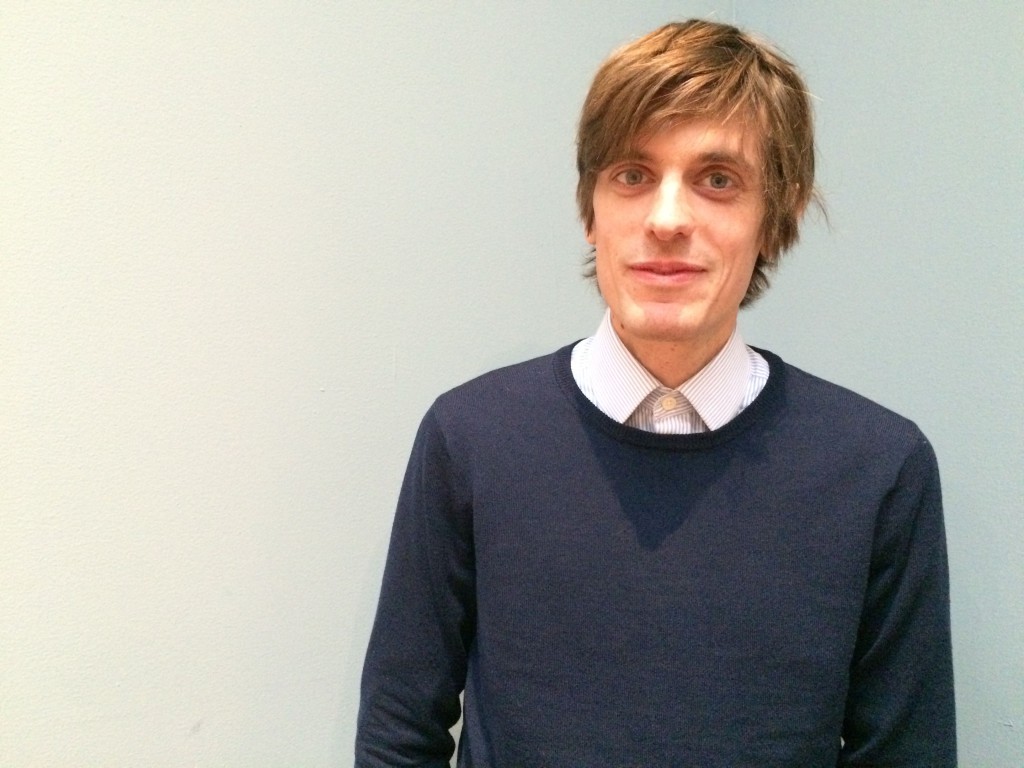
Technology won’t replace lawyers any time soon, but artificial intelligence and other tech tools will threaten the careers of judges and their clerks, warns Joshua Lenon, lawyer in residence for Vancouver-based Clio.
Lawyers have a only a 3.5 percent chance of losing their jobs to computers, declared Lenon at the International Legal Technology Association annual conference, citing a University of Oxford study, “The Future of Employment: How Susceptible Are Jobs to Computerization,” by Carl Frey and Michael Osborne.
Judges, however, face a 40.1 percent chance of being replaced by AI—
and their law clerks are looking at a 40.9 percent risk, said Lenon.
The judicial odds are optimistic compared to paralegals and legal assistants, who face a 94.5 percent chance of being automated, according to the report. Computers are already doing their work, the authors state.
The 2013 study evaluated the probability of computerization for 702 U.S. occupations, using a Gaussian process classifier, concluding that “about 47 percent of the total U.S. employment is at risk.” Frey and Osborne said their “novel methodology” factored in recent advances in machine learning, mobile robotics, engineering science, data mining, machine vision, computational statistics and other sub-fields of AI. They note that their results are consistent with a 2011 McKinsey Global Institute survey that showed that 44 percent of organizations that reduced headcount after 2008 “had done so by means of automation.”
(“Gaussian process classifier is a ‘fuzzy’ statistical processing technique that uses standard distributions for variables, as opposed to fixed values,” explained Jerry Kaplan, CodeX Fellow and author of “Humans Need Not Apply: A Guide to Wealth and Work in the Age of Artificial Intelligence.)

“Part of the reason that judges are vulnerable is that they are all too human,” said Lenon in an interview this week with Bloomberg Big Law Business. “Human bias affects too many potential cases.” The study cites examples such as experienced Israeli judges who were “substantially more generous in their rulings following a lunch break.”
“The public’s need for consistent rulings, no matter the time of day or blood sugar levels, is part of the reason judges are at risk to be replaced by robots,” said Lenon, a member of the New York bar. The ILTA panel, “Legal Technology Innovation: Bolstering And Destroying the Legal Profession,” also included Michael Mills (Neota Logic), Ryan McClead (Norton Rose Fulbright), Noah Waisberg (Kira Inc.) and Stuart Barr (HighQ).
“But none of this should be a surprise to anyone in the legal field,” said Lenon. “We’ve been moving for decades to minimize a need for court time and judges. The Federal Arbitration Act, online dispute resolution and a refusal to invest in court staffing have made it necessary for non-judicial alternatives to be developed.”
As for the future, “Judges will still be necessary, but they’ll handle disputes that have already passed through systems, like ODR, prior to getting to them,” predicted Lenon, who also forecasts that all levels of judges “will be more like appellate trials, ruling on fine points of law and procedure, not on facts.”
“Judges on cases of first impression are already being replaced by administrative law judges and arbitrators,” he said. “These processes are being moved online to automated adjudication.”
Alternatives include Modria, a San Jose, Calif.-based online dispute resolution service and the British Columbia’s Civil Resolution Tribunal, are both examples of this shifting workflow, he said. Canada’s Courts and Tribunals Judiciary is also exploring options.
“To prepare, judges should get more familiar with technology that enables quick appearances unhampered by distance, and be able to understand the technology behind the entry systems that led to these appearances,” said Lenon. “If you don’t understand Modria’s ODR system for e-commerce, or Twitter’s account suspension procedures, how can you rule on the outcomes?”
While most lawyers seem to be in no immediate danger, according to the report, they should not be complacent, advises Lenon. For the work of lawyers to be fully automated, engineering bottlenecks to creative and social intelligence will need to be overcome, implying that the computerization of legal research will complement the work of lawyers”— for a while, the study says.
Savvy lawyers should “familiarize themselves with alternative dispute resolution providers,” said Lenon. “They’ll need to be guides for clients, helping them choose the most effective methods for getting resolution. The includes not only knowing the process involved, but also the risks and benefits associated with each service.”
REBUTTALS
Not everyone is buying the study’s results.

“The Oxford study’s conclusions on this point are nonsense, in case it isn’t obvious,” said Kaplan. “Judges make judgements— machines follow decision trees and crunch probabilities. The whole reason for judges is so they can take broader context and mitigating circumstances into account, something computers can’t easily do. So judges “jobs” are safe,” he said.
“Lawyers, on the other hand, do a lot of routine work, in addition to more specialized and creative activities. And that work is potentially subject to automation, as we’ve already seen in areas like e-discovery. That’s at least one reason there’s a crisis in employment for recent law school grads: the grunt work they are often assigned can now be done better by computer.”
Photo: Russ Curtis
Said U.S. District Court Magistrate Judge (New York, Southern Division) Andrew Peck, “The idea that judges may be replaced by automation is absurd. The variety of legal issues judges face, and the factual determinations necessary, cannot be replaced by Watson or other computers.”

Photo: Monica Bay
Recently-retired U.S. District Court Magistrate Judge (D.C.) John Facciola was also asked for a comment, and I received this response:
“Judge Facciola is not available. This is his robot, R2 the Sicilian. I have a perfect memory of everything the judge has ever said. Once, he said: ‘Basically, I get paid to be patient and to help people find a quick, efficient and cheap solution to their problem. The basis skill demanded is to be a decent human being who tries to understand all the mysteries of human nature.’ I suppose that the judge would also say that if you can find that a machine that will do that, buy it.”
Monica Bay is a Fellow at CodeX and a freelance journalist for Bloomberg BNA Big Law Business. She is a member of the California bar. Twitter: @MonicaBay
Email: mbay@codex.stanford.edu.