
Algorithms Transparency
The CodeX FutureLaw Conference 2018 will be @ the Paul Brest Hall at Stanford University on April 5.
In no particular order, we’re previewing the upcoming presentations at CodeX FutureLaw. Information about how to attend is at the bottom of this post! Links: Agenda. Registration.

THE TITLE
“Fairness, Accountability and Transparency of Algorithms.”
THE TIME
10:00 a.m. to 11:00 a.m.
THE PRESENTERS

Bryan Casey, CodeX Fellow and a student at Stanford Law School.
His “research covers a broad range of issues at the intersection of law and emerging Artificial Intellegence applications. Casey’s scholarship has appeared in Northwestern University Law Review; Stanford Law Review Online; University of Massachusetts Law Review. His articles have featured in media outlets including Wired Magazine, Futurism, The Journal of Robotics Law, and The Stanford Lawyer. His latest work focuses on the role of corporate profit maximization and liability minimization in the design and implementation of high-stakes decision-making algorithms within A.I. systems.
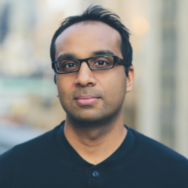
Sharad Goel: CodeX Affiliated Faculty; Assistant Professor of Management Science and Engineering and, by courtesy, of Sociology and of Computer Science, Stanford University.
“His primary area of research is computational social science, an emerging discipline at the intersection of computer science, statistics, and the social sciences. He has a particular interest in applying modern computational and statistical techniques to understand and improve public policy; his work has focused recently on stop-and-frisk, tests for racial bias, algorithmic fairness, swing voting, voter fraud, filter bubbles, and online privacy. He also helped start the Stanford Open Policing Project, a repository of data on over 100 million traffic stops across the United States.
Sharad studied at the University of Chicago (B.S. in mathematics) and at Cornell (M.S. in computer science; Ph.D. in applied mathematics). Before joining the Stanford faculty, he worked at Microsoft Research in New York City.”
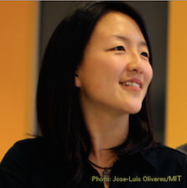
Been Kim: Research Scientist, Google Brain
“I am interested in designing high-performance machine learning methods that make sense to humans. Here is a short writeup about why I care. My current focus is building interpretability method for already-trained models (e.g., high performance neural networks). In particular, I believe the language of explanations should include higher-level, human-friendly concepts.
Previously, I built interpretable latent variable models (featured at Talking Machines, and MIT news) and creating structured Bayesian models of human decisions. I have applied these ideas to data from various domains: computer programming education, autism spectrum discorder data, recipes, disease data, 15 years of crime data from the city of Cambridge, human dialogue data from the AMI meeting corpus, and text-based chat data during disaster response. I graduated with a PhD from CSAIL, MIT. Read more here.
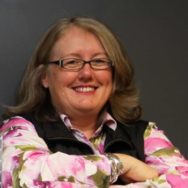
Mary-Anne Williams: CodeX Affiliated Faculty; Director, Innovation & Enterprise Research Laboratory, University of Technology Sydney
“Professor Mary-Anne Williams is Director of Disruptive Innovation at the University of Technology Sydney and listed on the Robohub’s top 25 women in robotics. She has a PhD in Computer Science and a Masters in Law. Mary-Anne is a Fellow at the Australian Academy of Technological Sciences and Engineering, and is a leading authority on Knowledge Representation and Reasoning with transdisciplinary strengths in AI, Social Robotics, Machine Learning, Robot Ethics, IP Law and Privacy Law.
She is Founder and Director of the Magic Lab at the University of Technology Sydney (UTS) and Guest Professor at the University of Science and Technology China. Mary-Anne chaired the Australian Research Council’s Excellence in Research for Australia Committee that undertook a national evaluation of research in Mathematics, Information and Computing Sciences in 2012. She is a non-executive director of the US-based Scientific Foundation KR Inc., was Conference Chair of the International Conference on Social Robotics in 2014, and serves on the Editorial Board for AAAI/MIT Press, the Information Systems Journal, Artificial Intelligence Journal, and the ACM Eugene L. Lawler Award Committee for Humanitarian Contributions within Computer Science and Informatics. Read more here.

April 5
Registration here.
Time: 9:00 a.m. – 5: 30 p.m. @ Stanford: Paul Brest Hall (555 Salvatierra Walk), Stanford, Calif. 94305 United States.
Google Map
MCLE Credit: 5.5 General Hours.
Also: “Legal Tech Founders: Then and Now.” April 4, 12:45 p.m. to 2:00 p.
Compiled by Monica Bay, CodeX Fellow.
Images: clipart.com