
Stanford’s David Sklansky on Special Prosecutor Jack Smith’s Case Against Trump
Last week, U.S. District Judge Tanya Chutkan allowed details of the charges in Special Prosecutor Jack Smith’s case against Donald Trump, the former president, to be made public. Trump was first indicted by Smith’s grand jury on August 1, 2023. In November of 2022, Attorney General Merrick Garland appointed Jack Smith as special prosecutor to investigate the actions of Trump to overturn the 2020 election. The appointment followed lengthy bi-partisan congressional investigations by both the Senate and House. This case has been delayed multiple times, first pending a lengthy Supreme Court review of presidential immunity and then after that ruling when the special prosecutor had to parse out charges and make a case for them going forward. Here, Stanford criminal law expert David Sklansky discusses the case and what might happen next.
Do you see new evidence in this landmark criminal case? What are the most important charges after the revisions?
The filing that Judge Chutkan released last week, in a redacted form, is the government’s explanation of the remaining charges in the case, and its argument that these charges are consistent with the Supreme Court’s ruling about presidential immunity. Special Counsel Smith had to discuss not just the charges but the evidence for those charges, because the Supreme Court said—in a particularly puzzling part of its decision—that when Trump is immune from prosecution for particular official activities, that doesn’t just mean that the government can’t criminalize those activities, it means that the government can’t even use that conduct as evidence that other, unofficial acts of the former president were criminal. So the government’s filing walks through all of the charges in the revised indictment, and discusses what kinds of evidence the government plans to introduce in support of those allegations.
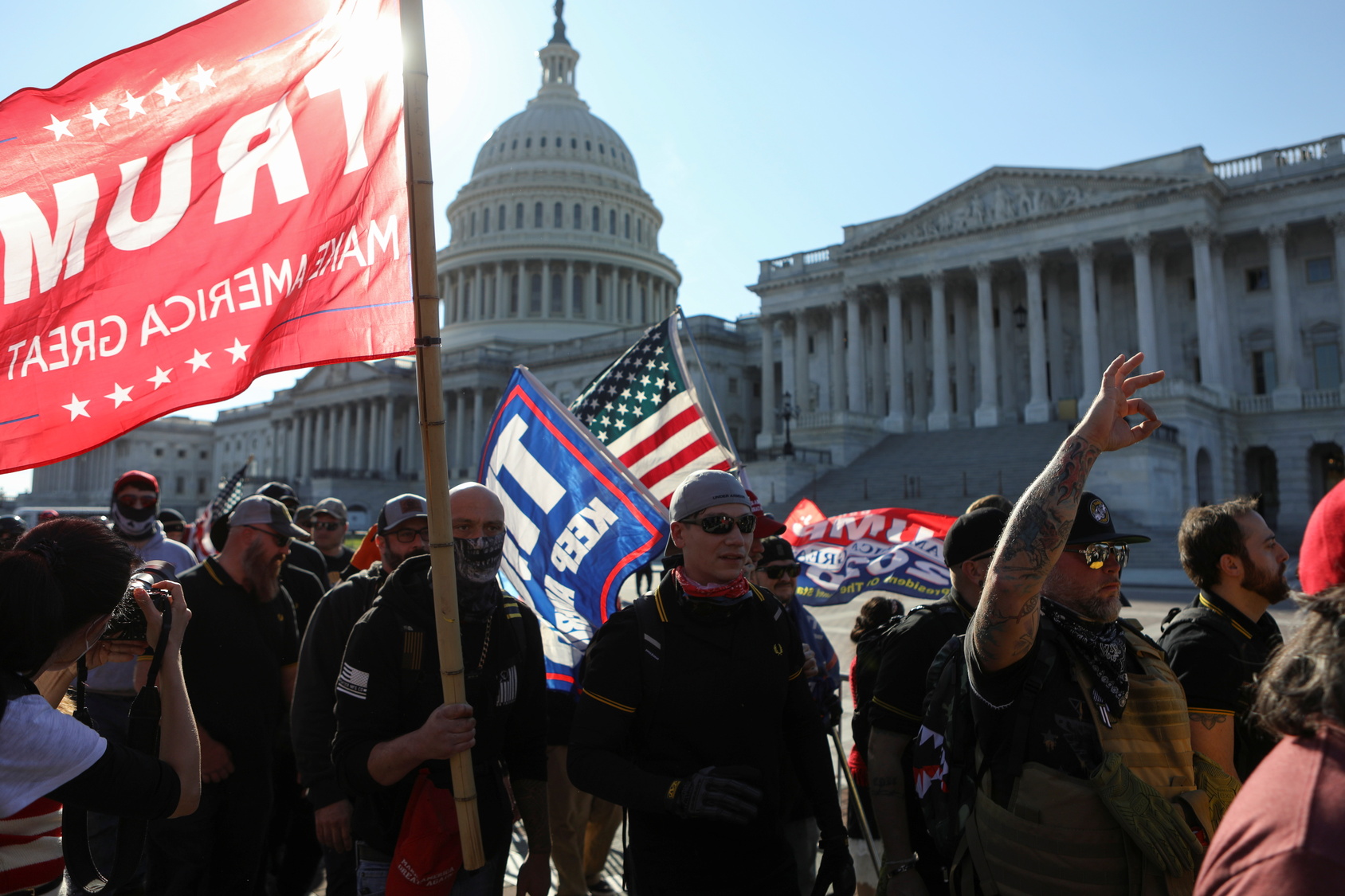
It’s a long filing, stretching 165 pages. The evidence it describes consists largely of lots of conversations and written communications between Trump, members of his inner circle like Rudy Giuliani, and the people they were trying to enlist in their efforts to overturn the election results, including state officials and Vice President Pence. Much of this evidence was already public, but some of it is new. There are some previously undisclosed remarks by Trump indicating that he didn’t care if he had really lost, some new evidence about information and advice that he received making it clear that the claims of widespread election fraud were unfounded, and some new evidence about his lack of concern for Pence’s physical safety during the January 6 assault on the Capitol, during which some of the rioters were chanting “Hang Mike Pence!” The new evidence would be shocking and explosive, except that it just confirms what the public record had already made clear.
The special counsel’s filing last week is significant not just because of the evidence it catalogs, but also because of what it suggests about the way that Smith and his team are thinking about the case. The indictment—both the original indictment, and the revised set of charges filed after the Supreme Court’s immunity decision—is all about fraud. It doesn’t charge Trump with insurrection, or with instigating the assault on the Capitol. Trump is charged with trying to take advantage of the January 6 riot, but not with provoking it. But the prosecutors’ filing makes clear that they intend to prove at trial that Trump did intentionally egg on the rioters.
Does Smith have strong evidence? Did the Supreme Court’s immunity decision weaken the prosecutor’s case?
Like any fraud case, this one will turn to a great extent on the defendant’s state of mind. The prosecutors need to prove not just that Trump said things that were false and other people say things that were false, but that he knew they were false. Proving fraudulent intent is always a challenge, especially with a defendant, like Trump, who seems adept at convincing himself of whatever is convenient for him to believe. But as someone who used to prosecute fraud cases, I’d say the evidence of Trump’s fraudulent intent—the evidence that he knew he was lying—is vastly stronger than in most of these cases. Fraud cases usually proceed, and often are successful, with significantly less evidence of fraudulent intent than Smith and his team have outlined in this case.
The allegations that the prosecutors dropped from their case in response to the Supreme Court’s immunity decision—the allegations about Trump’s dealings with the Department of Justice—were important, but they pertained to only one of? several different channels through which Trump is alleged to have sought fraudulently to overturn the election. The other channels involved Trump’s efforts to pressure state officials to decertify the vote, the creation of slates of fake electors, the repeated overtures to Vice President Pence, and the extraordinary events of January 6, 2021. Those other channels, all of which remain in the case at this point, are equally if not more important than the allegations that have been dropped.
But it remains to be seen whether the government will be forced to drop any other parts of its case because of the immunity ruling. It depends on whether the arguments that Smith and his team have made about the limited application of that ruling to this case are successful. So it is hard to say at this point how much the Supreme Court’s immunity ruling ultimately will undermine Special Counsel Smith’s case.
Trump’s legal team objected to unsealing the special counsel’s brief. Do you think Judge Chutkan was right to unseal it?
Yes, I do. There’s a strong presumption that criminal cases should be public, and there weren’t any good grounds for keeping this part of the case secret. Trump’s team suggested that it might unfairly influence the election to disclose the government’s evidence. But it’s not clear that the new disclosures in last week’s filing will change anyone’s opinion of Trump—the people who are likely to find any of the new evidence disqualifying for a presidential candidate are people who already were convinced Trump should never return to the White House. And if the new evidence were likely to sway voters, then keeping it secret would also be a decision with possible consequences for the election. So the best course was for Judge Chutkan was to put all that to one side, which is what she appears to have done.
The case was set to go to trial in March of this year, but it was it was delayed by months pending Supreme Court review of presidential immunity. The Supreme Court decided the case at the end of its term, on July 1, and Smith and his team filed a revised set of charges on August 27. How have Smith’s charges and the case against Trump changed since the Supreme Court’s review?
The Supreme Court said at the beginning of July that former presidents are immune from certain kinds of criminal prosecutions arising out of their actions while in office. They are absolutely immune from charges arising from exercises of their core constitutional duties—the functions that the Constitution gives exclusively to the president. With regard to official conduct that falls outside of the president’s core, exclusive responsibilities, former presidents are presumptively immune from criminal prosecution, but the presumption can be overcome by a showing that the prosecution won’t intrude on the proper functioning of the Executive Branch. For private conduct of a president—as opposed to the president’s official conduct—the Supreme Court said there’s no immunity at all.
The Supreme Court said that some of the conduct originally charged in this case fell within President Trump’s core constitutional duties, because they had to do with his oversight of the Department of Justice. The charges in question had to do with Trump’s alleged efforts to use the Department of Justice to promote fraudulent claims of voter fraud in the 2020 election. So the revised indictment that the special counsel filed in August dropped those allegations. But the other charges—which have to do with Trump’s dealings with then-Vice President Pence, his pressuring of state officials, his efforts to organize fake slates of electors, his propagation of false stories of election fraud, and his actions associated with the assault on the Capitol on January 6, 202—those charges have all remained intact. The special counsel argues that those charges either involve unofficial conduct by Trump, not official conduct, or they involve conduct for which the presumption of immunity has been rebutted, because a prosecution based on that conduct doesn’t intrude on the independence and authority of the Executive Branch.
Will Judge Chutkan now review Smith’s charges in light of the Court’s immunity decision? How do you expect this to play out? I understand that the judge set Oct. 17 as a deadline for Trump’s team to respond to the special counsel’s arguments and to challenge the indictment on immunity grounds. Smith’s team would then have until Oct. 29 to file its reply.
Yes, Trump’s lawyers will file a response to the government’s filing, undoubtedly arguing that much more if not all of the government’s case is invalidated by the Supreme Court’s immunity ruling. And then Judge Chutkan will hear arguments and make her decision.
Do you expect the Supreme Court to weigh in again?
It’s likely that Chutkan’s ruling will be appealed, first to the D.C. Circuit and then to the Supreme Court. It will be up the Supreme Court to decide whether to take the case up again to review how Judge Chutkan and the Court of Appeals have interpreted and applied its earlier ruling. Whether the Justices are likely to do so is hard to predict at this point, in part because we don’t know yet how Judge Chutkan and the D.C. Circuit will rule. And of course if Trump wins the election next month he will almost certainly terminate this entire case, along with the separate federal criminal case the special counsel has brought against him in Florida.
Some have called the case a political witch hunt. Can we back up and review why Jack Smith was appointed special prosecutor? Was it warranted after lengthy investigations by both the Senate (released its report in October, 2021) and the House, which published its final report in December, 2022 with recommendations for criminal charges for the former president. Smith was appointed just before public release of the House report.
Smith was appointed as special counsel precisely because of the political implications of this case, and the need to insulate the prosecution not just from? actual interference from the White House and President Biden’s top appointees at the Department of Justice, but from any appearance of impropriety, any suggestion that the case was being pursued for partisan reasons. Attorney General Merrick Garland made the right decision in appointing a special counsel. And despite Trump’s repeated suggestions that this case is being directed from the White House, there is no evidence of that—or of any interference in the case by the attorney general or anyone else at the Department of Justice.
Ironically, it’s precisely because the attorney general appointed a special counsel, rather than himself supervising the criminal investigations of Trump, that the criminal case against Trump in Florida, relating to Trump’s handing of classified documents after he left the White House, was thrown out. Judge Aileen Cannon dismissed that case in mid-July, reasoning that the attorney general didn’t have the authority to appoint a special counsel. That decision is now being appealed to the Eleventh Circuit.
Is there anything else you’d like to add?
People should read the filing! You can download it for free, and for a legal document it’s a fascinating read—I’d say even gripping. Regardless how you feel about Trump and this set of criminal charges, it’s important to understand the exact nature of those charges, and the nature of the evidence the prosecutors say they intend to introduce.
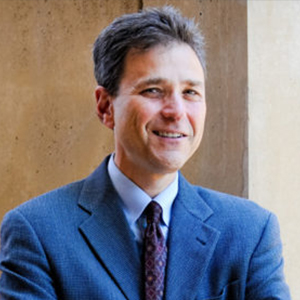
David Alan Sklansky is the Stanley Morrison Professor of Law and Faculty Co-Director of the Stanford Criminal Justice Center. His most recent book is “A Pattern of Violence: How the Law Classifies Crimes and What It Means for Justice” (Harvard University Press, 2021).