
The Brief: Raising the Standard for Using Force (February 2026)
Welcome to The Brief, our newsletter bringing you focused insights on race, law, policy, and technology from the Stanford Center for Racial Justice.
Raising the Standard for Using Force
When federal agents shot and killed Alex Pretti and Renée Good, both 37-year-old U.S. citizens, in Minneapolis last month, the Trump administration called it self-defense. In Los Angeles, federal agents have fired pepper balls from rooftops into crowds, employed chokeholds on people offering no resistance, and used vehicles to push back protesters. President Trump has said agents “haven’t gone far enough.” But when Border Patrol officials assure the public these actions are “well within” policy, how can communities evaluate those claims when the policies themselves are largely inaccessible?
Today we release a new policy brief, Raising the Standard for Using Force, which examines the troublingly low threshold established by the Supreme Court’s 1989 decision in Graham v. Connor and documents how nearly half of America’s largest police departments are already moving beyond it. Our research—the largest systematic analysis of American force regulations to date—shows that 48% of the 100 largest U.S. cities now require force to be “necessary” and “proportionate,” going well beyond the constitutional minimum of “objectively reasonable.” This past May, the Supreme Court unanimously reinforced this direction in Barnes v. Felix, holding that courts must consider the totality of circumstances when evaluating force—not just the final seconds before a shooting.
The brief accompanies our Model Use of Force Policy, which distills these emerging best practices into a coherent framework built on four core principles: officers must exhaust non-force options first, force must serve a lawful objective, it must be both necessary and proportionate, and evaluations must account for the totality of the circumstances.
These tools take on particular urgency as the Trump administration retreats from federal police oversight, having dismissed investigations in Minneapolis, Louisville, and other cities. With congressional policing reforms stalled, state and local policy has become the primary arena for change. To help communities, journalists, and policymakers navigate this landscape, we are also launching the Use of Force Policy Explorer—an interactive database covering 22 policy features across America’s 100 largest cities. Anyone can use it to find out whether their city restricts vehicle pursuits, requires de-escalation, or designates deadly force as a last resort.
Meaningful accountability starts with knowing the rules. These resources aim to close that gap.
Read the Policy Brief here.
Explore the Use of Force Policy Explorer.
Get the Model Use of Force Policy.
Upcoming Events
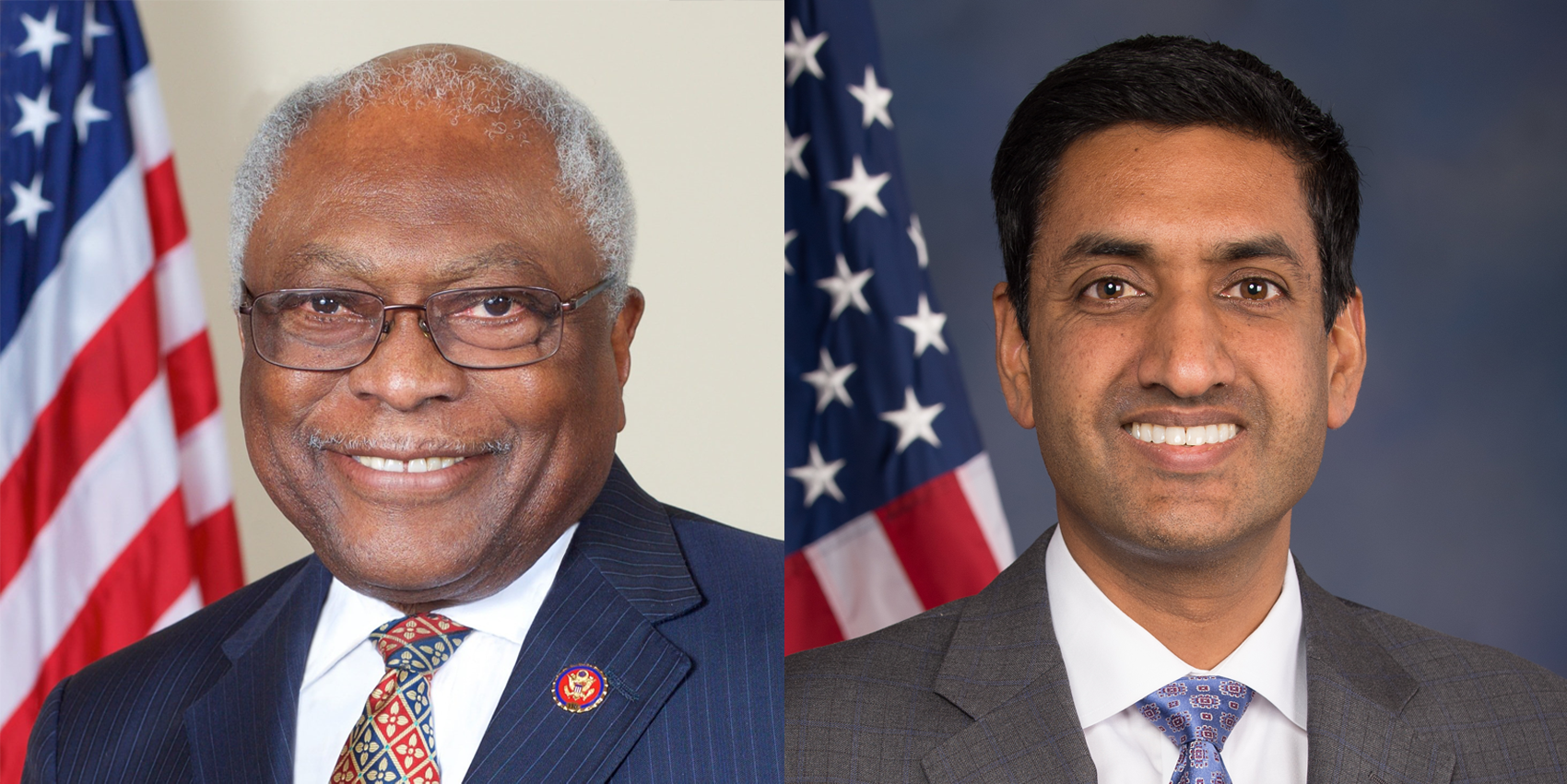
Rep. Jim Clyburn (D-S.C., 6th District) and Rep. Ro Khanna (D-Calif., 17th District)
Feb 18 The First Eight: A Fireside Chat with Congressman Jim Clyburn with Congressman Ro Khanna from 4:00-5:30 pm at Stanford Law School. RSVP here.
Mar 12–13 Antidiscrimination Law x AI Convening, co-sponsored by the Charles Hamilton Houston Institute for Race & Justice (Harvard Law School) and the Multiracial Democracy Project (George Washington Law School). Learn more here.
From the Stanford Center for Racial Justice
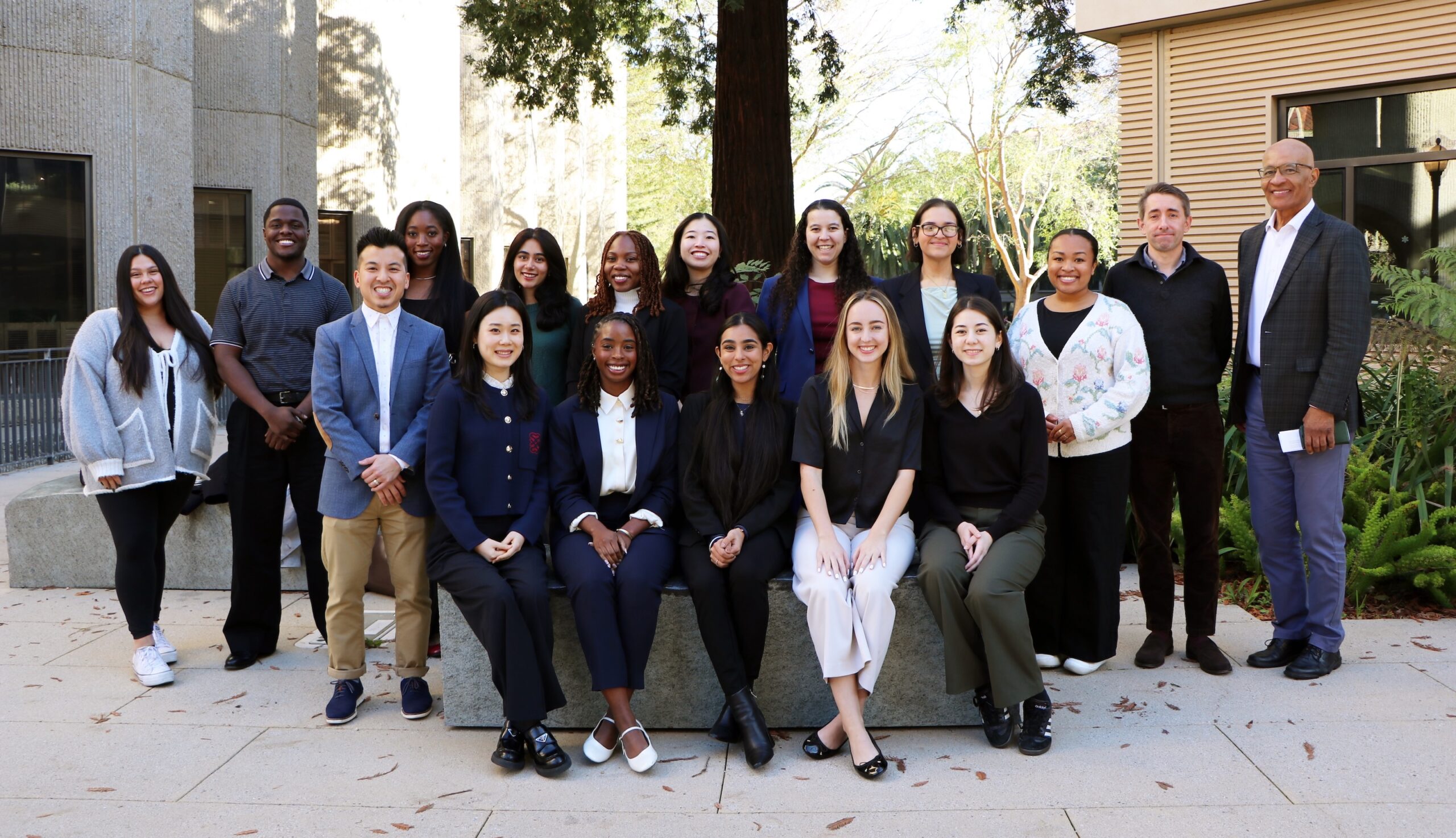
Our Team | Back Row: Dionna Rangel (Administrative Coordinator), Ayomide Oloyede (JD ’28), Asante Spencer (MA, GSE ’26), Reva Kale (JD ’28), Nini Tufon (JD ’28), Dayle Chung (JD ’27, Bremond Fellow), Erzsabet Gonzalez (JD ’28), Brionna Bolaños (JD ’27, Bremond Fellow), Nkemjika Emenike (JD ’28), Dan Sutton (Director, Justice & Safety), Rick Banks (Faculty Director). Front Row: Hoang Pham (Director, Education & Opportunity), Lauren Kim (JD ’28), Samantha Taylor (JD ’28), Tarina Ahuja (JD ’28), Lynne Dillman (MA, GSE ’26), Lily Hong (JD ’28).
The Center mourns the passing of Harry Bremond, the legendary Wilson Sonsini partner whose trailblazing career as one of the first Black lawyers between San Francisco and San José—and lifelong commitment to civil rights and mentorship—inspired the Bremond Fellowship that supports our student researchers. He was 91.
Center affiliate Jennifer Eberhardt was profiled by Time for her pioneering use of AI to analyze hundreds of hours of police body camera footage for language patterns that predict when routine traffic stops escalate. Her research at Stanford SPARQ identified a “linguistic signature” in escalated stops—officers beginning with orders rather than explanations—findings that could inform training to improve the more than 9 million police stops that occur each year.
The Center welcomed its 2025–26 intern cohort—11 Stanford Law School 1Ls and Graduate School of Education students who are already contributing to our police use-of-force policy research, education policy for schools serving vulnerable students, and analysis of AI, race, and the law.
Dan Sutton (with Rory Pulvino and J.J. Naddeo) published Hiding in Plain Sight: An Empirical Study of Prosecutorial Bias in AI Legal Analysis in the Columbia Science & Technology Law Review, finding that leading AI models exhibit a systematic prosecutorial default bias—recommending charges even when facts are thin or constitutional violations are clear.
Hoang Pham and Jordan Starck taught PSYCH 188: Practicum on Racial Bias and the Law, an innovative, interdisciplinary course that invites students to think critically and challenge beliefs about how race and bias operate within the legal system.
Subini Annamma and Hoang Pham, along with students Andrea Akinola (JD ’27) and Ev Gilbert (MA ’25), were invited to present their research on the Roses Talk Project at the 2025 American Educational Studies Association Annual Meeting. Their session focused on the unique research-practice partnership developed with the San José Unified School District, translating community-engaged research into policy impact at scale.
Rick Banks debated Wall Street Journal columnist Jason Riley on the resolution “Government should ban all DEI programs,” hosted by the Steamboat Institute in partnership with the University of Maryland’s Ed Snider Center for Enterprise and Markets. Banks argued the negative; Riley the affirmative. Watch the debate here.
With continued generous support from the Wilson Sonsini Foundation, our 2025–26 Bremond Fellows, Brionna Bolaños (JD ’27), and Dayle Chung (JD ’27), have conducted critical research for the Center, ranging from immigration enforcement and racial bias in the criminal legal system to K–12 censorship laws across the U.S.
“Even strong, clearly written, evidence-based policies won’t prevent every tragedy, but they’re essential for accountability. You can’t hold agencies accountable to standards that communities don’t understand. With federal oversight disappearing, local policy transparency isn’t optional—it’s the starting point for improving policing in America.”
Ralph Richard Banks and Dan Sutton, Stanford Center for Racial Justice
In USA Today, on the release of the Center’s Use of Force Policy Explorer and police use of force research.
FROM CHALLENGING PRECEDENT
The Supreme Court’s Shadow Docket, Signaling, and the Racial Politics of Immigration Enforcement
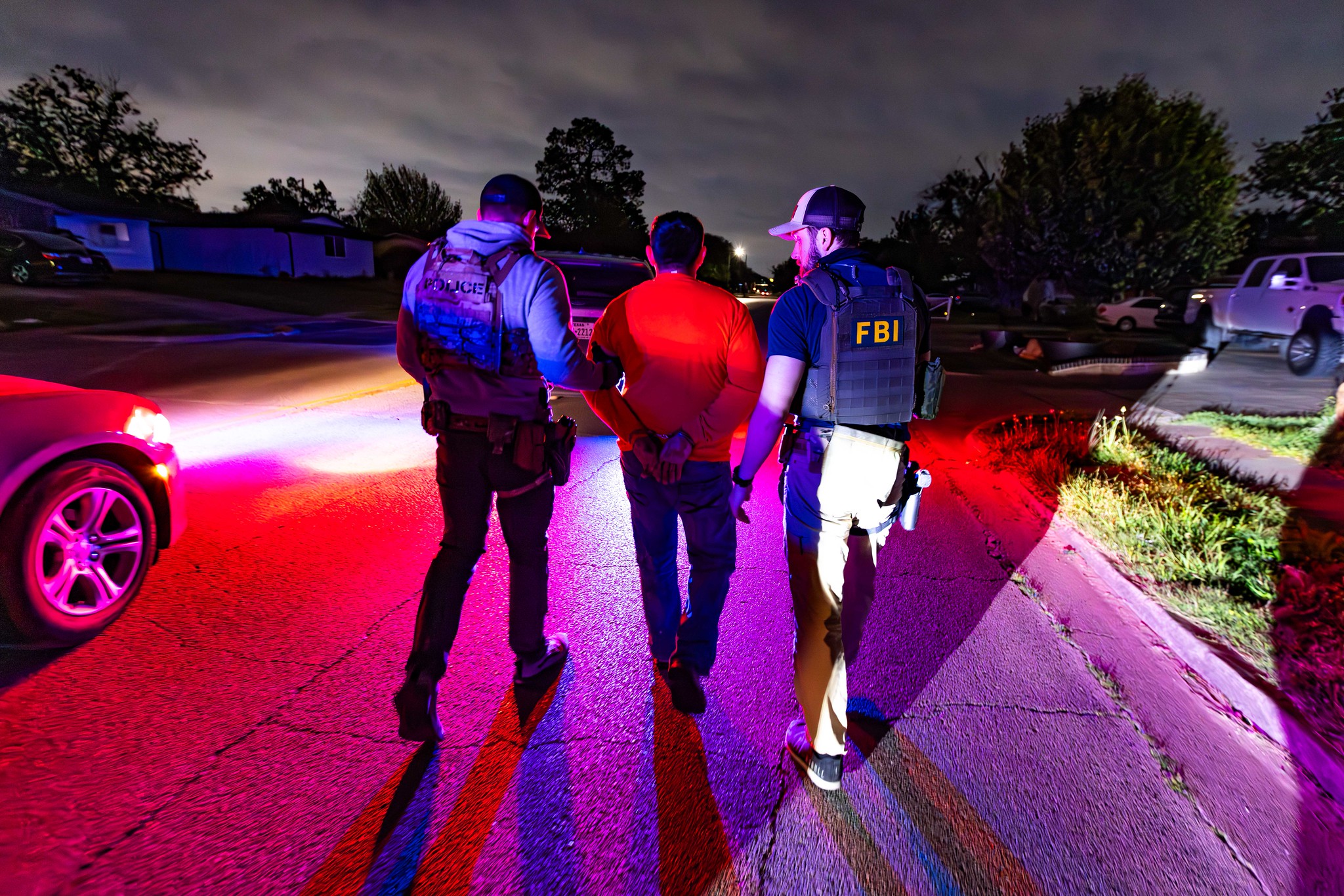
In the latest post on the Center’s Challenging Precedent blog, Bremond Fellow Brionna Bolaños examines how the Supreme Court’s shadow docket has become a powerful—and largely unchecked—tool in immigration enforcement. Through the end of 2025, the Trump administration filed 34 emergency applications, more than the combined totals of the Obama, Bush, and Biden administrations, with the Court ruling at least partially in the government’s favor in 80% of decided cases. Immigration cases dominated, accounting for more than a third of all decisions and more than half of the Court’s unreasoned rulings. In Noem v. Vasquez Perdomo, the Court stayed an injunction barring ICE from relying on appearance, language, and location in targeting raids—despite what Justice Sotomayor described as a near-total absence of concrete evidence from the government. Without written opinions explaining these decisions, the administration has adopted maximalist interpretations: DHS called the ruling a “major victory,” and officials declared they had received a “green light” from the Court to continue their enforcement tactics. Bolaños argues that this pattern—granting extraordinary relief without explanation—effectively transfers interpretive authority to the executive branch, with the most significant consequences falling on Black, Brown, and immigrant communities.
Read the full post.
Here’s what else we’re following.
FTC chairman warns law firms of liability over diversity programs: FTC Chairman Andrew Ferguson sent letters to more than 40 law firms warning of “serious concerns” about their participation in Diversity Lab’s certification program, characterizing the work as “potentially anticompetitive collusion” on DEI metrics. Bloomberg Law
AI-generated police report claims officer transformed into a frog: A Utah police department was forced to explain why an AI-generated report claimed an officer had shapeshifted into a frog—the software had picked up dialogue from Disney’s “The Princess and the Frog” playing in the background. Futurism
Trump administration drops appeal in school DEI funding lawsuit: The Trump administration abandoned its effort to withhold billions in education funding from schools that refused to certify they had no diversity and equity programs, following a federal ruling that found improper procedure and threats to educators’ free speech. The New York Times