Roses Talk: Elevating Student Voice in Policy & Practice 16

Roses Talk: Elevating Student Voice in Policy & Practice

Student voice is essential to education policymaking. Too often, those most impacted by inequality are excluded.

Efforts to elevate student voice in education decision-making have grown over the past decade—through state legislation, district governance structures, and school-based student groups. Leaders increasingly recognize that student perspectives are critical to improving outcomes amid persistent challenges in K–12 education. Yet existing student feedback mechanisms rarely capture the voices of students most impacted by education inequality—those whose experiences most clearly reveal where systems are failing.

The Roses Talk Project seeks to remedy this exclusion by deliberately elevating these students’ voices in education policymaking—translating their experiences into actionable, evidence-based recommendations for school and district leaders.

Through interviews and focus groups with marginalized students, our research-practice partnership model identifies persistent challenges faced by young people and ideas for policy change that could meaningfully improve their educational trajectories.

“We started brainstorming ideas of how Stanford could support San José Unified. And that led to this project.” —Jodi Lax, Associate Superintendent of Instruction, San José Unified School District

WATCH PROJECT VIDEO

Featured Publication


Roses Talk San José Unified: Rethinking Education Policy Through At-Promise Student Voices

February 2026 | Report

In partnership with the San José Unified School District and Gunderson High School, this project report outlines a set of ambitious yet feasible recommendations for school and district leaders designed to expand opportunity infrastructure across four key areas: (1) Post-Secondary Support; (2) Teaching and Learning; (3) Discipline, Relationships, and School Climate; and (4) Facilities and Athletics. Together, these recommendations aim to reduce longstanding disparities in student outcomes, strengthen trust between youth and adults, and create school environments where every student can thrive.

The Project


Coined by Tupac Shakur, the “rose that grew from concrete” is a metaphor for young people who often experience the most challenging environments but nonetheless show unmatched determination to overcome their circumstances. If these “roses” are given opportunities to talk, what would they tell us about what they need from school to succeed?

Law and Policy Lab

The Roses Talk Project launched in 2025 as a Stanford Law and Policy Lab (LAW 809X/EDUC 309X), partnering with the San José Unified School District and Gunderson High School. The course offers a unique opportunity for Stanford students to participate in community-engaged learning and research, apply technical skills and academic knowledge to real-world challenges, and contribute to positive educational outcomes for underserved students.

Project Convening

The Roses Talk Project Convening brings together stakeholders from across the education sector—including district and school leadership, Stanford faculty, staff and students, policymakers, civil society leaders, and community partners—for a day of reflection, dialogue, and collaboration aimed at improving outcomes for marginalized students. Attendees engage in a series of interactive panels highlighting key findings and recommendations from the project, providing critical feedback and working collectively to problem-solve.

Campus Visit

The Roses Talk Campus Visit was designed by Stanford students for research participants in the Roses Talk Project. This day-long event offers high school students and their families an opportunity to explore Stanford’s campus, engage in interactive workshops, and build connections with Stanford students committed to supporting their educational journeys. Workshops are responsive to findings from the research project and focus on practical tools for life after high school—ranging from resume-building and interview preparation to navigating post-graduation pathways and managing health and wellness.

Research Insights


As part of their coursework in the Law and Policy Lab, students author a series of independent blog posts that offer insight into their research experiences. These reflections not only document their learning but also contribute to an ongoing dialogue about education in the U.S., particularly by amplifying the voices of the young people they work with.

News & Media


Roses Talk Student Reflection: Moving from Education Research to Policy Change 3

New Research Brings High School Student Voices to the Forefront of Education Policy
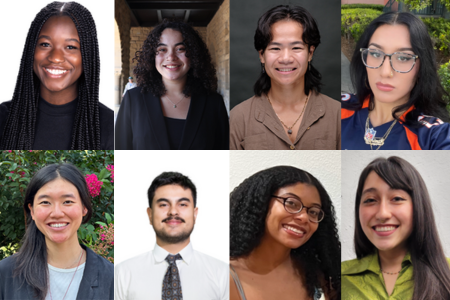
At Gunderson High School in South San José, California, a group of students gathered last year to talk about what school could be—if it worked better for them. One student […]
Stanford Center for Racial Justice Launches Policy Lab to Elevate the Voices of Marginalized Students in San José Unified 8

Stanford Center for Racial Justice Launches Policy Lab to Elevate the Voices of Marginalized Students in San José Unified

Despite decades of efforts to remediate racial disparities in education, low-income schools serving predominantly students of color continue to face significant challenges that perpetuate unequal educational outcomes. While no single […]
2025 Community Engagement Impact Projects - Stanford Center for Racial Justice

Stanford Center for Racial Justice Project Chosen as Stanford Community Engagement Project

(Originally published by the Stanford Office of Community Engagement on January 14, 2025.) Stanford supports community engagement hubs to make a difference through community impact projects that are co-created with non-profits […]

Research Team

  • Co-Lead
  • Senior Fellow and Faculty Lead in Education
  • Associate Professor, Graduate School of Education

  • Research Assistant
  • Graduate School of Education, MA `25

For partnership inquiries, please reach out to Hoang Pham at hgpham@law.stanford.edu.

This project is generously supported with funding from the Stanford Office of Community Engagement, the Haas Center for Public Service, and the Stanford Law and Policy Lab.