
Research to Policy Impact: Gunderson High School Comes to Stanford to Implement Roses Talk Recommendations
The Roses Talk Project is a Stanford Center for Racial Justice initiative that seeks to directly address persistent disparities in education by centering “at-promise” student voices in education policy and practice. Stanford students working on the project engage in rigorous qualitative research and policy development, crafting evidence-based recommendations that inform school and district decision-making.
In August, Gunderson High School opened the 2026–27 school year in an unusual way. Teachers, administrators, instructional associates, support staff, and custodians, along with San José Unified School District (SJUSD) leadership, spent a day at Stanford Law School. They came together around one theme: “Relationships First: Every Student, Every Adult, Every Day.”
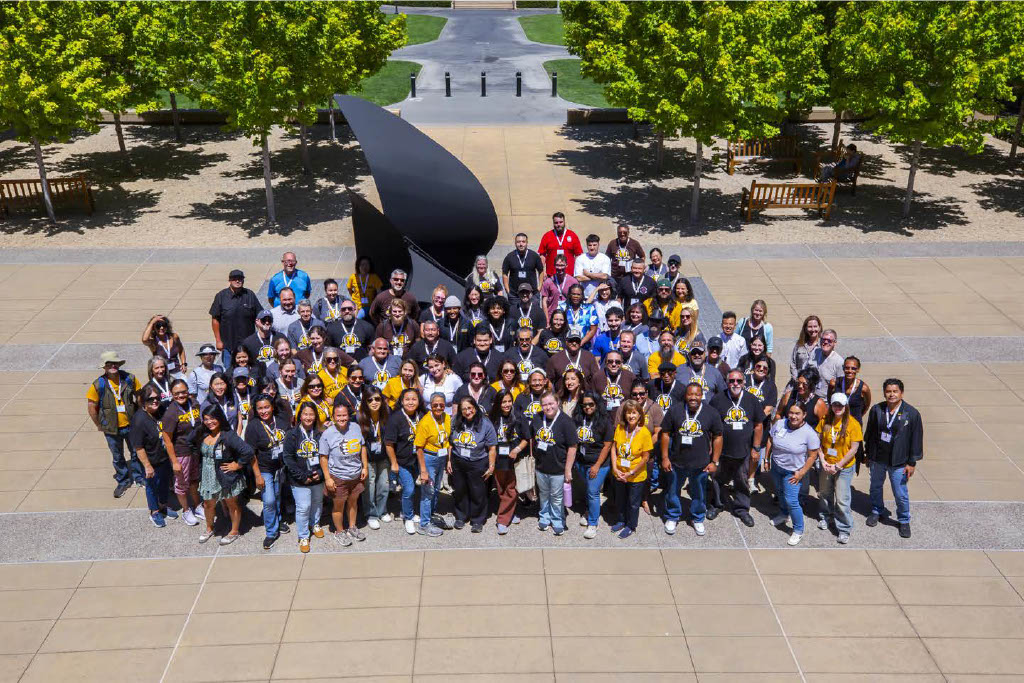
The retreat grew out of the Roses Talk Project, a partnership between the Stanford Center for Racial Justice and SJUSD. The project began in a Stanford Law School Policy Lab that asked marginalized students a direct question: What would make high school work better for you? Their voices shaped the Roses Talk San José Unified report, released in February 2026, and informed the district and school’s policy development work through “Stakeholder Workshops”—which included students, parents, teachers, staff, school administrators, and district leaders as well as the Center’s research team. Through a participatory governance, co-design process, these workshops led to the selection of creating a school-wide relationship-building strategy as one of the school’s initial and primary recommendations to implement.
The Retreat: Everyone in One Room
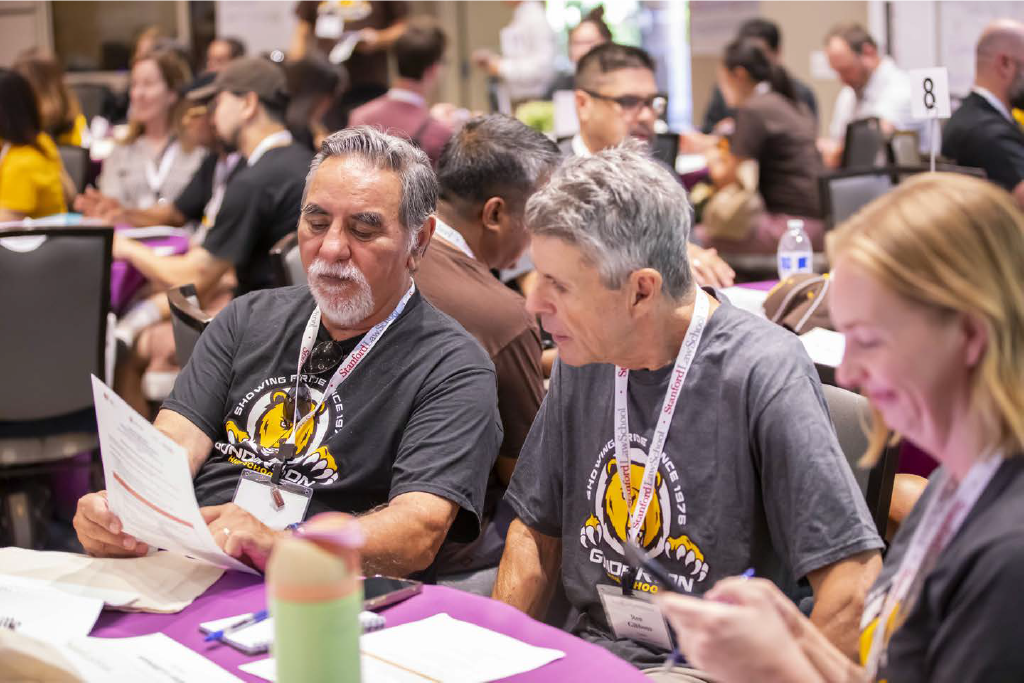
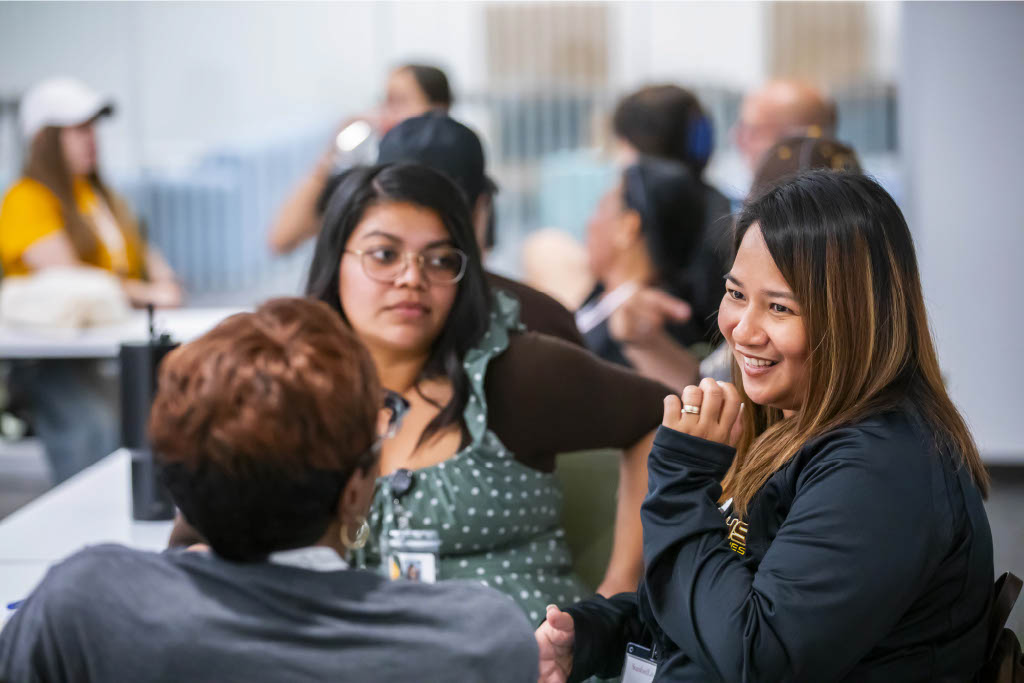
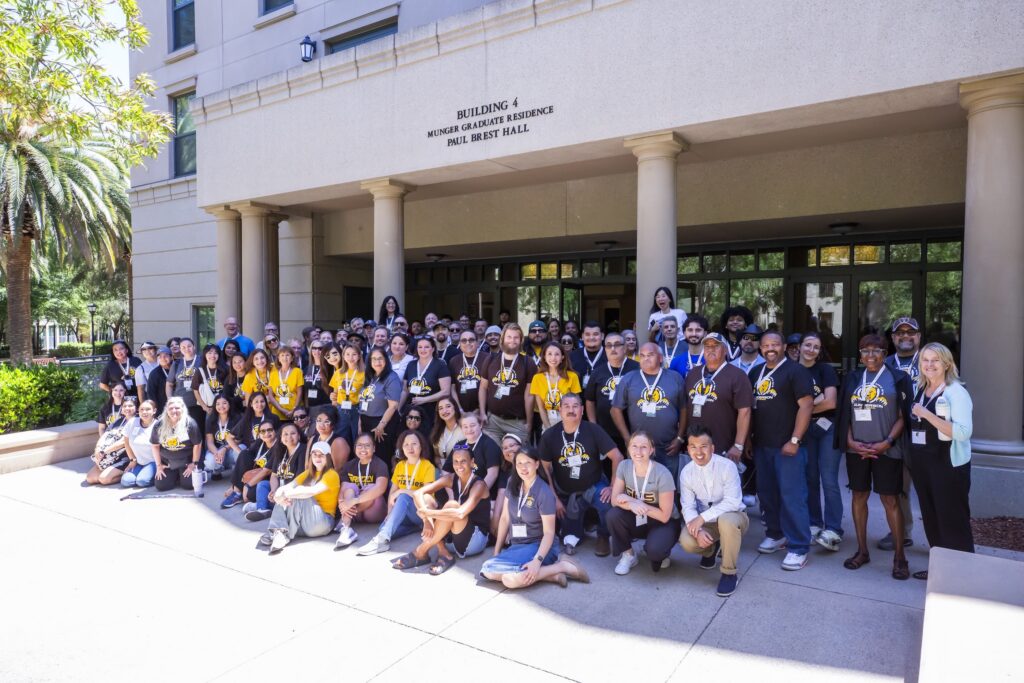
That recommendation became practice at the retreat. The morning started on a warm note as more than 100 attendees arrived and mingled in Paul Brest Hall. The room buzzed with palpable electricity as people chatted and smiled, catching up after the summer and clearly excited for the day ahead.
After opening remarks, the mood shifted, and it was time to get to work. Students had been clear about what they needed: to be heard, to be valued, and to be treated as people rather than as problems to manage. Their recommendation was relationship-building, and the retreat asked what it would take to put that into practice.
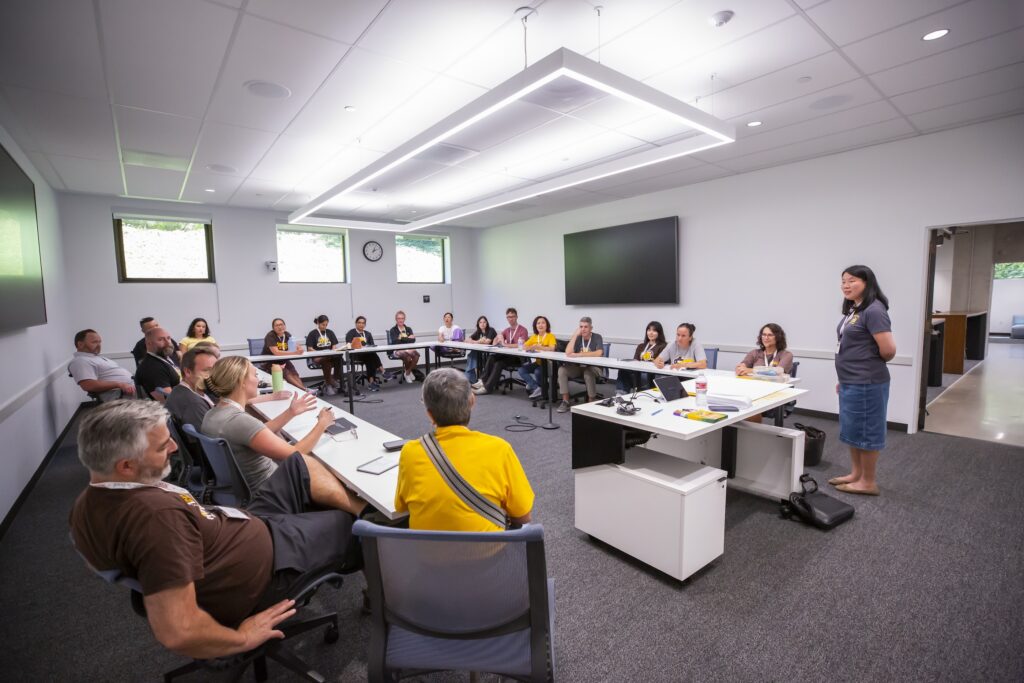
The answer began with the staff themselves. Rather than asking students to change, the day invited adults to look inward and examine their own practices and the assumptions behind them: how they listen, how they respond, and what they believe about the students in front of them. To do that, staff were split into 12 table groups and used chart paper to tackle two questions. The first question, “What qualities in an adult changed us?” took staff back to someone who made a difference in their own lives and what they valued in that person. The second, “How can we meet our students’ needs?” brought them to the present: What could they do, within their own control, to be that kind of adult for students today? Once each table had jotted down its answers, the charts went up around the room for a gallery walk. Participants read one another’s ideas and placed dot stickers on the ones they valued most. Across the 12 tables, the room recorded 106 ideas and placed about 270 dot votes.
What the Room Told Us
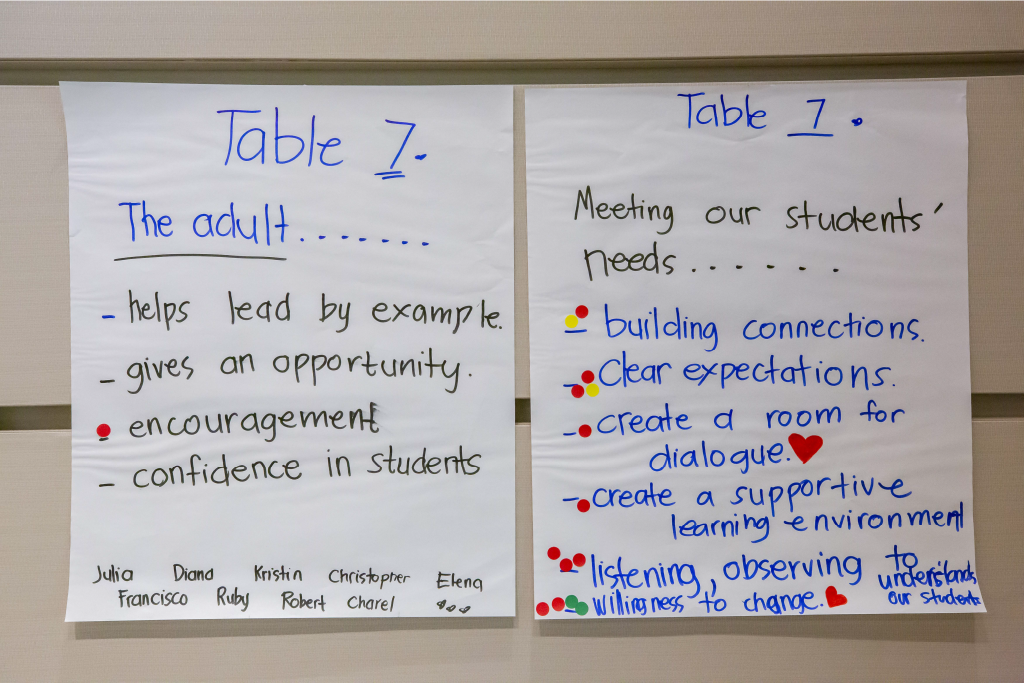
The votes pointed in a clear direction: staff’s strongest ideas echoed what students had been asking for. Staff reflected on their own experiences, named what mattered, and held up a mirror to their own practice. By drawing on their own experiences and challenging one another’s thinking, staff arrived at ideas they could act on. The most-voted idea across the whole room was about listening: “Students feel unheard. Follow the same process for every student: give them time to explain and be heard, rather than assuming we already know.”
Listening wasn’t only about big conversations. The second most-voted idea was simply “say hi and smile,” and staff pointed to other everyday gestures, like having “non-academic conversations with students” and sending “students to the principal’s office for good things.”
Those ideas echoed what the staff said about their own lives. Looking back on the adults who changed them, they gave the most votes to “provided a safe space,” followed by adults who recognized their strengths, believed in them, and treated them “like adults.”
Staff also turned the lens on themselves. When the team sorted the votes by theme, well-being and self-regulation came out on top, with ideas like “teacher self-care: make sure your cup is filled” and “adults need to regulate their emotions.” Alongside those, staff voted for clear boundaries, consistent expectations for every student, and a “post-intervention or restorative process after suspensions or incidents, to rebuild relationships.”
Together, these ideas offer a first road map to a question that has guided the project: How do we build a school culture of mutual trust and accountability? Listening and creating a safe space builds trust, while clear boundaries, consistent expectations, and a process for repairing harm builds accountability.
From there, staff began shaping school-wide strategies for building stronger relationships with students in the upcoming year, moving from reflection toward commitments.
What Comes Next
The retreat was an opening step. A planning committee of Gunderson and SJUSD stakeholders and the Center’s research team is now building a Gunderson-specific relationships framework, drawing on what adults in the building already do well and what students say they need. The goal is to produce a framework that adults and students share, built from the ideas staff put on chart paper and the voices students raised through the Roses Talk study. Ultimately, every student will be able to name a trusted adult, and the school will feel a stronger sense of belonging, trust, and student voice.
Photography by: Christine Baker
For the latest updates, follow the Stanford Center for Racial Justice on LinkedIn and Instagram and subscribe to our newsletter.