
From Readings to Reflection: An Overview on What It Means to Interview Youth
The Roses Talk Project is a Stanford Center for Racial Justice initiative that seeks to directly address persistent disparities in education by centering “at-promise” student voices in education policy and practice. Stanford students working on the project engage in rigorous qualitative research and policy development, crafting evidence-based recommendations that inform school and district decision-making. As part of their work, students author a series of independent blog posts that offer insight into their experiences. These reflections not only document their learning but also contribute to an ongoing dialogue about education in the U.S., particularly by amplifying the voices of the young people they work with.
Within the weeks leading up to the act of interviewing students from Gunderson High, our class learned key insights pertaining to education and qualitative research methods. Since we knew the research question we were investigating was on how at-promise students can shape school and district policies and practices to improve their educational outcomes, developing a nuanced understanding of both the students’ experiences and qualitative research approaches was key.
As our class discussed our readings at length, we discovered how to approach this community through intentional questions that focused on their identity and created opportunities for deeper follow-up questions. Irving Seidman’s Interviewing as Qualitative Research guide helped provide us with the framework behind the choice to interview as he reinforced our understanding that our purpose was not to simply answer our research question, but to understand their lived experiences. By understanding these experiences, we open up the opportunity to see issues through the lens of the affected community. With the Roses Talk Project, this matters more than ever as we are working with a group of youth who have faced the pedagogy of pathologization and the ramification of hyper-surveillance, hyper-labeling, and hyper-punishment—as explained in Dr. Subini Annamma’s book, Pedagogy of Pathologization. This framing allowed our class to better understand the perspective of the students and recognize the importance of asking questions that focus on both their achievements and strengths alongside the challenges they’ve encountered.
Furthermore, these ordeals that students at Gunderson High School have experienced validate the importance of designing a human-centric interview protocol, a key element that we focused on during our initial class sessions, spanning direct protocol editing sessions to mock interviews. This process familiarized us with the interview protocol and helped ground us in the mindset of interviewing. We edited to let the interview feel more conversational and provide the right amount of specificity for students, in accordance with Kakali Bhattacharya’s Fundamentals of Qualitative Research. There was a challenge in how structured the interview protocol felt, but we were able to develop our own interview style using the protocol as a guideline. The mock interviews helped us understand the impact of specific language utilized in interviewing, allowing us to workshop different approaches and conduct additional practice interviews.
However, these mock interviews did not replicate the real setting. It can be challenging to place ourselves in the shoes of the students as our feelings about our high school experiences are also shaped by our experiences in higher education. Going into our first interviews with the students at Gunderson, these were all things we kept in mind as we navigated our conversations with young people.
Reflections of an Educational Graduate Student | Avery Shippen
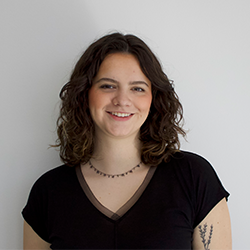
As a graduate student studying international education policy analysis, with a focus on participatory approaches for youth learning, I came into this experience with an understanding of the type of youth we would be interviewing. I have direct experience doing youth participatory action research and have worked directly with at-promise youth on developing application materials for college and to expand their understanding of what their future could entail. In my work, I interviewed over fifty students and learned that each student approaches interviewing in a different way based on their personality and motivations.
However, one aspect of my positionality that I reminded myself of constantly throughout the interview process was that my experiences do not define the outcome of these interviews. My work was limited to my hometown of Nashville, Tennessee, a community that has a different education system and set of challenges than San José. At Gunderson High, I was an outsider from the students’ perspective and so I worked on making the students feel comfortable during the process. I was intentional about my body language when interviewing two of the students by making eye contact while speaking with them and asking follow-up questions that focused on their strengths as well as their challenges.
The overall experience visiting Gunderson High for the first time was different than I imagined because of the unexpected memories that it triggered for me. The last time I was in a high school was when I was a student, and I found myself thinking back to the type of person I was back then. I think this retrospection was helpful because it helped me settle my nerves about interviewing the students and look at the high school in a new light.
During our visit, we went on a brief tour before diving into our interviews. While the tour helped develop my understanding of the school on an administrative level, our interviews allowed me to see how students view what is and isn’t working. The interviewees’ focus on the interview ranged from discussing the teachers that have made a real impact on them to how they think Gunderson should be renovated to showing excitement about the development of the career center in the library. While their topics varied, they both showed an authentic perspective of their school and how they think it should change to succeed in the future. The level of interest and attention to detail that these two students showed about Gunderson helped shape my understanding of the type of community that the school is developing, and how the administrators are contributing to this.
Student Voices for Change | Cara Lee
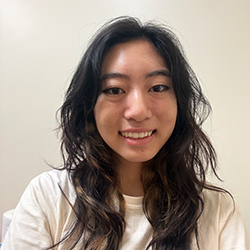
Two years ago, I was a high school student myself. While interviewing two students at Gunderson, I was reminded of my own time in the classroom, from the clustered desks to the artwork on the walls and even to the mirthful looks at the utterance of the words “six or seven” as we introduced ourselves to the class. I went to a private Catholic school in the Bay Area and while I remained aware of how my privilege and resources shaped my upbringing, I saw both similarities and differences in our school experiences.
I focused on asking open-ended questions (and many follow-ups) to avoid letting assumptions influence how I understood my interviewees’ answers. Even when follow-ups didn’t seem directly related to our research question, they often ended up indirectly answering a different question or gave students a chance to share what mattered to them. I think my memories of high school allowed me to relate to my interviewees; walking through the halls of Gunderson, I could put myself in the shoes of students to try and understand how they felt coming to school each day. The students shared how teachers who opened up about their own lives and emotions made them feel cared for and comfortable. I tried to do the same with my questions and responses to make the interview feel less clinical and more like a conversation.
The students I interviewed were incredibly driven to make a change in their community, from the differences they wanted to see in their school environment to their initiative in creating clubs to gather students with similar passions. What really stood out to me was how much the students care about their school. They noticed the small things their teachers did and talked about the skills they wanted to learn. They wanted to make their school a better place not just for themselves, but also for their classmates whose struggles they empathized with. I enjoyed talking to these students and learning about their hobbies, aspirations for the future, and desires for their educational experience.
Cara Lee (BS `29) is a sophomore from Menlo Park, California. She wants to study data science for its applications to social justice problems in different domains ranging from environmental policy to education. In the past, she has been an advisory board member at the California Association of Youth Courts and interned at the Disability Rights Legal Center. These experiences shaped her interest in education access, restorative justice, and how individual narratives contribute to widespread change. This summer, she conducted research in computational social science, tracking how people’s values have shifted across generations around the world. Outside of class, you can find her drawing/painting, spending time with her two dogs, reading, and playing Pokemon games. She is excited to be a part of the Stanford Center for Racial Justice’s policy practicum this year!
Avery Shippen (MA `27) is a master’s student from Nashville, TN, studying International Education Policy Analysis in the Graduate School of Education. Recently graduated from George Mason University with dual degrees in Conflict Analysis and Art and Visual Technology, her academic focus is on working with youth in conflict-affected communities and applying a design thinking approach to education. She has written research papers focusing on the experiences of international students in participatory pedagogies and how Appalachian students can thrive in place-based education. Professionally, she recently left her work with the federal government as a Visual Information Specialist to come to Stanford. She has also worked at George Mason University through various on-campus roles, the World Affairs Councils of America as a Global Education intern, and private and non-profit education companies. Avery is interested in going into the field of international educational programming and EdTech once she graduates. In her free time, she enjoys creating watercolors and collages, exploring the Stanford campus, and going to the ocean!
Follow the Stanford Center for Racial Justice on LinkedIn and Instagram and subscribe to our newsletter.