Affiliated Organizations

Futuristic glowing open book on circuit board symbolizing AI education, smart learning, e-knowledge

AI Learning Hub at Robert Crown Library

The Robert Crown Law Library plays a central role in Stanford Law’s AI Initiative by helping students, faculty, and staff navigate the rapidly evolving landscape of AI-powered legal research and practice tools. The library has developed a robust AI framework spanning research guidance, training, pedagogy, and tool development, including an expanding slate of workshops and practical resources. Its work is helping position Stanford as a national model for responsible, informed, and hands-on engagement with AI in legal education.
Technology,Leadership,Business,The Way Forward,Innovation,Futuristic,Artificial Intelligence,Graph,Chart,Planning,Strategy,Growth,Data,Finance,Economy,Businessman,Wealth,Analyzing,Statistician, ai, CEO

Arthur and Toni Rembe Rock Center for Corporate Governance

The Rock Center for Corporate Governance brings together Stanford Law School and Stanford Graduate School of Business to advance cutting-edge research and real-world dialogue on how companies are governed. As part of Stanford Law’s AI Initiative, the Rock Center helps shape conversations at the intersection of artificial intelligence, corporate leadership, and accountability, engaging scholars, regulators, investors, and business leaders in timely debates about how AI is transforming corporate decision-making and oversight.
Center for Internet and Society 14

Center for Internet and Society

The Center for Internet and Society (CIS) is a public interest technology law and policy program that examines how emerging technologies shape free speech, privacy, innovation, and democratic values. Through research, education, and public programming, CIS equips policymakers, scholars, and the public with rigorous analysis at the intersection of law, technology, and the public interest.
CodeX Insurance Initiative

CodeX

CodeX is a multidisciplinary research center that helped lay the groundwork for today’s AI-driven legal technologies, pioneering computational law research decades before AI entered the mainstream. Today, it advances legal technology through research on computational law, augmented legal practice, and legal analytics.
Stanford Center on the Legal Profession 35

Deborah L. Rhode Center on the Legal Profession

The Deborah L. Rhode Center on the Legal Profession brings together research, teaching, and policy work to make civil justice more equitable, accessible, and transparent. Its work focuses on access to justice and legal innovation, technology’s role in courts and legal practice, protecting consumers and clients in litigation, and reimagining legal education for the 21st century.
Crowd photo

Executive Education

Stanford Law School’s Executive Education programs convene senior leaders for intensive, practice-focused learning at the intersection of law, business, and policy. With growing programming on artificial intelligence and emerging technologies, these programs help executives, policymakers, and legal professionals understand how AI is reshaping governance, markets, and the practice of law.
Focused, serious medical scientists analyzing research scans on a computer, working late in the laboratory. Lab workers examine and talk about results from a checkup while working overtime

The Healthcare Ethical Assessment Lab for Artificial Intelligence (HEAL-AI)

HEAL-AI is an interdisciplinary Stanford-based team working to identify and address ethical risks raised by healthcare AI tools before they create harm for clinicians, patients, or institutions. HEAL conducts rapid ethical assessments of proposed AI use cases at Stanford Health Care and is developing scalable, open-source materials and training to help other organizations adopt responsible AI governance models.
Cyber Law And Digital Justice Concept With Gavel

Juelsgaard Intellectual Property and Innovation Clinic

The Juelsgaard Intellectual Property and Innovation Clinic gives students hands-on experience representing clients in cutting-edge technology and innovation matters, including AI regulation and accountability, online speech, privacy, antitrust, and cybersecurity. Students litigate, draft amicus briefs, participate in federal agency rulemakings, and develop policy guidance, with a focus on how technology law intersects with equity, innovation, and structural inequality.
Training in Legal Design and Tech

Legal Design Lab

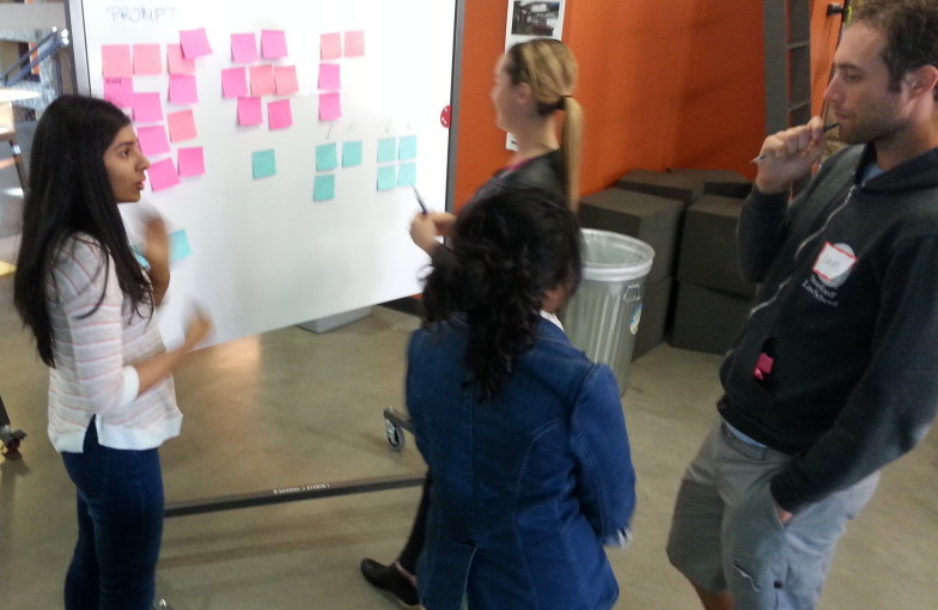
The Stanford Legal Design Lab is a research and development hub focused on building a more people-centered justice system through design, technology, and policy innovation. The Lab creates and studies new tools, services, and interventions—including AI-enabled systems—to help individuals navigate legal problems and to help courts and legal institutions deliver more accessible, equitable, and effective justice.
Abstract illustration - tech, 3D graphs.

Legal Innovation through Frontier Technology Lab (liftlab)

The Legal Innovation through Frontier Technology Lab (liftlab) develops and evaluates artificial intelligence and other frontier technologies to improve the quality, efficiency, and accessibility of legal services. Working in close collaboration with AI developers and the legal industry, liftlab conducts applied research and builds prototypes—from AI-driven contract drafting and legal simulations to tools that surface expertise and mitigate bias—to shape how AI is used in legal education and practice.
The Future of Algorithms: Navigating Legal, Social and Policy Challenges

Regulation, Evaluation, and Governance Lab

The Regulation, Evaluation, and Governance Lab (RegLab) partners with governments to design, evaluate, and scale data-driven policies and technologies that modernize public institutions. Drawing on advances in AI, machine learning, and causal inference, RegLab bridges academic research and real-world governance through high-impact collaborations with federal, state, and local agencies.
The California Racial Justice Act of 2020, Explained

Stanford Center for Racial Justice

The Stanford Center for Racial Justice is a research, law, and policy organization working to counter racial division and advance a more just society through work on education and opportunity, justice and safety, and race and society. The center combines legal analysis, empirical research, and data-driven tools to inform policy and practice.
stanford-program-in-law-science-technology-2

Stanford Program in Law, Science & Technology

The Stanford Program in Law, Science & Technology (LST) brings together faculty, students, alumni, and industry leaders to examine how science and emerging technologies—including AI—are reshaping law, policy, and society. Through coursework, research, and public engagement, LST prepares legal professionals and policymakers to navigate the technical, ethical, and regulatory challenges of rapidly advancing technologies.