
Bernadette Meyler
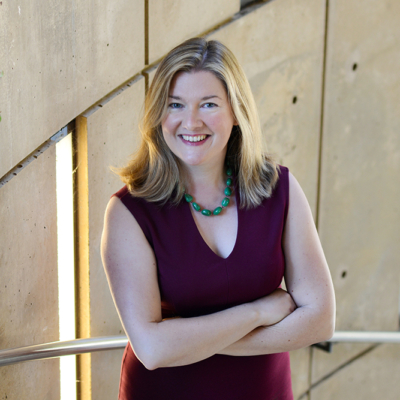
- Carl and Sheila Spaeth Professor of Law
- Professor, by courtesy, English
- Associate Dean for Research and Intellectual Life
- Room N365, Neukom Building
Expertise
- Comparative Law
- Constitutional History
- Constitutional Law
- Critical Theory
- Equal Protection
- Federalism
- Gender & Sexual Orientation Discrimination
- Jurisprudence
- Law & Humanities
- Law & Literature
- Law & Rhetoric
- Law & Society
- Legal History
- Legal Theory
- Protection of Civil Liberties
- Race & Ethnicity Discrimination
- Religious Freedom
- Separation of Powers
- Supreme Court
Biography
Bernadette Meyler, JD ’03, who served as a 2020 Gugggenheim Fellow in Constitutional Studies, is a scholar of British and American constitutional law and of law and the humanities. Her research and teaching bring together the sometimes surprisingly divided fields of legal history and law and literature. She also examines the long history of constitutionalism, reaching back into the English common law ancestry of the U.S. Constitution, and explores the implications of this history for how the Constitution should be understood today.
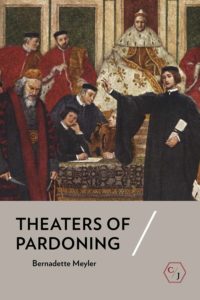
Professor Meyler’s books stem from these respective areas of her scholarship. Theaters of Pardoning (Cornell UP, 2019) demonstrates that the representation of pardoning tracks changing conceptions of sovereignty within the plays and politics of seventeenth-century England. In doing so, the book considers how the shared audiences of dramatic and historical tragicomedy—whether Kings, students at the Inns of Court, or potential jurors—brought concepts from the literary into the legal arena and back again. Her current project, Common Law Originalism, shifts to the American context, looking at the multiple eighteenth-century common law meanings—both colonial and English—of various constitutional terms and phrases. Based on this variety, as well as on the practices of common law interpretation with which members of the Founding generation were familiar, the book argues that we should, in large part, reject the pursuit of a singular and determinate original meaning; instead, it contends, we must embrace a more vigorous debate in the present over contested constitutional meanings. Professor Meyler is also the co-editor of several collections of essays in law and the humanities designed to introduce scholars and students to the field, including, with Elizabeth Anker, New Directions in Law and Literature (Oxford UP, 2017) and, with Simon Stern and Maksymilian Del Mar, The Oxford Handbook of Law and the Humanities (Oxford UP, 2020).
After receiving her BA in Literature with a focus on Classics at Harvard University, Professor Meyler obtained her JD from Stanford Law School and completed a PhD in English at UC, Irvine as a Mellon Fellow in Humanistic Studies and a Chancellor’s Fellow. Following law school, Professor Meyler clerked for the Hon. Robert A. Katzmann of the U.S. Court of Appeals for the Second Circuit.
Professor Meyler previously taught at Cornell University, where she served, most recently, as Professor of Law and English and Faculty Director of Research at the Cornell Law School. She also visited Princeton University as the inaugural Mellon/LAPA Fellow in Law and the Humanities.
Education
- BA, Harvard College
- JD, Stanford Law School, 2003
- PhD (English), University of California, Irvine
Related Organizations
Courses
- Constitutional Law
- Constitutional Law: The Fourteenth Amendment
- Directed Professional Writing
- Directed Research
- Discussion (1L): Executive Power: Theories, Origins, Critiques
- Discussion (1L): Legal Education in History: Conflicts Over Law and Its Teaching
- Law and Literature: Liberalism and Beyond
- Legal Studies Workshop
- Modern American Legal Thought
- Public Law Workshop
- Universities and the Constitution

News
Have Mercy
Harper's
Bernadette Meyler wrote an article, "Have Mercy", published by Harper's. https://harpers.org/archive/2026/02/have-mercy-presidential-pardon-bernadette-meyler/
Read More : Have MercyStanford Law School Announces New Cohort of Sallyanne Payton Fellows
DOJ claims it has the power to decide who gets Trump’s sweeping 2020 pardon
Trump announces termination of Biden pardons allegedly signed with autopen
Trump issued pardons to allies linked to the 2020 election efforts. What that means