
Narrative Strategies for Racial Justice
This course considers the intersection of narrative strategies and tactics with conventional modes of law reform as a means of furthering racial justice. In addition to classroom lecture and discussion on campus, this class will travel to Montgomery, Alabama, where students will visit the Legacy Museum and the National Memorial for Peace and Justice. Students will explore the role of narratives of racial difference in American history—from slavery and reconstruction to lynching and segregation–and how they supported the codification of racial hierarchy and enabled racial bigotry to often triumph over the rule of law and principles of equality. The course will consider the extent to which contemporary problems reflect these longstanding racial narratives.
The materials for the course will include judicial decisions and social science materials, as well as detailed reports on the Transatlantic Slave Trade, the Domestic Slave Trade, Reconstruction, Lynching, and Segregation. Readings will consider the extent to which the contemporary carceral state functions as an extension of the historical narratives of race. The African-American experience will provide a basis for thinking about the absence of transitional justice in the U.S., the tolerance of racial disparities and inequities across many disciplines and how narrative work, cultural sites, storytelling, accessible reports and data can be powerful tools for change. All students in the course will be required to read a book from a booklist provided by the instructors that relates to the course and write a 10-15 page reflection paper that addresses ideas from the course about narrative and social justice.
LAW 7131 | 3 Units | Grading: Law Mandatory P/R/F
Instructors
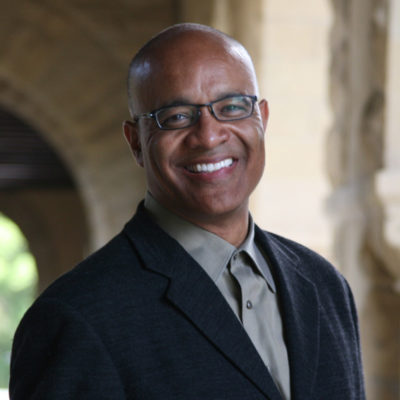
Ralph Richard Banks
Ralph Richard Banks (BA ’87, MA ’87) is the Jackson Eli Reynolds Professor of Law at Stanford Law School, the co-founder and Faculty Director of the Stanford Center for Racial Justice, and Professor, by courtesy, at the School of Education. A native of Cleveland, Ohio and a graduate of Stanford University and Harvard Law School (JD 1994), Banks has been a member of the Stanford faculty since 1998. Prior to joining the law school, he practiced law at O’Melveny & Myers, was the Reginald F. Lewis Fellow at Harvard Law School and clerked for a federal judge, the Honorable Barrington D. Parker, Jr. (then of the Southern District of New York). Professor Banks teaches and writes about family law, employment discrimination law and race and the law. He is the author of Is Marriage for White People? How the African American Marriage Decline Affects Everyone. At Stanford, he is affiliated with the Michelle R. Clayman Institute for Gender Research, the Center for Comparative Studies in Race and the Ethnicity, the Stanford Center for Opportunity Policy in Education and the Center for the Study of Poverty and Inequality. His writings have appeared in a wide range of popular and scholarly publications, including the Stanford Law Review, the Yale Law Journal, The New York Times and the Los Angeles Times. He has been interviewed and quoted by numerous print and broadcast media, including ABC News/Nightline, National Public Radio, The New York Times and the Los Angeles Times, among others.
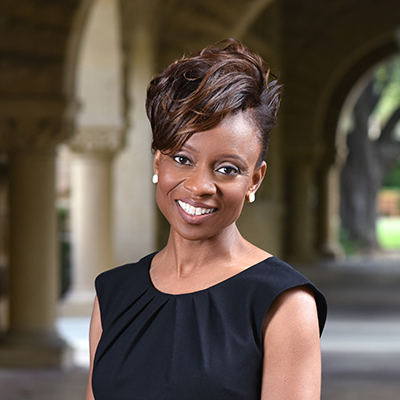
Jennifer Eberhardt
Jennifer Eberhardt is a Professor (by courtesy) of Law and Professor in the Department of Psychology. Professor Eberhardt’s primary research interests include stereotyping, prejudice, and stigma. Her most recent research examines the nature of racial categories. She focuses on the social psychological implications of viewing race as a natural category (rather than as a socially created category) and the link between racial stereotyping and racial categorization. She received her Ph.D. in Psychology from Harvard University in 1993.
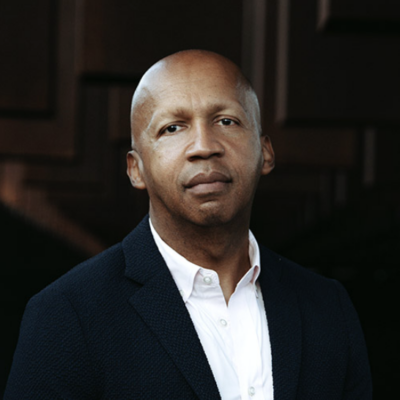
Bryan Stevenson
Bryan Stevenson is a widely acclaimed public interest lawyer who has dedicated his career to helping the poor, the incarcerated, and the condemned. Under his leadership, EJI has won major legal challenges eliminating excessive and unfair sentencing, exonerating innocent death row prisoners, confronting abuse of the incarcerated and the mentally ill, and aiding children prosecuted as adults. He led the creation of EJI’s highly acclaimed Legacy Sites, including the Legacy Museum, the National Memorial for Peace and Justice, and Freedom Monument Sculpture Park. Mr. Stevenson’s work has won him numerous awards, including over 50 honorary doctorates, the MacArthur Foundation “Genius” Prize, and the ABA Medal, the American Bar Association’s highest honor. He is a graduate of the Harvard Law School and the Harvard School of Government; the author of the award-winning New York Times bestseller, Just Mercy, which was adapted as a major motion picture; and the subject of the Emmy Award-winning HBO documentary True Justice. In 2023, he was awarded the National Humanities Medal by President Biden.