
Promise Mabilo, South African Clean Air Activist, Wins Stanford Bright Award
Promise Mabilo does not need an air-quality monitor to know when the pollution in Emalahleni is especially bad.
In the coal country of South Africa’s Mpumalanga Highveld, she can feel it when she breathes.
“Sometimes you feel like you are breathing burning tires,” said Mabilo, an environmental justice activist who has lived in the region for more than two decades. “You can feel that today is not right to be outside.”

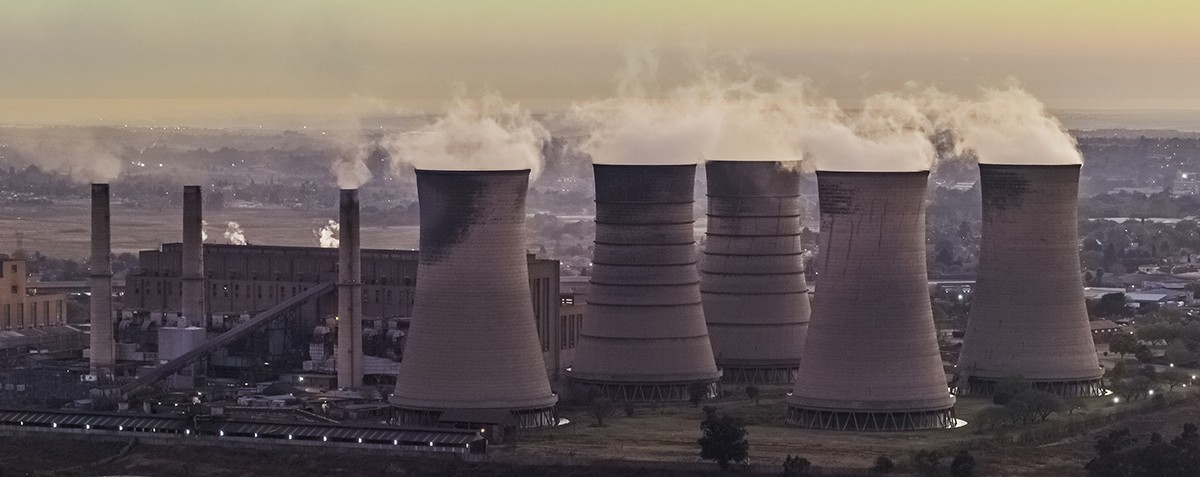
On the worst days, she said, the sky turns brown. The air, thick with emissions from the region’s coal-fired power plants and coal mines, burns the nose and throat. People struggle to breathe. The crisis became personal in 2008, when her young son began developing severe breathing problems and was later diagnosed with asthma.
That pushed Mabilo to mobilize neighbors and, in 2016, she established the Vukani Environmental Justice Movement in Action, a community-based organization in Emalahleni focused on combating fossil fuel pollution and protecting the health of people living in one of South Africa’s most polluted areas.
Her work eventually carried her into one of South Africa’s most important environmental rights cases.
In recognition of her leadership in South Africa’s “coal country,” Mabilo has been selected as the 2026 winner of Stanford University’s highest environmental prize, the Bright Award for Environmental Sustainability. The annual award was established by a gift from Stanford Law School alumnus and lifelong conservationist Raymond E. Bright, JD ’59, who passed away in 2011. The winner is selected annually from one of 10 rotating regions worldwide based on recommendations from regional consultants and a nominating committee composed of Stanford Law students and faculty members, including Barton H. Thompson, Jr., the Robert E. Paradise Professor in Natural Resources Law, senior fellow at the Woods Institute for the Environment, and a professor in the Doerr School of Sustainability.
Mabilo will receive the award at a September 28, 2026, ceremony at Stanford Law School.
“Promise Mabilo’s leadership in mobilizing her community and using legal action to address noxious pollution in her region is inspiring,” said George Triantis, JSD ’89, the Richard E. Lang Professor of Law and Dean of Stanford Law School. “We are honored to recognize her extraordinary contribution to environmental sustainability in South Africa.”
Unable to Stay Quiet
Mabilo moved to Emalahleni from a region about three hours away when she was a young mother in search of work. She had heard stories of neighbors who found opportunity there, bought cars, and built houses. But when she arrived, she found coal mines, power stations, and air that was making people sick.
At first, she did not understand why her son was struggling to breathe. Then environmental justice organizations began holding workshops in the community about air pollution and health.
“That made me very angry when I heard that we are living in a highly polluted area,” Mabilo said. “Will I just sit down knowing the truth that we are in a place that is killing our coming generation? If I’m quiet now, how many children are suffering like my son?”
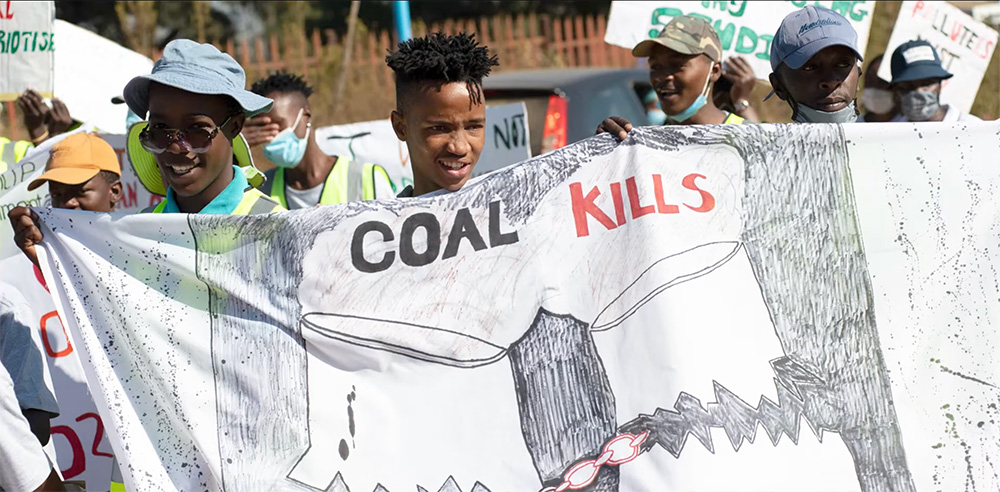
In 2016, she established Vukani Environmental Justice Movement in Action, known locally as VEM. Building the organization was not easy, she said. In a region economically dependent on coal, Mabilo and other activists were sometimes accused of being anti-development or opposed to progress.
But Mabilo rejects that framing.
“Our focus stands,” she said. “We want to see Emalahleni, and the Highveld Priority Area, as a good place for people to live.”
The Deadly Air case
Mabilo’s most significant contribution to environmental justice has been her central role in the landmark “Deadly Air” litigation, brought in 2019 by VEM and groundWork, a South African environmental justice organization, and litigated by the Centre for Environmental Rights. The case brought together community organizing, environmental advocacy, and public-interest law to challenge the government’s failure to act on toxic air pollution in the Mpumalanga Highveld.
The region had been declared a pollution hotspot in 2007, and the government adopted an air quality management plan intended to clean up the air. But residents and advocates argued that the government had failed to implement and enforce the plan.
The litigants made the case that the government’s failure to act violated Section 24 of South Africa’s Constitution, which guarantees the right to an environment that is not harmful to health or well being. In 2022, the Pretoria High Court agreed, finding that the government’s failure to regulate air quality in the Highveld was unconstitutional and ordered the government to adopt regulations to implement the air quality management plan.
In April 2025, the Supreme Court of Appeal dismissed the minister’s appeal, reinforcing that the government had a legal duty to issue regulations once they became necessary to implement and enforce the Highveld Plan.
Palesa Madi, Deputy Director at the Centre for Environmental Rights, which represented VEM and groundWork in the litigation, said the case is significant because it was ruled that the air pollution in the Highveld was a violation of the constitutional right to an environment that is not harmful to one’s health and wellbeing.
“The problem,” she said, “is implementation.”
A Victory Waiting to be Realized
“We are still really far from the outcomes of the judgment,” Mabilo said. “There is nothing practical on the ground that shows they mean to reduce the emissions that are killing our people within the Highveld.”
She wants to see more air monitoring stations, more training for local residents, mobile clinics to monitor people’s health, and stronger enforcement against polluters. Instead, she said, the air often feels worse than before.
But Mabilo says she is sustained by the possibility of change in a community that has endured years of pollution and neglect.
“A good day for me is to do something for my community,” she said. “I invested a lot in seeing change. I really want to see one win in my community.”
About Stanford Law School
Stanford Law School is one of the world’s leading institutions for legal scholarship and education. Its alumni are among the most influential decision makers in law, politics, business, and high technology. Faculty members argue before the Supreme Court, testify before Congress, produce outstanding legal scholarship and empirical analysis, and contribute regularly to the nation’s press as legal and policy experts. Stanford Law School has established a model for legal education that provides rigorous interdisciplinary training, hands-on experience, global perspective and a focus on public service.