
The Bright Award
The Bright Award was created by a gift from Raymond E. Bright, Jr., JD ’59 in 2007 on behalf of his late wife, Marcelle, and himself. Mr. Bright died in 2011. Under the terms of his gift, the Bright Award is given annually to an “individual who has made significant contributions in the environmental preservation and sustainability area” and is awarded to an individual from one of ten rotating regions.
The nomination committee is led by Barton H. Thompson, Jr., Robert E. Paradise Professor in Natural Resources Law, Stanford Law School, and former Perry L. McCarty Director & Senior Fellow, Stanford Woods Institute for the Environment. The nomination committee is comprised of Stanford Law School faculty members, law students and others on campus, with assistance from consultants focused on designated regions of the world, and will recommend potential candidates each year. The Dean of Stanford Law School will select the final award recipient. An Advisory Committee, consisting of Shay Bright, George Bright, and Alan Markle, helps oversee the Bright Award and also provides guidance in the selection of the recipient. The award winner delivers a public lecture at Stanford University. 2013 was the inaugural year of the award.
2026 Bright Award Winner
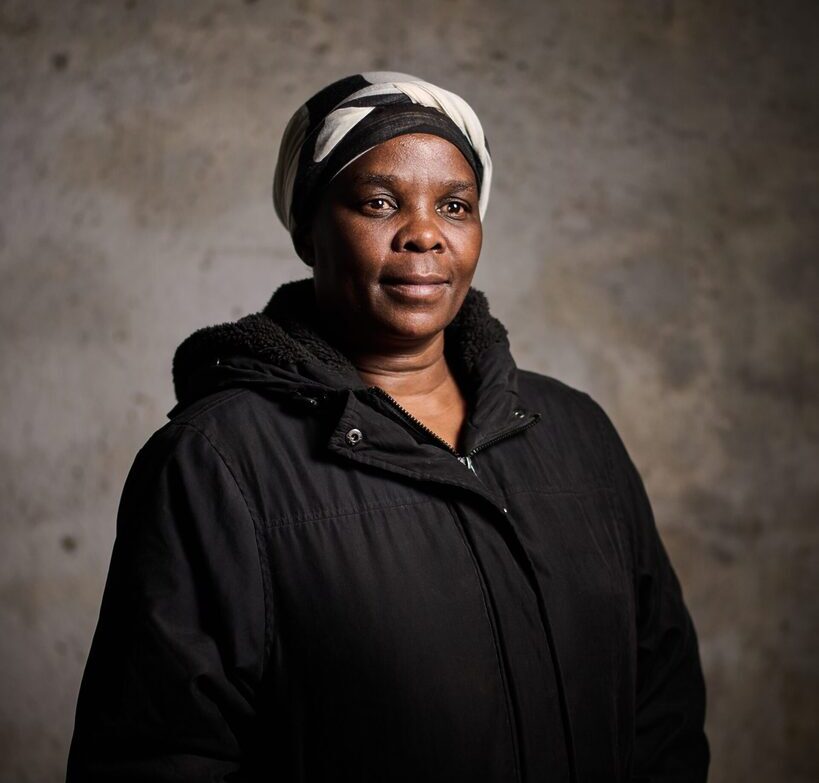
Promise Mabilo
Founder of the Vukani Environmental Justice Movement in Action
In recognition of her leadership in Emalahleni, South Africa’s “coal country,” Mabilo was selected as the 2026 winner of Stanford University’s Bright Award for Environmental Sustainability.
“Sometimes you feel like you are breathing burning tires,” said Mabilo, an environmental justice activist who has lived in the region for more than two decades.
On the worst days, she said, the sky turns brown. The air, thick with emissions from the region’s coal-fired power plants and coal mines, burns the nose and throat. People struggle to breathe. The crisis became personal in 2008, when her young son began developing severe breathing problems and was later diagnosed with asthma.
That pushed Mabilo to mobilize neighbors and, in 2016, she established the Vukani Environmental Justice Movement in Action, a community-based organization in Emalahleni focused on combating fossil fuel pollution and protecting the health of people living in one of South Africa’s most polluted areas.
Her work eventually carried her into one of South Africa’s most important environmental rights cases.
Learn More About Promise Mabilio

Previous Bright Award Winners
The Stanford Bright Award Celebrates 10 Years

The Bright Idea Podcast
The Bright Idea is a Stanford Law School podcast that highlights some of the most promising and inspirational work around the world in sustainability and conservation. Professor Buzz Thompson begins this series by talking to some of the past winners of Stanford Law School’s Bright Award. The Bright Award is an annual environmental award given to individuals who have dedicated their careers to improving sustainability and conservation. It is the only award like it in the world, and it is the highest environmental prize given by Stanford University. Stanford Law School Alumnus, Ray Bright, established the Bright Award with the goal of recognizing the winners’ prior sustainability work and supporting and extending that work into the future.

Nomination Criteria
- The primary criterion of the Bright Award is the contribution that the individual has made to environmental preservation and global sustainability.
- The emphasis of the award is on environmental sustainability. Although the work of the award recipient can address broad issues of sustainability (including economic and social sustainability), the work must also speak to the importance of environmental preservation as part of overall sustainability.
- Although the primary criterion speaks of “global sustainability,” the work of the award recipient can focus on local or regional issues; the recipient need not have worked at the global level. However, it is important that the work of the recipient provide a model for addressing, or otherwise speak to, issues of global importance.
- The recipient of the award need not be broadly known for his or her work. Indeed, the selection committee encourages the nomination of “hidden heroes” of environmental sustainability.
- Ideally, the publicity and funding that will accompany the Bright Award will help the recipient to continue and expand his or her work on behalf of environmental preservation and sustainability. As a result, we have a preference that the recipient be an individual who is still actively engaged in the pursuit of environmental preservation and sustainability and whose work therefore is likely to benefit from receipt of the award. This is merely a preference, and not a requirement, however.
- The 2026 award winner must come from Africa.
Note: Do not use this form to submit High Risk Data.
2026 Bright Award Nomination
The Bright Award for Environmental Sustainability recognizes an individual who has made a significant contribution to environmental preservation and global sustainability. For 2026, the nominees must come from Africa.
Please use the form below to submit a nominee for the Bright Award.
* indicates required fields