
Stanford Law Students Partner with Computer Science and Business Students at Startup Boot Camp To Address Sustainable Development
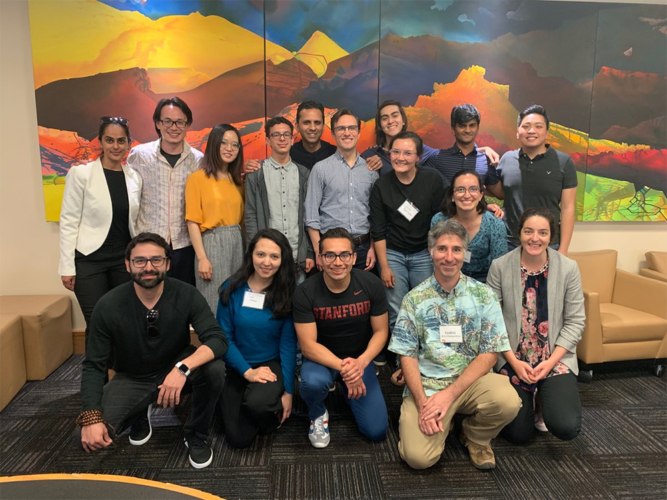
In May, CodeX — the Stanford Center for Legal Informatics and CS+Social Good, a Stanford student organization that connects technologists to leverage technology for social good, hosted a Startup Boot Camp at Stanford Law School focused on ethical and sustainable development. The boot camp brought together a diverse mix of Stanford students from the law school, computer science department, and business school to create startup ideas that advance the United Nations’ Sustainable Development Goals (SDGs). The boot camp was organized by CodeX Fellows Jay Mandal and Jameson Dempsey.
“It is not every day that you get the task of saving the world,” said Laura Galindo-Romero, Stanford Law JSM student, from team E-Doc+. “The experience was for me a blend of exploring my entrepreneurial spirit, my legal reasoning and my curiosity for learning and co-working with other incredible individuals from different disciplines and ages to tackle a global problem.”
A Focus on Cross-disciplinary Learning
The 1.5-day, intensive boot camp “was designed to teach students essential skills related to product development, cross-disciplinary teamwork, consumer protection, and startup pitching, while applying those skills to address some of the most pressing challenges that humanity faces: access to justice, climate justice, education, and health & wellness,” said Dempsey.

The camp began with a teaching session where students learned product ideation techniques to start developing startup ideas that address the UN SDGs. During the second part of the boot camp, the students returned for a high-intensity day of product design, rapid prototyping, and funding pitch preparation, concluding with presentations by four student startup teams to Silicon Valley-based venture capitalists and social impact experts.
“Our class ethos was ‘learn by doing’ so we reduced lecture time and immersed students in a startup environment,” said Mandal. “As a result, each team was forced to roll up their sleeves, use the startup tools we provided them, and jump right on in to build world-changing startup ideas and product prototypes in just over a day.”
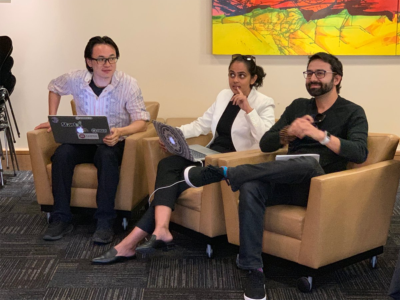
After a lunchtime talk from CodeX Executive Director Roland Vogl, the boot camp welcomed social impact and tech industry veterans to coach the students in preparation for their product pitches. Coaches included Niamh Hughes, Senior Director of Communications for Shutterstock; Yusuf Safdari, a longtime Bay Area startup attorney and general counsel; Kate Didech, Director of Public Sector Innovation at Symbium; and Jorge Jimenez, a fellow at Stanford’s Legal Design Lab.
After coaching concluded, the students pitched four ideas to a panel of venture capital judges, including Tony Lai of legal.io, Shruti Nagarajan of Illumen Capital, and Saad Kahn of Uprising:
- Access to Justice: Nairea. Nairea is a platform to help small businesses adopt corporate governance best practices in order to prepare for microfinancing. The team included Naina Sharma and Aurea Maria Fuentes Morales, both LLM students at Stanford Law School.
- Climate Justice: Climate Coin. Climate Coin rewards individuals for investing in climate-saving projects, using machine learning and computer vision to track project success. The team included David Dao (CS PhD), Jasmine Yushi Shao (SLS JD), and Jack Cai (Stanford MSx GSB).
- Education: ThinkPod. ThinkPod is a MMS-based podcasting service that matches students in developing countries with social impact educational challenges. The team included Jillian Meibusch (SLS LLM), Fernando Juarez Hernandez (SLS LLM), Sasankh Munukutla (CS).
- Health & Wellness: E-Doc+. E-Doc+ is a mobile platform designed to streamline the triage process in under-resourced, over-burdened hospitals in developing markets. The team included Laura Galindo-Romero (SLS JSM), Diva Sharma (CS), and Mustafa Khan (Symbolic Systems, CS).
After difficult deliberation, the judges selected Climate Coin as the best prototype and E-Doc+ as the best pitch and best business.
“We were thrilled to see such an enthusiastic response from students across campus. Their energy, creativity, and hard work were inspiring and demonstrate the power of cross-disciplinary collaboration and problem-solving,” said Dempsey.
Mandal and Dempsey are already in discussions with universities around the world about reprising the Startup Boot Camp for Ethical and Sustainable Development.
“More than a challenge, it was a unique opportunity to have hands-on experience with what it means to start a startup and test ideas by the minute,” said Galindo-Romero.