
Stanford Space Law Society
The Stanford Space Law Society (SSLS) raises awareness and encourages an interest in outer space issues, with a particular emphasis on the intersection between outer space and the law. SSLS fosters a collaborative, interdisciplinary dialogue and community through lectures, discussions, reading groups, and other events while providing students with information about careers in the outer space industry.
SSLS Blog: Space Law & Policy Perspectives
Governing Orbits: Report on Collision Prevention and Liability in Earth Orbit
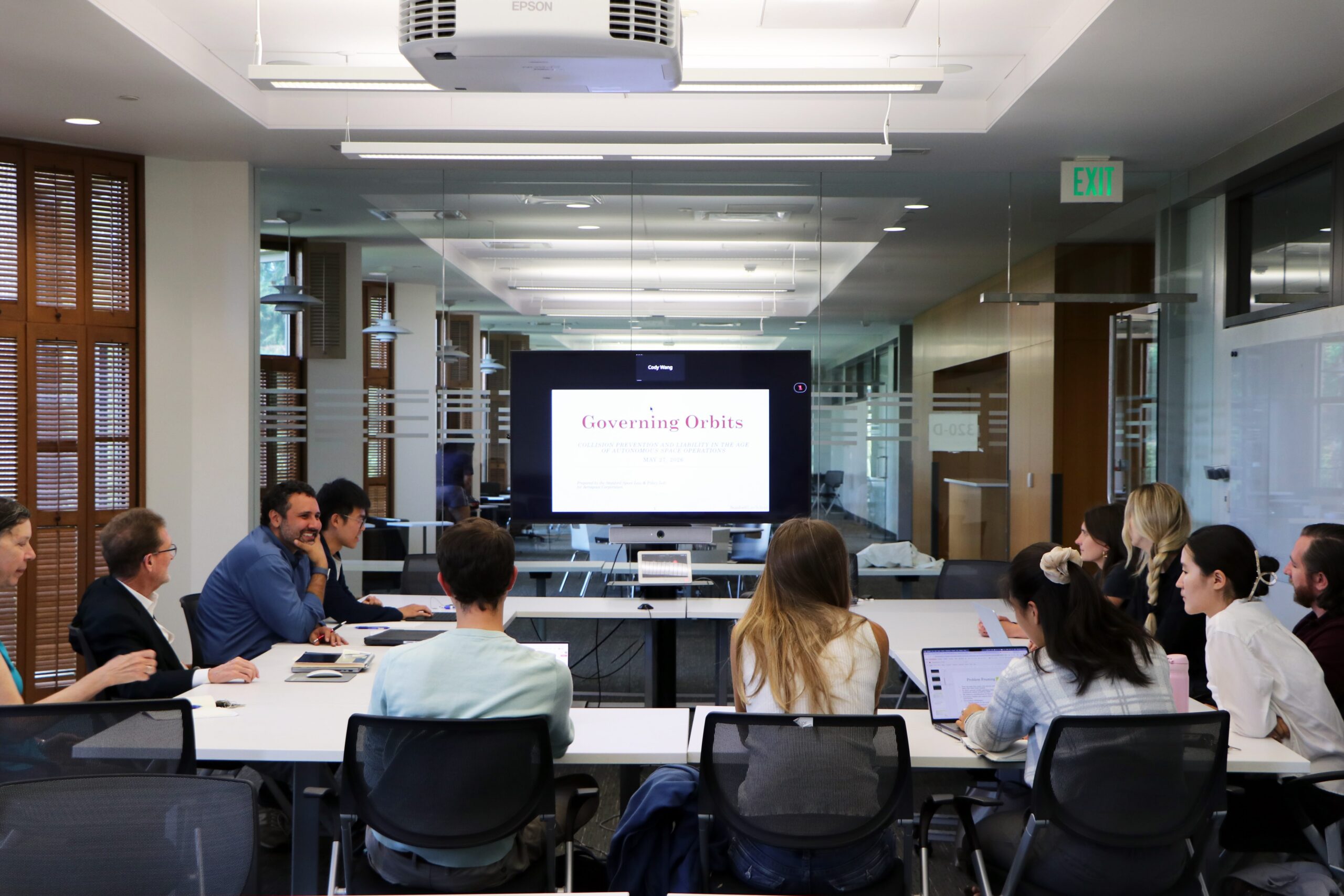
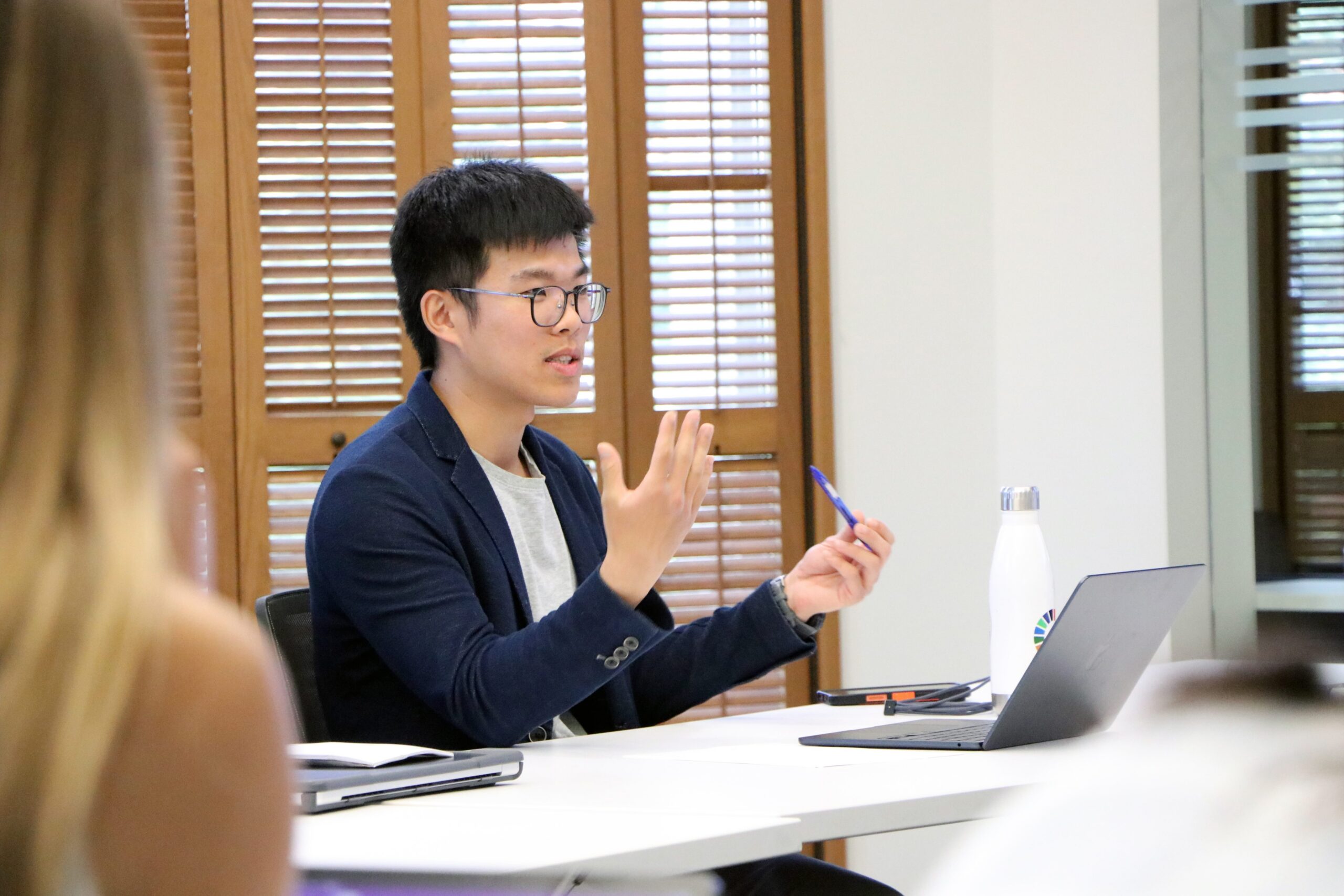
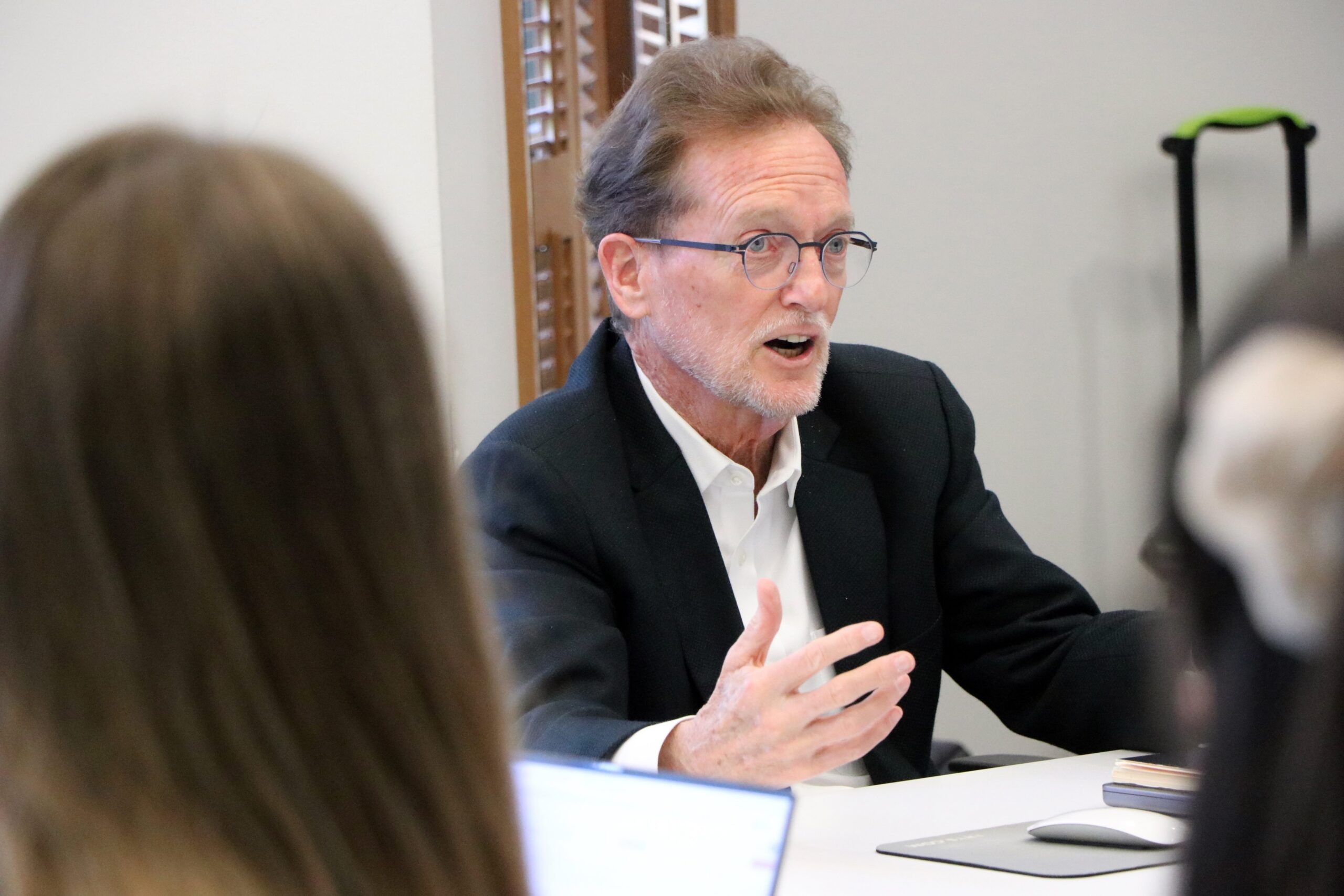

On September 14, 2026, we are proud to announce the release of “Governing Orbits: Collision Prevention and Liability in the Age of Autonomous Space Operations,” produced by the Space Law & Policy Lab at Stanford Law School. Link here: https://law.stanford.edu/publications/governing-orbits-collision-prevention-and-liability-in-the-age-of-autonomous-space-operations/
Nearly 60% of all objects ever launched into space went up in the past five years, and they now share orbits with more than 140 million pieces of debris too small to track, travelling several times faster than a bullet. A single collision can generate thousands of new fragments, each one a future collision risk. This is the cascading failure known as Kessler Syndrome, which threatens to render the orbits carrying GPS, weather forecasting, and global communications unusable.
Spacecraft are also carrying out increasingly complex activities, often enabled by autonomous technology. Yet while the U.S. has a multi-layered licensing regime for space activities, comparatively little is said about how spacecraft should behave once they are in orbit and encounter each other.
To map that gap, we categorized on-orbit interactions by the type of spacecraft involved and by whether an encounter is intentional or unintentional. Each category raises distinct prevention and liability questions, and existing rules cover them unevenly. From there, we identify policy options ranging from the near-term, such as strengthening licensing conditions, improving space situational awareness, and clarifying accountability, to longer-term structural reforms of orbital governance.
Around a year ago, our Society initiated the Lab in partnership with The Aerospace Corporation and SLS, bringing together students from law, aeronautics and astronautics, international policy, and business. Over eight months, we consulted private space companies, senior policy officials, government entities, academics, and researchers to produce this report.
A massive thank you to the industry speakers who shared their expertise; the team at The Aerospace Corporation, Pamela Wood, Kerianne Hobbs, Ph.D., Michael Gleason, and Katherine Melbourne, for their guidance; the Lab’s supervisors Erik Jensen (Director of the Rule of Law Program) and Dinsha Mistree (Hoover Institution, Stanford University Research Fellow); the administrative staff at SLS; and our team: Cody Wang Chenxi, Somi Eigbe, Kazumi Hoshino, Grace Kim, Laurel Kim, Argyris Kriezis, Paulina Montgomery, Emma Nicolai, Vale Rasmussen, Matt Rogowski, Anika Turcotte, our Haas Community Engaged Learning Coordinator, and Alexis Opferman, who attended our Winter classes.
We shall continue to bring together thinkers and doers across the community to shape the future of humanity’s expansion into outer space.
4 May 2026 - Rethinking Conflict in Space: New Perspectives on Security Beyond Earth
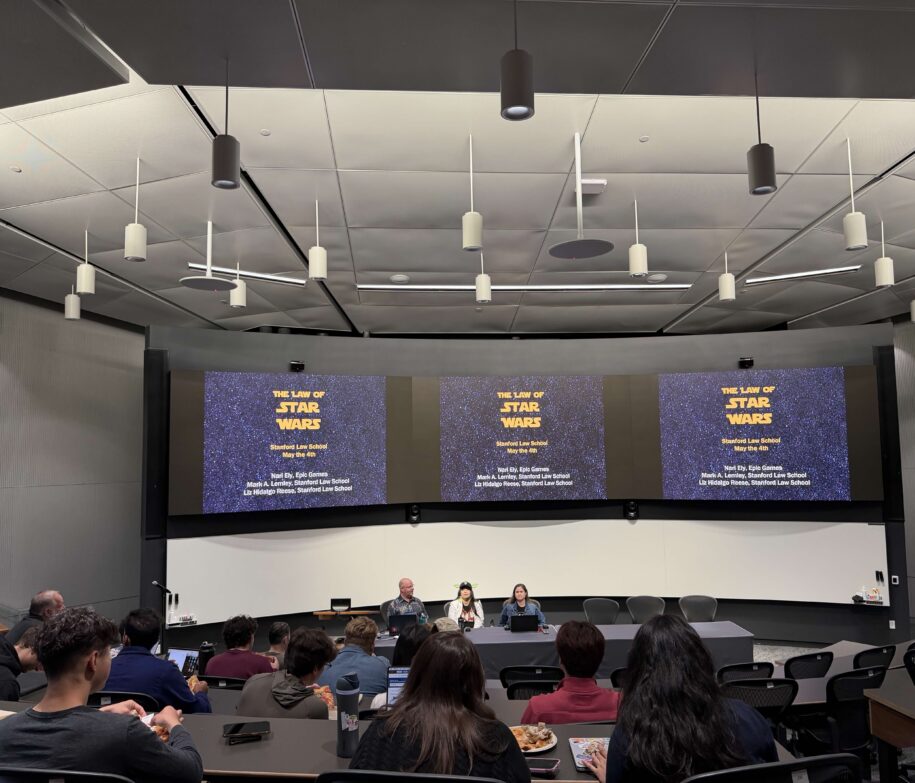
On May 4, 2026, a date that really chose itself, Professors Mark Lemley and Elizabeth Hidalgo Reese, joined by Nari Ely of Epic Games, led a lunchtime conversation at Stanford Law School applying US legal doctrine to the Star Wars universe. Some of these questions may have been more serious than they initially sound: who owns R2-D2 and C-3PO, did Han Solo shoot in self-defense, what do the Ewoks’ tactics mean under the laws of war, and what does Ghorman’s mineral extraction tell us about tribal sovereignty and natural resource law?
The Stanford Space Law Society was proud to co-sponsor the event alongside the Native American Law Students Association, Stanford Entertainment and Sports Law Association, and Stanford Law and Technology Association. The Force (and the Law) was strong with this one.
7 April 2026 - Rethinking Conflict in Space: New Perspectives on Security Beyond Earth
On April 7, 2026, the Stanford Space Law Society had the privilege of hosting Dr. Ben Zweibelson, PhD, Director of the Strategic Innovation Group at U.S. Space Command, for a virtual session at Stanford Law School. Our discussion focused on how emerging technologies and space expansion are reshaping the foundations of conflict and security.
Drawing on his work at the intersection of military strategy, design thinking, and complex systems, Dr. Zweibelson challenged conventional assumptions about how conflict operates beyond Earth. Several highlights from the discussion:
– 𝗧𝗵𝗲 𝗨𝗻𝗶𝗾𝘂𝗲 𝗟𝗼𝗴𝗶𝗰 𝗼𝗳 𝗦𝗽𝗮𝗰𝗲 𝗮𝘀 𝗮 𝗗𝗼𝗺𝗮𝗶𝗻: Unlike land, air, or sea, objects in orbit repeatedly traverse the same paths, creating the potential for cumulative effects such as persistent debris fields. At the same time, “key extraterrestrial terrain” like Lagrange points introduces strategic considerations more familiar to terrestrial domains.
– 𝗧𝗲𝗰𝗵𝗻𝗼𝗹𝗼𝗴𝗶𝗰𝗮𝗹 𝗗𝗶𝘀𝗿𝘂𝗽𝘁𝗶𝗼𝗻 𝗮𝗻𝗱 𝗙𝘂𝘁𝘂𝗿𝗲 𝗦𝗲𝗰𝘂𝗿𝗶𝘁𝘆: Technological advances in other domains are converging with outer space development are converging in ways that could fundamentally reshape strategic stability. For instance, autonomous systems in orbit, as well as the impact of quantum sensing and communications, raise new questions about deterrence, escalation, and governance.
– 𝗧𝗵𝗲 𝗥𝗶𝘀𝗶𝗻𝗴 𝗥𝗼𝗹𝗲 𝗼𝗳 𝗖𝗼𝗺𝗺𝗲𝗿𝗰𝗶𝗮𝗹 𝗔𝗰𝘁𝗼𝗿𝘀: As private industry expands deeper into space, traditional state-centric models of security may be challenged. The discussion considered how increasingly commercial space capabilities, which are more distributed and global, could have a knock-on impact on both cooperation and conflict in space.
– 𝗥𝗲𝘁𝗵𝗶𝗻𝗸𝗶𝗻𝗴 𝗪𝗵𝗮𝘁 “𝗪𝗶𝗻𝗻𝗶𝗻𝗴” 𝗠𝗲𝗮𝗻𝘀 𝗶𝗻 𝗦𝗽𝗮𝗰𝗲: Most fundamentally, the conversation raised the question of whether existing frameworks for victory, deterrence, and strategy are even applicable in a domain where conflict could have irreversible consequences for all actors.
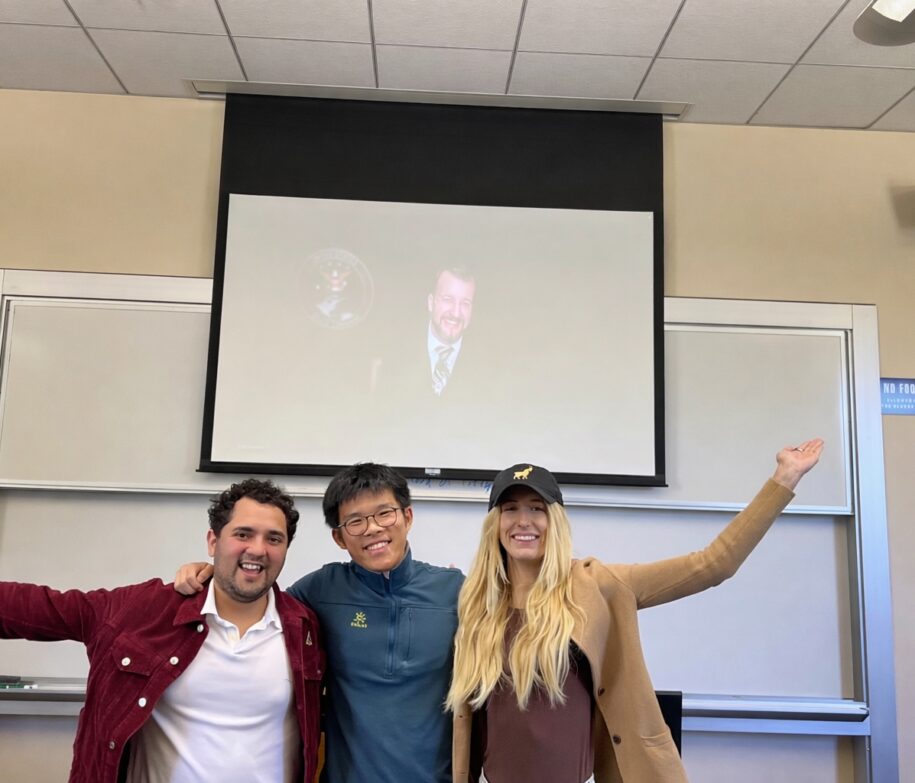
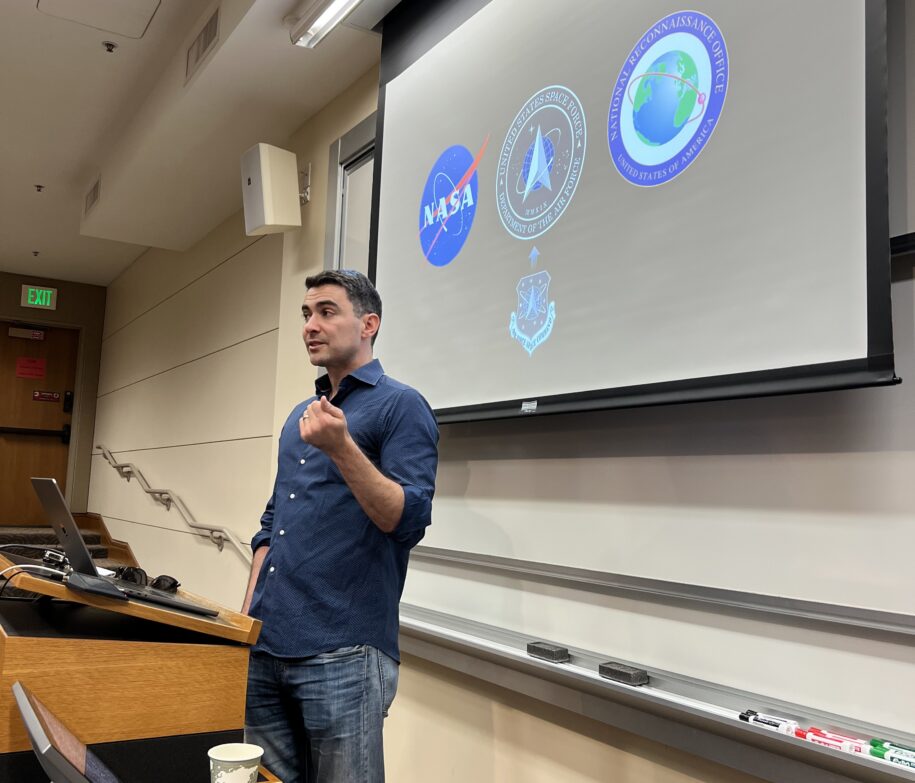
2 February 2026 - Lunar and Deep Space Exploration Policy
On February 2, 2026, we were thrilled to host Dr. Matthew Daniels, Co-Founder & CTO of Ultra, For All Mankind, to speak on the topic of Lunar and Deep Space Exploration Policy. Prior to Ultra, Dr. Daniels held technical, leadership, and strategy roles at the White House, NASA, and the Department of Defense.
Several highlights from the event:
◆ 𝗧𝗵𝗲 𝗚𝗲𝗼𝗴𝗿𝗮𝗽𝗵𝘆 𝗼𝗳 𝗗𝗲𝗲𝗽 𝗦𝗽𝗮𝗰𝗲: the strategic significance of lunar resources, from water ice in permanently shadowed regions that could fuel future space exploration, to the discovery of energy-efficient pathways around Lagrange points that are reshaping how we think about space navigation.
◆ 𝗘𝘃𝗼𝗹𝘂𝘁𝗶𝗼𝗻 𝗼𝗳 𝗨.𝗦. 𝗦𝗽𝗮𝗰𝗲 𝗣𝗼𝗹𝗶𝗰𝘆: From the Apollo era’s Cold War objectives to today’s cislunar ambitions, we discussed the shifting rationales behind American space exploration, including factors ranging from public science to international partnerships that have influenced policy decisions across administrations.
◆ 𝗪𝗵𝗲𝗿𝗲 𝗖𝗶𝘃𝗶𝗹 𝗮𝗻𝗱 𝗡𝗮𝘁𝗶𝗼𝗻𝗮𝗹 𝗦𝗲𝗰𝘂𝗿𝗶𝘁𝘆 𝗜𝗻𝘁𝗲𝗿𝘀𝗲𝗰𝘁: The conversation examined how exploration objectives increasingly overlap with national security considerations, the growing role of commercial actors in deep space activities, and the complex interagency coordination required to advance both scientific discovery and strategic interests beyond Earth.
29 September 2025 - Practicing National Security Law at a Law Firm
On September 29, 2025, as the first event in the academic year, we were thrilled to host Joshua Gruenspecht, National Security & Trade Partner at Wilson Sonsini Goodrich & Rosati, for an engaging discussion on Practicing National Security Law at a Law Firm.
We co-organized the event alongside the Stanford National Security Law Society (SNSLS), the Stanford Artificial Intelligence and Law Society (SAILS), and the China Law and Policy Association (CLPA). Several highlights from the event:
⚖️ Bridging Policy and Practice: Drawing from over a decade of experience, Joshua walked us through the mechanics of the Committee on Foreign Investment in the United States (CFIUS) and related regimes that govern cross-border investments and technology transfer.
🌍 National Security in a Globalized Economy: From biotechnology to video games, Joshua highlighted how modern national security law may be applicable in “traditionally unexpected” sectors—reflecting a world where technological innovation, data infrastructure, and investments are increasingly globally intertwined.
🛰️ Implications for the Space Sector: As outer space becomes an increasingly international and commercial domain, frameworks like CFIUS and export control are playing a growing role in shaping the future of space investment and technology collaboration.


20 May 2025 - Lessons from Earth’s Frontiers: What the Oceans and Antarctica Teach Us About Space
On May 20, 2025, we were delighted to host Dr. Lida Teneva (PhD’13 in Oceanography/Marine Ecology) at Stanford Law School for a captivating discussion co-hosted with our friends from the Ocean Law at Stanford Law School and the Stanford Student Space Initiative. We first connected with Dr. Teneva at the Space Beach Law Lab and were thrilled to bring her back on campus.
Dr. Teneva, a conservation scientist with over fifteen years of global experience, including at GLOBAL CONSERVATION, World Wildlife Fund, and OceanX shared a unique blend of legal and environmental perspectives:
🧊 Lessons from Antarctica’s Foundation: By “freezing” sovereignty claims, prohibiting military use (even amidst Cold War pressures), and prioritizing science, the Antarctic Treaty showed how legal architecture can establish peaceful international access in new domains – a crucial lesson for space.
🌱The Urgency of Proactive Environmental Safeguards: Antarctica’s robust environmental protections, like the mineral extraction moratorium (via the 1991 Protocol) and the Convention for the Conservation of Antarctic Marine Living Resources’ precautionary approach to marine life, underscore the need for foresight in space.
🔄Cross-Pollination for Smarter Governance: Dr. Teneva emphasized how terrestrial law offers guidance to space activities, noting how space mining ventures are already looking to deep-sea mining frameworks under the Law of the Sea to better understand the application of principles like the “common heritage of mankind” and equitable benefit-sharing.
🤝Building Enduring Cooperation: Drawing on the Antarctic Treaty System’s success in fostering consensus and adapting through protocols despite geopolitical tensions, Dr. Teneva encouraged a spirit of principled pragmatism, reminding us that complex international cooperation is achievable.
12 May 2025 - Commercial Practice and the Space Sector: A Conversation with Orrick Partner Laura Lariu
On May 12, 2025, we had the immense pleasure of hosting Laura Lariu, Partner of Orrick, Herrington & Sutcliffe LLP, at Stanford Law School. We first met Laura at the Space Beach Law Lab in March and were thrilled to welcome her on campus for this event. During our fireside chat, which was joined by law students and students from the Stanford University School of Engineering, we had the unique opportunity to learn about Laura’s personal story and journey to becoming a space lawyer:
• Laura’s wide-ranging interests and curiosity led her to Emerging Companies and Venture Capital work in New York, an experience that exposed her to a range of technology sectors. Eventually, this sparked a leap into Virgin Hyperloop, where she discovered how dynamic and interdisciplinary startup legal work can be, supporting fast-moving teams across every corner of the business.
• Later, Laura joined Relativity Space as the first in-house legal hire, just as the company was entering a period of explosive growth. Over the next few years, Laura helped Relativity scale from less than 100 to over 1,000 employees, raising more than $1.3 billion in funding and vastly expanding their physical infrastructure. Laura made it a point to walk the factory floor, meet engineers, and listen closely to their needs, proactively embedding legal support into the company’s culture and technical workflows.
• Today, at Orrick, Laura brings her deep in-house experience to support clients in both space and non-space sectors. Laura spoke about the value of cross-practice work, the overlap between ECVC and space tech, and the importance of asking legal questions early, especially when navigating cutting-edge technologies.


2 May 2025: Tour of Space Exploration at Hoover Archives
On May 2, 2025, members of the Stanford Space Law Society had the unique opportunity to tour the Archives of the Hoover Institution, Stanford University with expert historians. We explored rare and exclusive materials from the early space age, including stunning archival photos of the Moon landing.
We also learned how to navigate Hoover’s extensive digital databases—valuable tools for researchers diving into space history. The visit wrapped up with panoramic views of San Francisco and Oakland from the top of Hoover Tower.
22 Apr 2025: Privateers or Pirates: Private Space Companies and Outer Space Law
On April 22, 2025, we had the immense privilege of hosting Professor Frans von der Dunk for a lunch talk titled “Privateers or Pirates: Private Space Companies and Outer Space Law.” The event explored how evolving geopolitical realities—like the privatization of space assets and the rise of space as a military domain—are testing the limits of current legal frameworks. Some of the issues we discussed included:
-Private actors are increasingly central to space conflicts: From companies like Starlink supporting military communications to Wagner-like groups engaging in cyber operations, non-state actors are now deeply embedded in modern warfare, and space is no exception.
-The Woomera Manual on the International Law of Military Space Operations is helping define the legal boundaries of military space activity: As space becomes more strategically contested, the Woomera Manual offers a structured attempt to clarify how international humanitarian law and the law of armed conflict apply beyond Earth. The Manual invites us to think about the potential and the limitations of applying terrestrial legal principles to the space domain.
-Article VI of the Outer Space Treaty places responsibility squarely on States: Even when space activities are carried out by private entities, States remain internationally responsible for ensuring authorization and continuing supervision. This is a uniquely strict regime under international law, and one that becomes especially consequential in cases involving potential armed conflict or dual-use technologies.


March 2025: Delegation to the Annual Space Beach Law Lab in Long Beach
From March 25–27, 2025, a small delegation of Stanford Space Law Society members attended the annual Space Beach Law Lab, held aboard the historic Queen Mary in Long Beach, California. The event brought together a vibrant mix of aerospace executives, general counsels, policymakers, academics, and legal practitioners to explore pressing issues in the rapidly evolving space sector. For the full report, please visit here.
13 Feb 2025: Vast – The Legal Frontier of Private Commercial Space Stations
On 13 February 2025 (Thursday), the Stanford Space Law Society had the privilege of hosting David G., Acting General Counsel at Vast, and Shaya Afshar, Associate General Counsel, for a deep dive into the legal perspectives of commercial space stations. Vast is a cutting-edge space company working to develop the world’s first commercial space stations, with Haven-1 set to launch in 2026.
Career Paths and Lessons
David and Shaya shared their unique journeys from Big Law to Vast. They emphasized:
– The value of mentorship in navigating career transitions.
– The transferable skills from private practice—IP, government contracts, and commercial transactions—that prepared them for the fast-paced world of space startups.
– The importance of finding a niche area and developing deep expertise early in one’s career.
– The ability to simplify complex legal concepts for advising startups and policymakers.
Legal Challenges in Space Startups
Unlike traditional companies, space startups require lawyers to be deeply involved in business strategy, regulatory navigation, and fast-moving transactions. Our speakers highlighted:
– The challenges of shifting from law firm to in-house counsel, where lawyers may often assist in non-legal roles.
– The balance between risk and innovation, especially when navigating uncharted legal territory.
– The need for lawyers to work across disciplines, coordinating with engineers, policymakers, and business teams.
Key Drivers Shaping the Industry
Our discussion also covered:
– Government vs. Commercial Contracts – The complexities of liability and regulatory oversight when dealing with government partners vs. private clients.
– Intellectual Property in Private Space Stations – How companies manage licensing, payload agreements, and astronaut participation.
– The Commercial Opportunities of Private Space Stations – Private space stations may allow for greater flexibility in commercial partnerships, regulatory structures, and operational models compared to the International Space Station, which operates under intergovernmental agreements.


4 Feb 2025: Careers in Space - Federal Space Lawyers
On 4 February 2025 (Tuesday), the Stanford Space Law Society and Stanford National Security & Law Society had the privilege of hosting Mr. Steven Mirmina, a senior attorney in NASA’s International and Space Law Practice Group, and Major Matthew Zellner, Deputy Staff Judge Advocate in the U.S. Air Force’s Space Law Division. They shared insights on careers in space law, the evolving legal landscape, and the biggest challenges facing the industry—and it was a phenomenal discussion with great turnout at Stanford Law School.
Pathways into Space Law
Both speakers highlighted the diverse career routes that led them into space law:
– Mr. Steven Mirmina shared his transition from private aviation law to NASA and academia, where he has helped negotiate numerous international agreements.
– Major Zellner discussed the close connection between government service and private practice, where expertise in regulatory and national security law is highly valued.
Their key advice? Excelling in traditional legal fields—whether regulatory, procurement, or international law—provides a strong foundation for transitioning into space law. In short: The first step to becoming a space lawyer is being a good lawyer.
Key Legal Challenges in Space
The discussion also explored some of the biggest legal hurdles in today’s space industry:
– Evolving Regulatory Landscape – shifting U.S. space policies with each administration create uncertainty for long-term planning.
– Space Safety & Debris Mitigation – Developing effective incentives for responsible space operations remains a challenge.
With space law still in its early stages, lawyers today have a rare opportunity to shape policies that will govern commercial space activities, national security operations, and international cooperation for decades to come.
What Does Space Law Practice Look Like?
Practicing space law can mean:
– Drafting cooperative agreements between NASA and international space agencies (e.g. the European Space Agency).
– Advising on military operations involving space-based assets.
– Navigating complex intersections of law, science, policy, and diplomacy.
It’s an exciting and dynamic field—one that will define how humanity engages with the final frontier.
18 Nov 2024: Orbiting Innovation - Space Startups and the Law
On 18 November 2024 (Monday), the Stanford Space Law Society and the Stanford Law Start-Up Project had the honor of hosting Dan Berkenstock, a distinguished fellow at the Hoover Institution, Stanford University as well as the founding CEO and CPO of Skybox Imaging (acquired by Google for $500 million in 2014). Dan led an insightful discussion on the evolution of satellite technology and the crucial role of space law in supporting the growth of space startups. Key takeaways:
– Evolution of Satellite Technology: From early analog film shot into space to today’s HD satellite imaging, which is transforming industries like communications, climate monitoring, and national security. Companies like Planet and LeoLabs are leading the charge with innovative satellite solutions, reshaping how we observe and interact with our planet.
– Role of Space Lawyers: The critical role of lawyers in helping space startups secure funding from investors and navigate intellectual property protections, as well as compliance with industry regulations, including satellite licensing, Federal Communications Commission rules, and NOAA: National Oceanic & Atmospheric Administration Earth-observation data oversight, etc.
– Need for New Thinking in Space Law: Dan’s talk came just ahead of SpaceX’s Starship flight test on 19 November 2024. With Starship’s potential to carry significantly larger payloads and reduce launch costs, it will open new possibilities for satellite deployments and space missions. At the same time, as new technologies push the boundaries of space exploration, the legal and regulatory frameworks must evolve. With innovations in payload capabilities and cost-effective launch solutions, space law will need to adapt to support the growing New Space Economy.


12 Nov 2024: Commerce in Outer Space — Sources of Disputes and Methods of Resolution Webinar
On 12 November 2024 (Tuesday), we invited Professor Yun Zhao to speak at the Space, Law, and Business Webinar, which was organized together with the Stanford International Arbitration Association. Professor Zhao shared his research on the development of international space law as well as the new opportunities and challenges arising from the privatization of outer space. During the discussion, we explored topics such as:
-The traditional dispute resolution instruments under the United Nations framework, including the role of the United Nations Office for Outer Space Affairs (UNOOSA)
-The overall readiness of existing legal and regulatory regimes in the face of an exponential growth in space launches and space objects in orbit we have witnessed as part of the growing NewSpace Economy
-New approaches to outer space dispute resolution with a focus on private enterprises, such as the Space Disputes Guides published by the DIFC Courts
Earth is the cradle of humanity, but one cannot live in a cradle forever.
Konstantin Tsiolkovsky's letter from 1911
Stay Connected
Follow us: Stay ConnectedContact Us
Note: Do not use this form to submit High Risk Data.
Contact form for Stanford Space Law Society
* indicates required fields