
Centering Students in Policy Implementation: Nurturing Voices and Growing Advocates
The Roses Talk Project is a Stanford Center for Racial Justice initiative that seeks to directly address persistent disparities in education by centering “at-promise” student voices in education policy and practice. Stanford students working on the project engage in rigorous qualitative research and policy development, crafting evidence-based recommendations that inform school and district decision-making. As part of their work, students author a series of independent blog posts that offer insight into their experiences. These reflections not only document their learning but also contribute to an ongoing dialogue about education in the U.S., particularly by amplifying the voices of the young people they work with.
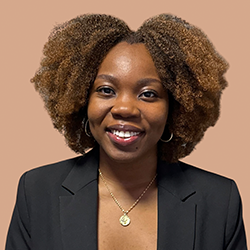
Creating Space: How Student Voices Reshape What We Think We Know | Nini Tufon
The Roses Talk Project, a partnership between the Stanford Center for Racial Justice and the San José Unified School District, spent 2025 listening directly to Gunderson High School’s “at-promise” students—those most likely to be suspended, chronically absent, or otherwise underserved, yet who often hold exceptional insight into what would help them succeed. Their voices shaped the Roses Talk San José Unified report, released in February 2026. They also informed the district and school’s policy development work this past spring through “Stakeholder Workshops,” which brought together students, parents, teachers, staff, school administrators, district leaders, and the Center’s research team. Through a participatory governance and co-design process, these workshops led to the selection of three recommendations from the report that Gunderson will implement this academic year, including creating a school-wide relationship-building strategy as one of the school’s primary goals.
One of the most memorable experiences I had during my 1L year was preparing for and facilitating breakout groups during these workshops. I learned that good facilitation is less about having answers and more about cultivating an environment where people feel comfortable sharing and listening to each other. I would ask a question and then step back to let the conversation flow, only intervening to clarify suggestions or encourage new voices to join. Often, the best insights came from someone in the room who had already been thinking about the problem for years. My job was just to make sure they were heard.
Before the first workshop, our research team drafted a policy brief to ground the series of Stakeholder Workshops in evidence from the Roses Talk San José Unified report. The brief provided three practical recommendations that Gunderson could develop into community-centered implementation plans. These recommendations included: (1) improving access to post-secondary resources; (2) creating an at-promise student advisory board; and (3) intentional relationship-building across the school. When we presented these to the school community during the first workshop, our ideas resonated with them, confirming what students, teachers, and administrators were already thinking. During breakout groups that brought together a multitude of stakeholders, we discussed different ways to move each recommendation forward and explored actionable next steps together. The collaboration was unlike what typically happens in education policymaking, with all stakeholders—teachers, students, administrators, district leaders, and parents—being able to contribute openly and honestly about how to improve their school. I’ll never forget how much everyone valued the different perspectives in the room.
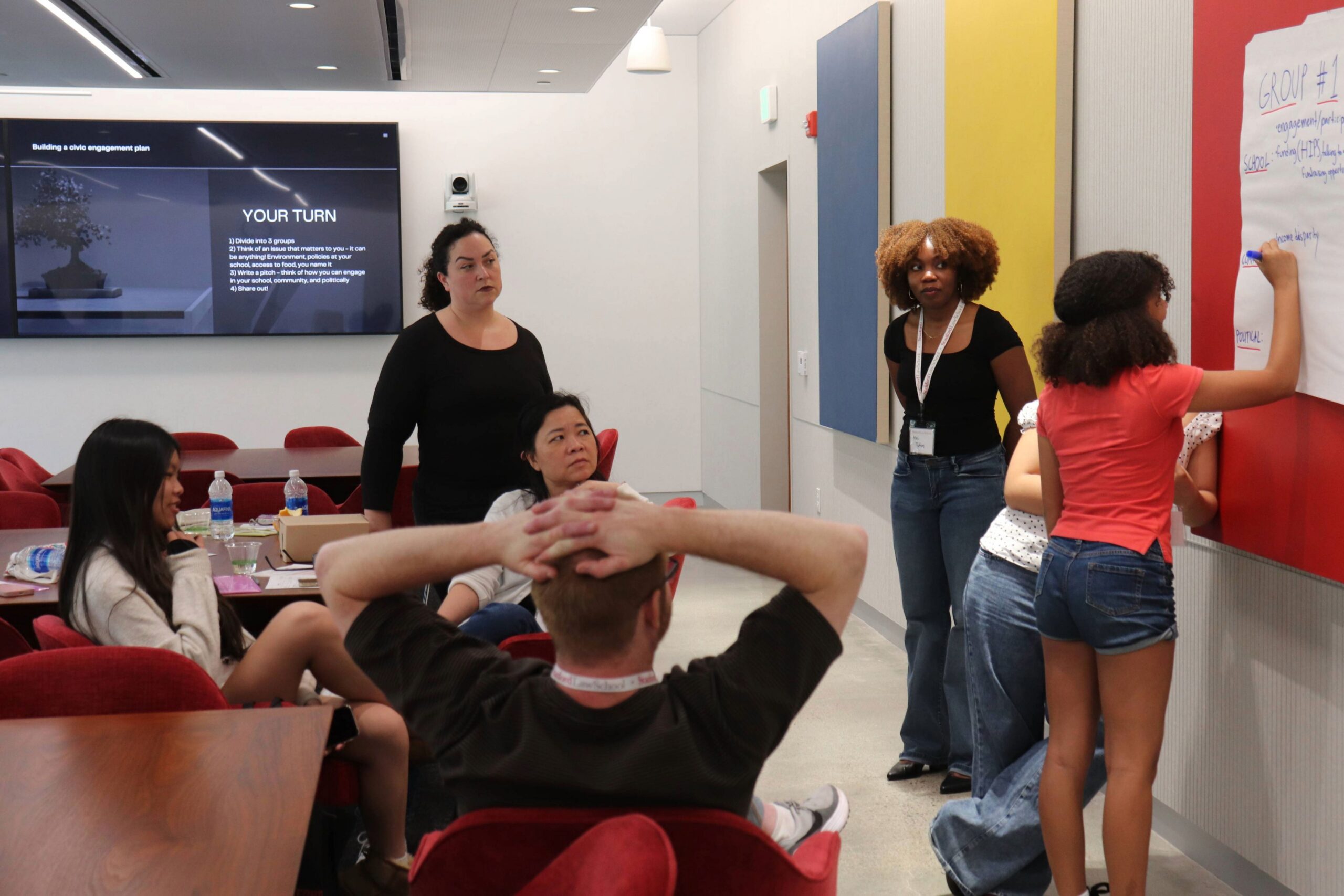
Throughout the first workshop, students actively participated, sharing suggestions and feedback about what Gunderson needed and what would help them succeed. This process centered their perspectives in a way that changed the entire conversation. It shifted the dynamic from an adult-centered decision-making process to a student-guided one that ensured even those who were more reluctant to speak up had opportunities to do so. During this initial workshop, it became increasingly clear that the more we heard from students, the better informed we were about which recommendations we would advance in developing concrete implementation plans to support Gunderson leaders. The ideas that students raised were compelling, concrete, actionable recommendations rooted in their unique experiences in school. It was clear that Gunderson students wanted change and success not only for themselves but also for those who come after them.
One concern raised during the conversation was how to reach students who are the least engaged—the ones who typically do not show up or participate in events like the workshops, or who might feel intimidated by formal leadership spaces. This ultimately led the group to select “improving relationships” as the central goal for Gunderson in 2026–27. Our team then supported this process by developing a comprehensive Policy Implementation Plan, which we revised and refined throughout the remaining Stakeholder Workshops. This plan culminated in a Gunderson High School Staff Retreat at Stanford in August, where over 100 community members spent the day together examining student experiences from the Roses Talk study, reflecting on their own practices and assumptions, and collaborating on shared, Gunderson-centered relationship strategies to carry into the new school year.
From Policy Brief to Facilitator: Witnessing Student Transformation | Erzsabet Gonzalez

Prior to meeting with our Roses Talk Project research team, Nini Tufon and I met to discuss which of the policy recommendations from the Roses Talk San José Unified report we wanted to prioritize at the first Stakeholder Workshop. We arrived eager to brainstorm ways to implement them all. Thankfully, our supervisor, Hoang Pham, helped us reframe our approach. He challenged us to think realistically about how many recommendations we could effectively prioritize and provided us with broader context about Gunderson High School. We were reminded that education is not a one-size-fits-all template, and an effective policy isn’t about imposing 100 solutions at once. We realized that we did not want to just address the symptoms of the issue; we wanted to engage directly with the system itself. We wanted to get to know Gunderson students not as data points but as people who lived these realities every day.
When it came to actually writing the policy brief that would be used as a grounding document for the Stakeholder Workshops, the turnaround time was incredibly quick. We had a little over one week to draft the brief, receive feedback on it, and incorporate the changes. While intense, the work was not more than we could handle. The largest contributor to our success was the research team’s commitment to clear and honest communication. From the start, everyone was incredibly transparent about their capacity; if someone needed to decrease their workload, someone would step up and increase theirs, without hesitation or judgment. Though much of the writing happened asynchronously, everyone was in constant communication and more than willing to hop on a quick call or meet up in-person to discuss questions and suggestions. Overall, this process modeled the co-authoring dynamics I want to continue to employ both at Stanford Law School and in practice: communication and grace.
That said, while the turnaround time did not pose any challenges for the collaborative work, it definitely posed challenges for research. Prior to reading the report’s recommendations, I was almost entirely unfamiliar with the concept of “near-peer mentorship.” Thus, I needed to conduct a vast amount of research on existing models, their benefits, and best practices for designing near-peer mentorship programs, and I needed to do it quickly. As a result, it was not until just before our internal deadline that I noticed one of the appendix resources I’d included was more related to counseling, not near-peer mentorship. This moment, while frustrating, also marked my transition from merely gathering information to understanding the conceptual framework of the material I was collecting, deepening my engagement, and in turn, revealing a second challenge: finding near-peer mentorship models that worked specifically for Gunderson.
A majority of near-peer mentorship models I found were centered on 11–12th grade students, not 9–12th grade. The predominant reason we recommended implementing a near-peer mentorship program was because of student feedback that they were not learning critical information (e.g., what a cumulative GPA is) early enough. Similarly, even the models that included 9th and 10th grade students disproportionately focused on college as a post-secondary path over career preparedness. These models are appropriate for some Gunderson students, but not all, since many also participate in Gunderson’s career technical education opportunities and may choose to focus on non-college routes as their post-secondary pathway. Thus, I chose to adapt existing models and create a “how-to-guide” for developing a near-peer mentorship program based on Gunderson’s specific needs. The transformation of my understanding from complete unfamiliarity to being able to critically evaluate and adapt existing frameworks ultimately built my confidence as a researcher.
The Stakeholder Workshops were an opportunity to put our plans into action. At the first workshop, I assumed the role of notetaker, allowing my facilitation partner to lead the conversation as I wasn’t quite comfortable enough to take a leadership role in steering it. But while I observed, I watched Gunderson students, teachers, and staff share their opinions on which recommendations should be implemented. Specifically, one student in my small group took an incredibly active role, sharing her opinion and volunteering to share insight from our group’s conversation with the larger group. It was only after the convening that Hoang told me the student used to be incredibly shy and sometimes struggled to engage. This was completely unfathomable to me, as I only knew this student as a confident advocate for the needs of at-promise students. Her confidence pushed me to find my own.
At the second workshop, I was left without a facilitation partner and was therefore forced to assume the role for my small group. I pushed my own feelings aside and focused on the task at hand, creating a space where students’ voices felt heard. Thankfully, all our hard work on the policy brief paid off, as the stakeholders echoed our concerns. Additionally, students continued to go beyond our three identified recommendations, combining them with others from the report and proposing their own, original ideas!
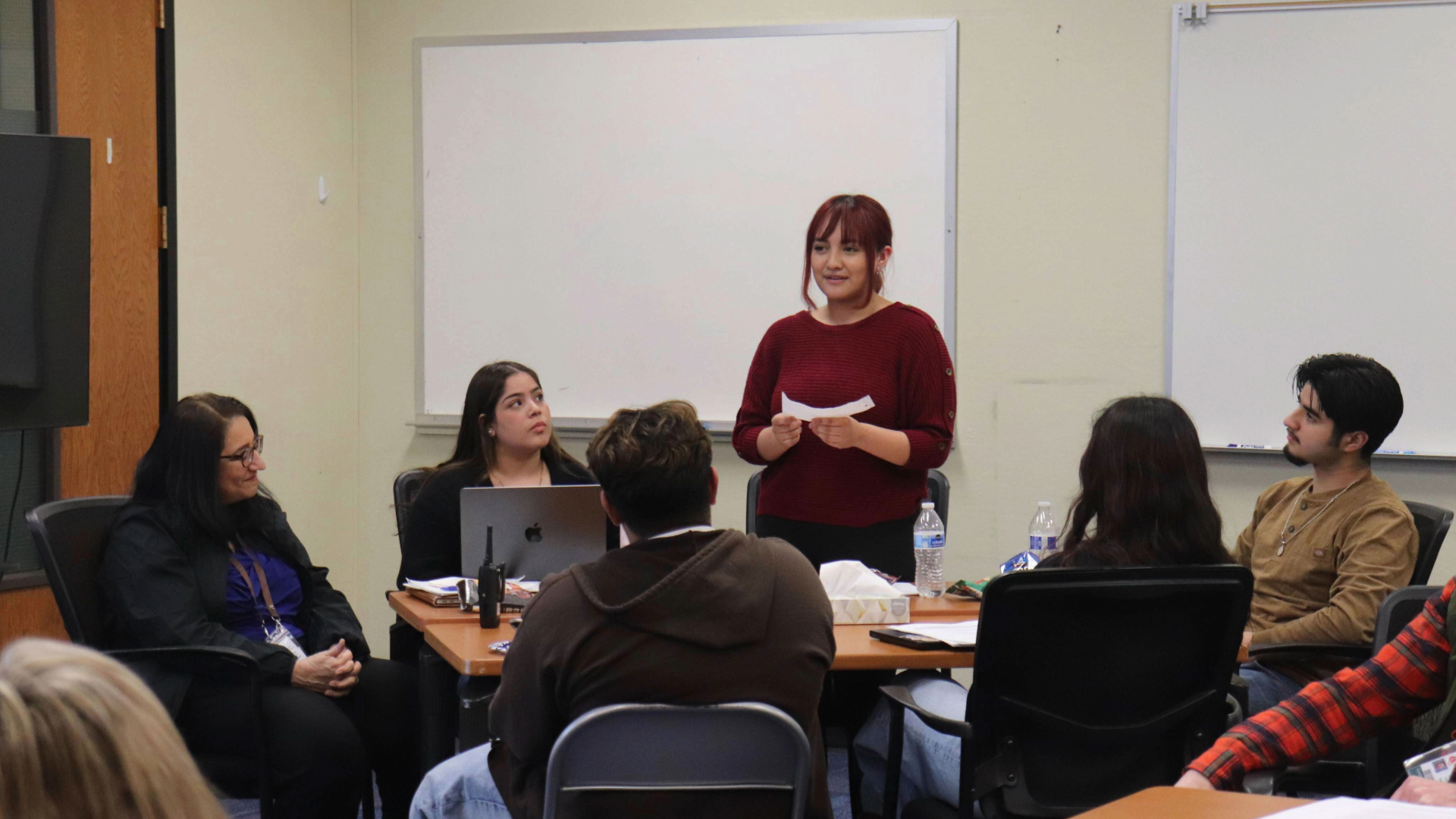
By the final workshop, even with a partner, I felt confident taking a much more active role in driving conversations, but more importantly, I understood what my role actually was. It wasn’t to bring Stanford’s expertise to Gunderson but to facilitate conversations and ensure students realize the agency they have in their education. It is through initiatives like the Roses Talk Project that youth, like Gunderson students who participated in these workshops, can grow in confidence and become advocates for themselves. This is particularly important because these students are experts on their realities and possess the most current understanding of how education policy must change. However, we will only recognize that understanding if we develop spaces where students’ voices are not only heard but nurtured.
Nini Tufon (JD `28) is a rising 2L at Stanford Law School. She grew up in the Atlanta metropolitan area, and her family is originally from Cameroon. Her interests center on international law and access to justice, with a particular focus on how legal systems can better serve marginalized and underserved communities. At Stanford, Nini is involved in pro bono and research initiatives related to human rights and educational equity. Outside of law school, Nini is a co-founder of Bridge 19:17, a faith-based nonprofit that addresses housing insecurity, poverty, and resource access through community-centered initiatives. Her approach to this work is shaped by a commitment to building systems that make it easier for people to find support, feel seen, and succeed regardless of background. In her free time, Nini enjoys reading and writing, staying active, and engaging with creative outlets through movement and dance. She values mentorship and collaboration, and hopes to build a career that combines legal training with meaningful community impact.
Erzsabet Gonzalez (JD `28) (she/her) is a rising 2L at Stanford Law School. She earned undergraduate degrees at the University of California, Berkeley, in both Bioengineering and Theater Performance Studies. She strives to combat racism in health care and is passionate about the deconstruction of dominant narratives and the empowerment that is possible through literary arts and performance. At Stanford, Erzsabet works on the Education Defense pro bono project to ensure that youth in the juvenile justice system have their educational rights met. She is also a member of the Hopi Tribe Appellate Court Assistance project team and is active with the Black Law Students Association (BLSA). In her free time, Erzsabet enjoys playing Dungeons & Dragons, rock climbing, and puzzling.
Follow the Stanford Center for Racial Justice on LinkedIn and Instagram and subscribe to our newsletter.