The Keystone Initiative
1. The Stakes
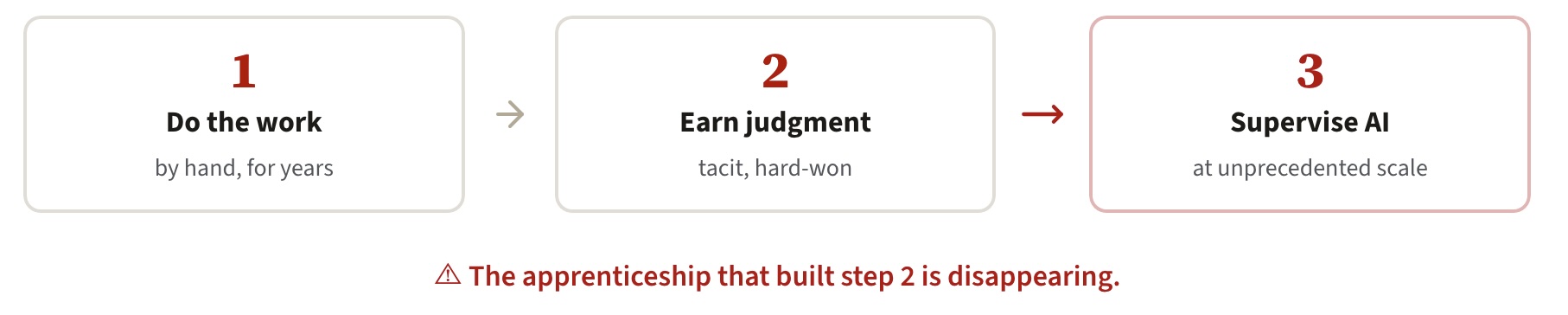
Competence has always been built by doing the work first.
AI now writes a fast-growing share of legal work. New attorneys are asked to review, sign, and stand behind work they were never trained to do. The chain that built judgment is breaking.
2. The Signal
Expert judgment, made visible.
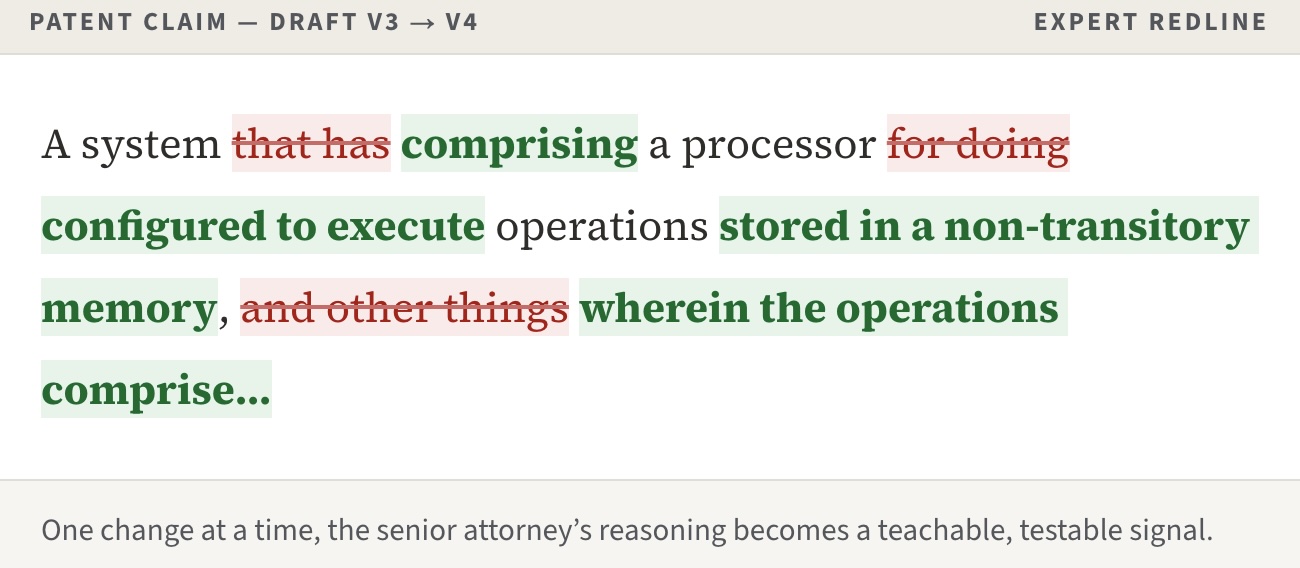
The skill a senior attorney spends years absorbing hides in one place: the delta between one draft and the next — exactly what an expert changed, and the judgment behind it. Capture that signal, and judgment itself becomes teachable.
3. The Idea
A practice simulator for lawyers.
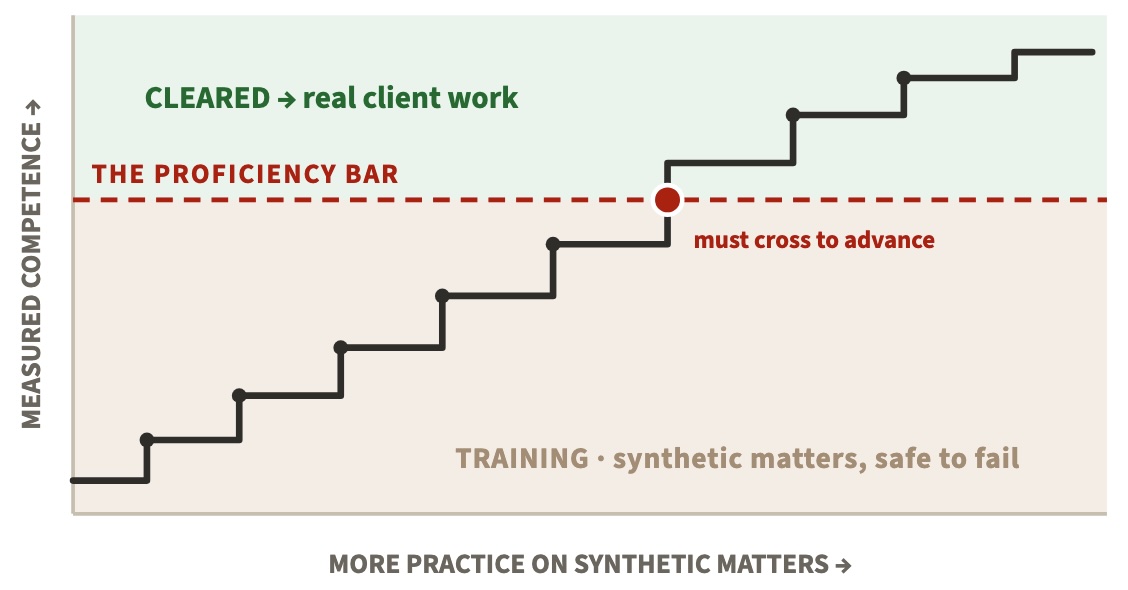
Pilots log hundreds of hours in a simulator before they fly. Attorneys should too. Trainees practice on realistic synthetic matters — free to fail — while we measure their skill against expert work. Only when they clear a proven bar are they cleared for real client work.
4. The End Game
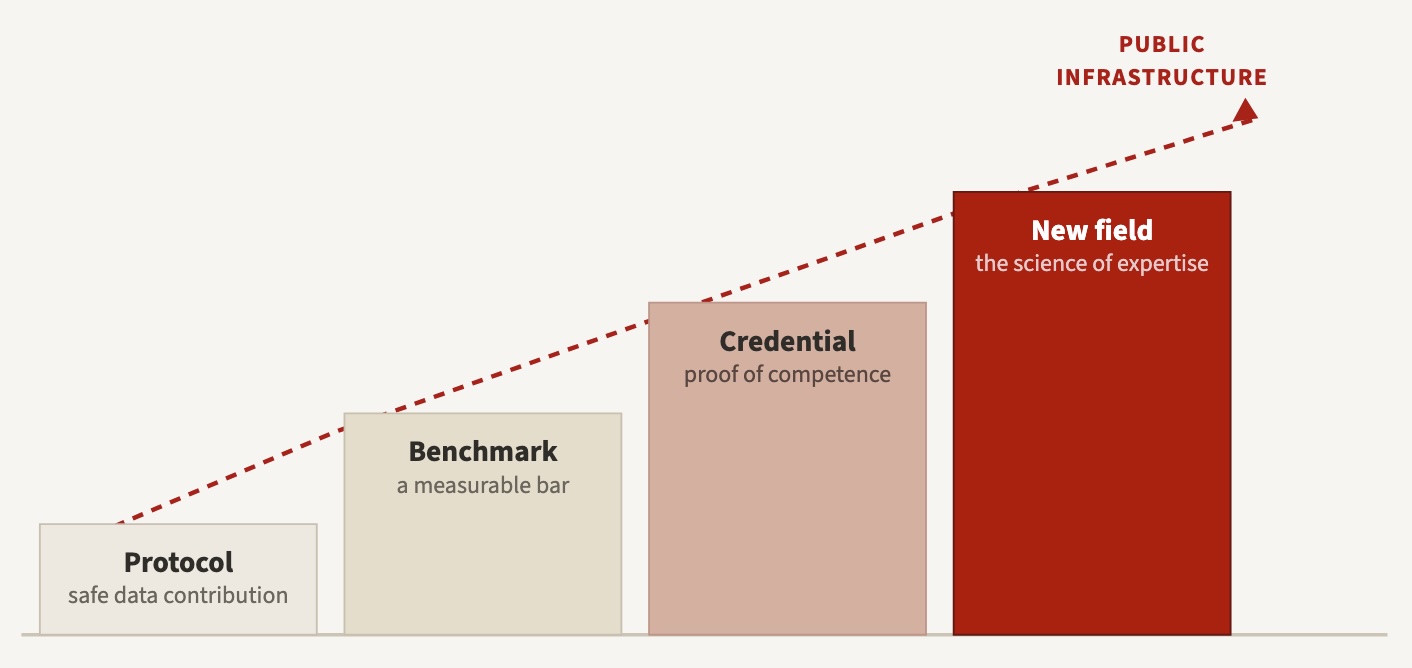
The standard is the wedge. Public infrastructure is the destination.
Each rung stands on its own — and makes the next one possible.
5. The Coalition
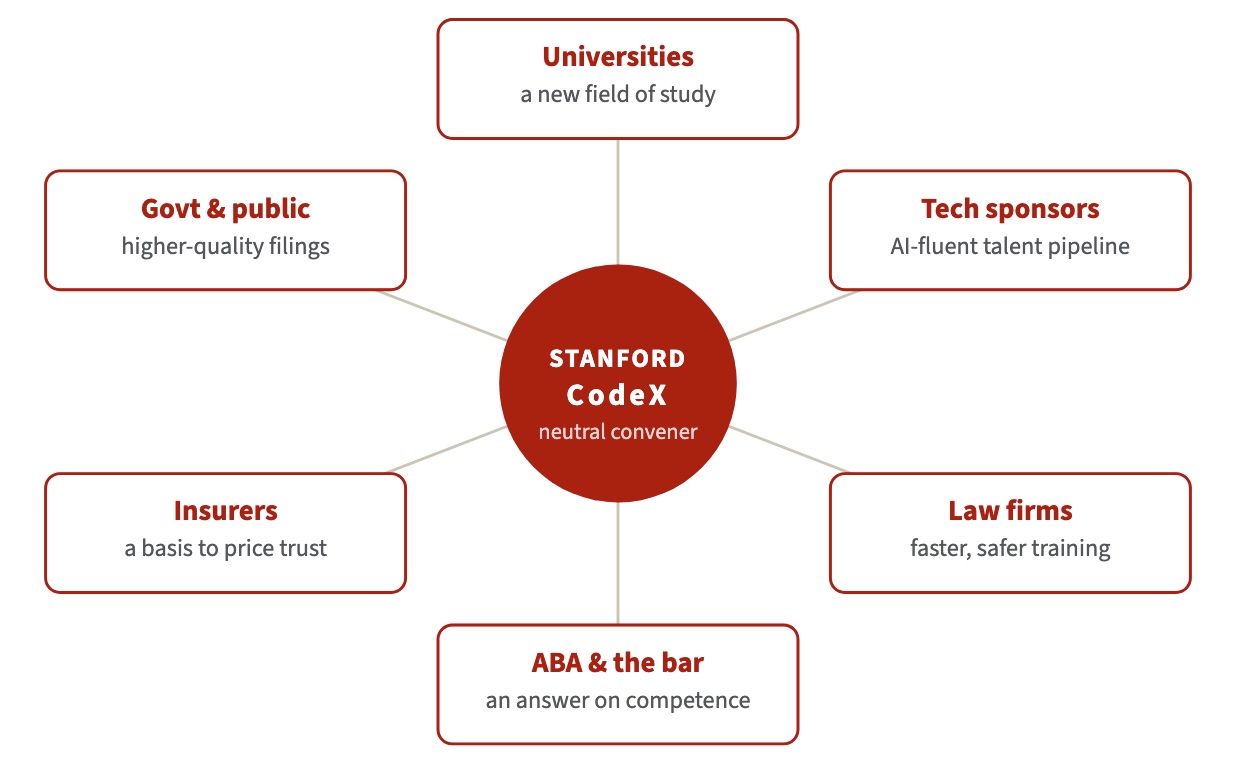
Positive-sum, end to end.
No one has to lose for this to work. Each stakeholder has its own reason to engage.
6. Why Stanford? Why Now?
No one moves first without a neutral place to stand.
Stanford authors ‘step zero’ — a vendor-neutral standard for contributing drafting deltas safely. Independently governed. Every firm keeps control of its own contributions. Neutrality isn’t a constraint on the opportunity; it’s what creates one.

7. The Path Forward
What we are convening.
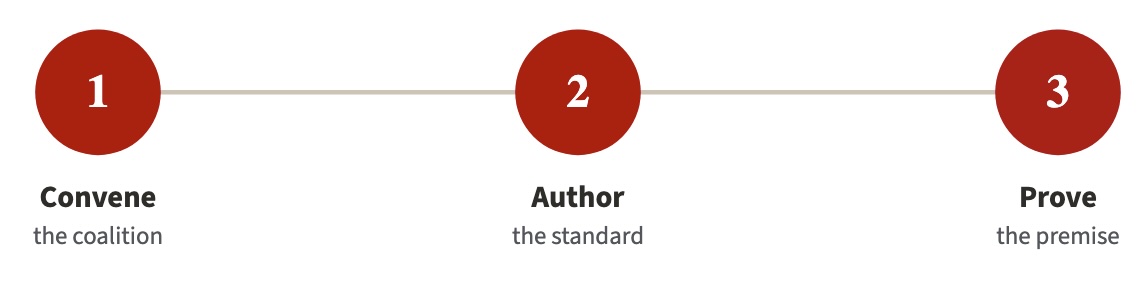
What gets built on the foundation is the coalition’s to decide. The opportunity: define, at its inception, how the profession trains the lawyers who will supervise AI’s legal work.
Blog
Setting the Keystone: Who Will Supervise AI’s Legal Work?
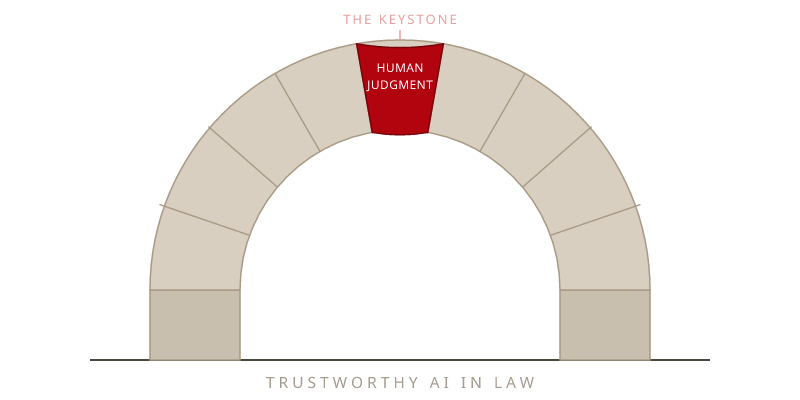
Roman builders raised an arch in a set order: first a temporary wooden frame, the centering, to carry the stones; last, the keystone at the crown. Then the stones locked together; the frame came down. Remove the frame before the keystone is set, and the arch falls.
The legal profession has formed lawyers the same way. The frame was apprenticeship: a junior lawyer drafts, a senior lawyer redlines, and the junior absorbs why. The keystone is judgment: the capacity to stand behind advice and supervise others. Generative AI is now taking the frame down. That is no loss in itself; much of it was drudgery. But the first drafts juniors learned from are increasingly written by machines, and the profession has not yet settled on what will hold new lawyers up while their judgment forms.
The Keystone Initiative at Stanford CodeX exists to solve that problem: to form lawyers who can be trusted to supervise AI’s legal work.