
Ralph Richard Banks
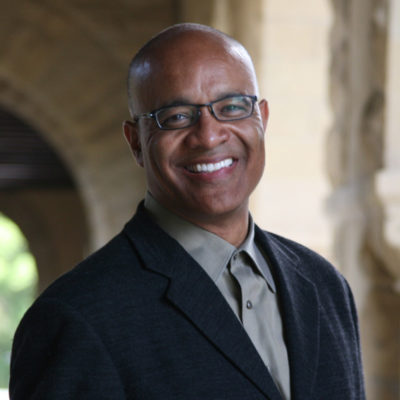
- Jackson Eli Reynolds Professor of Law
- Faculty Director, Stanford Center for Racial Justice
- Room N331, Neukom Building
Expertise
- Children & the Law
- Civil Rights
- Constitutional Law
- Distributive Justice
- Equal Protection
- Family Law
- Inequality
- Race & the Criminal Justice System
Biography
Ralph Richard Banks is the Jackson Eli Reynolds Professor of Law at Stanford Law School and a professor, by courtesy, at the Stanford Graduate School of Education. He is the Founder and Faculty Director of the Stanford Center for Racial Justice, an initiative that aims to confront and counter the polarization that plagues American society through an analysis of contentious racial issues free from the orthodoxies of Left and Right.
Professor Banks is the co-author of two leading law school casebooks, Racial Justice and the Law: Cases and Materials (2016) (with co-editors Kim Forde-Mazrui, Guy Uriel Charles and Cristina Rodriguez) and Family Law in a Changing America (2nd ed. 2024) (with co-editors Douglas NeJaime, Joanna Grossman, and Suzanne Kim). He is also the author of the trade book Is Marriage for White People? How the African American Marriage Decline affects Everyone (2011; paperback 2012), described by the Los Angeles Times as a “must read,” by the New York Times as “important” and by the Wilson Quarterly (the official publication of the Woodrow Wilson International Center for Scholars) as one of the Top Ten Books of 2011. The book has been featured by a wide range of media outlets, including The Wall Street Journal, The Economist, Essence magazine, The Village Voice, Time, Newsweek/The Daily Beast, and also NPR (local and national) CNN, ABC News/Nightline, The View, and Fox News, among many others. His forthcoming book, The Big Sort: How College Can Make or Break the American Dream, will be published in 2025.
At Stanford, Professor Banks teaches Constitutional Law, Family Law and a variety of courses related to race, law and inequality. He joined the Stanford faculty in 1998 after clerking for federal judge Barrington D. Parker, serving as the Reginald F. Lewis Fellow at Harvard Law School and practicing law at the law firm O’Melveny & Myers. He graduated from Harvard Law School with honors and received Bachelor’s and Master’s degrees from Stanford University.
Education
- BA Stanford University 1987
- MA Stanford University 1987
- JD Harvard Law School 1994
Related Organizations
Courses
- Constitutional Law: The Fourteenth Amendment
- Critical Race Theory
- Directed Research
- Discussion (1L): Meritocracy, Inequality and Higher Education
- Family Law
- Policy Practicum: "What's Next? After Students for Fair Admissions"
- Policy Practicum: Roses Talk: Elevating At-Promise Student Voices in San Jose Unified
- Race, Meritocracy, and Higher Education
- S-Term: Narrative Strategies for Racial Justice
- SPILS Masters Thesis
- TGR: Dissertation
Affiliations & Honors
- Member, Faculty Advisory Board for the Michelle R. Clayman Institute for Gender Research
- Faculty Associate, Research Institute for Comparative Studies in Race and Ethnicity
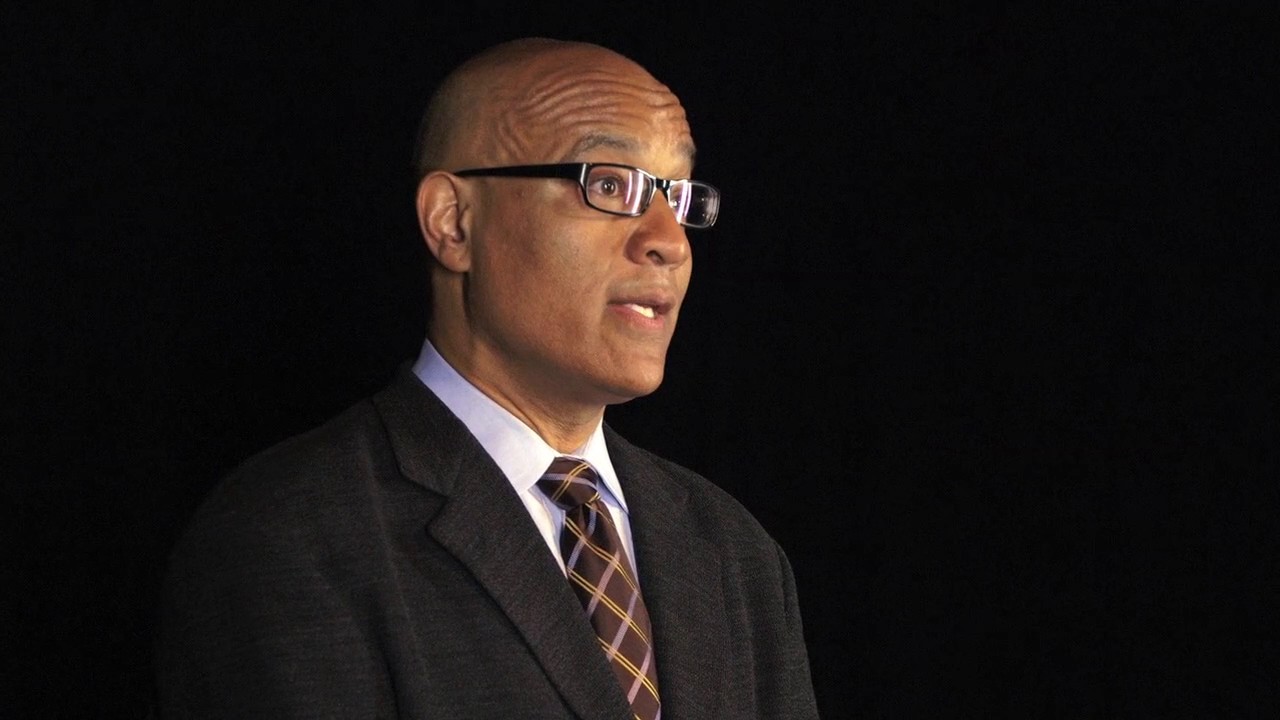
Faculty on Point | Prof. Ralph Richard Banks on Racial Justice Beyond Constitutional Law



Key Works
News
A Square Peg, a Round Hole, and the Future of Antidiscrimination Law
A job applicant is screened out by an automated hiring system. A prosecutor relies on an AI tool to assess a defendant’s likelihood of recidivism. A public agency adopts a system meant to make decisions more fairly, only to discover that the tool may be replicating old patterns of discrimination…
Read More : A Square Peg, a Round Hole, and the Future of Antidiscrimination LawNew Research Brings High School Student Voices to the Forefront of Education Policy
Stanford Center for Racial Justice Brings Transparency to the Rules Governing Police Use of Force
What is the Definition of Use of Force? Depends on Where You Live.
Newsom vetoes bill that would have granted priority college admission for descendants of slavery
Lineage, Not Race: California’s Strategy to Advance Equity for Descendants of Slavery

Is Marriage for White People?
During the past half century, marriage has declined throughout American society. Among those who do marry, the wife is more likely than ever to outearn or be better educated than her husband. Why have these changes occurred? How have they shaped intimate relationships?
Is Marriage for White People? answers these questions through an exploration of the lives of the black middle class.