
“ICE, Camera, Action?” Exposing ICE’s Filming Operations
For years, Immigration and Customs Enforcement (ICE) and the Department of Homeland Security (DHS) have recorded videos of immigration officers arresting immigrants and posted these videos publicly. The videos sometimes show people’s faces, license plates, and home addresses, exposing immigrants and their families to harm. ICE also hosts a webpage titled “ICE, Camera, Action!” The webpage highlights how ICE and DHS work with production companies to produce “gripping” movies and TV shows about immigration enforcement. Until recently, the public knew very little about ICE and DHS filming operations.
In May 2023, Plaintiff Immigrant Legal Defense (ILD), represented by the Stanford Law School Immigrants’ Rights Clinic (IRC), filed two requests under the Freedom of Information Act (FOIA), a law that gives the public the right to know what the government is doing. ILD requested (1) documents related to ICE and DHS filming practices, and (2) videos of immigration raids that ICE conducted in California in 2020.
ICE and DHS failed to produce a single record, violating the FOIA. In December 2023, ILD, represented by IRC, filed a lawsuit in the Northern District of California to get access to the records. IRC student Truman Chen, ‘24, conducted legal and factual research, and drafted the complaint.
The lawsuit forced ICE and DHS to finally respond to ILD’s FOIA request. ICE and DHS have produced 1,845 pages of documents and 56 videos to ILD. The records show that ICE and DHS actively use films to improve their public image. In their film projects, ICE and DHS exploit fears and stereotypes to promote a false narrative around dangerous “criminal aliens.”
Here are some takeaways from the records that ICE and DHS have produced:
Takeaway #1: ICE and DHS devote significant resources to enhancing their public image.
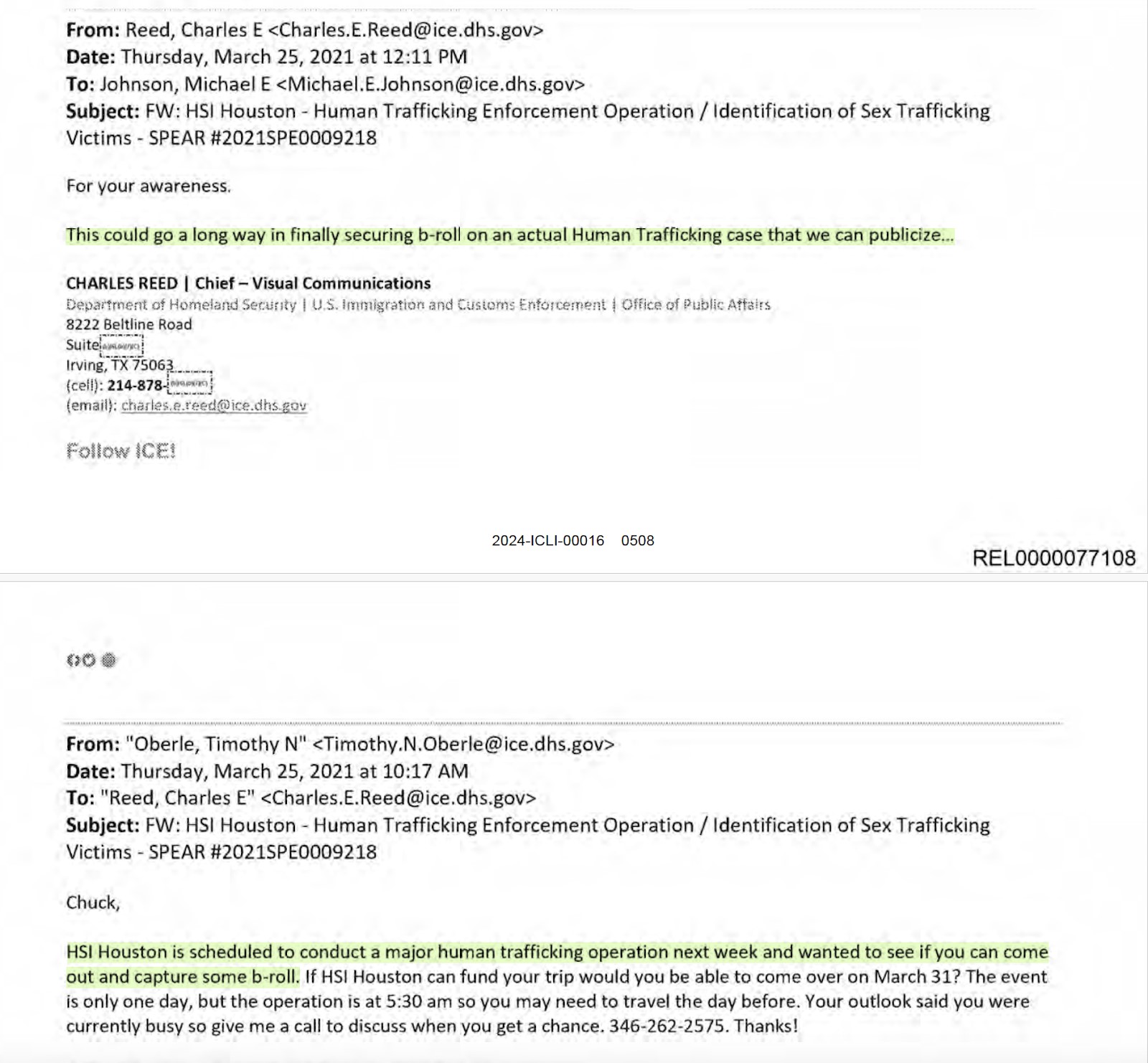
A review of the records produced by the agency reveals that ICE treats enforcement operations as opportunities to capture footage for public consumption.
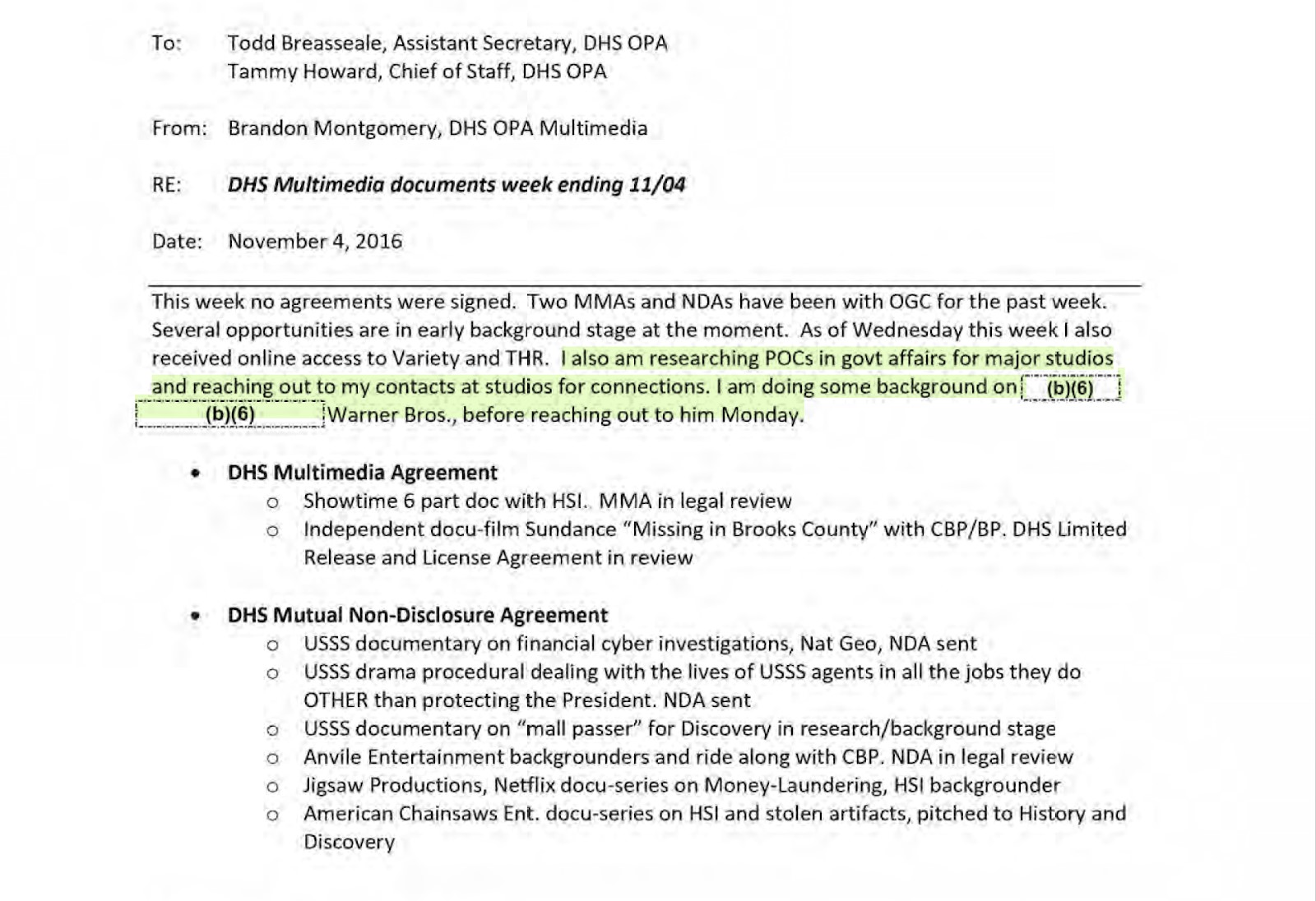
DHS Office of Public Affairs staff also conduct outreach to production companies to secure opportunities to showcase immigration enforcement operations.
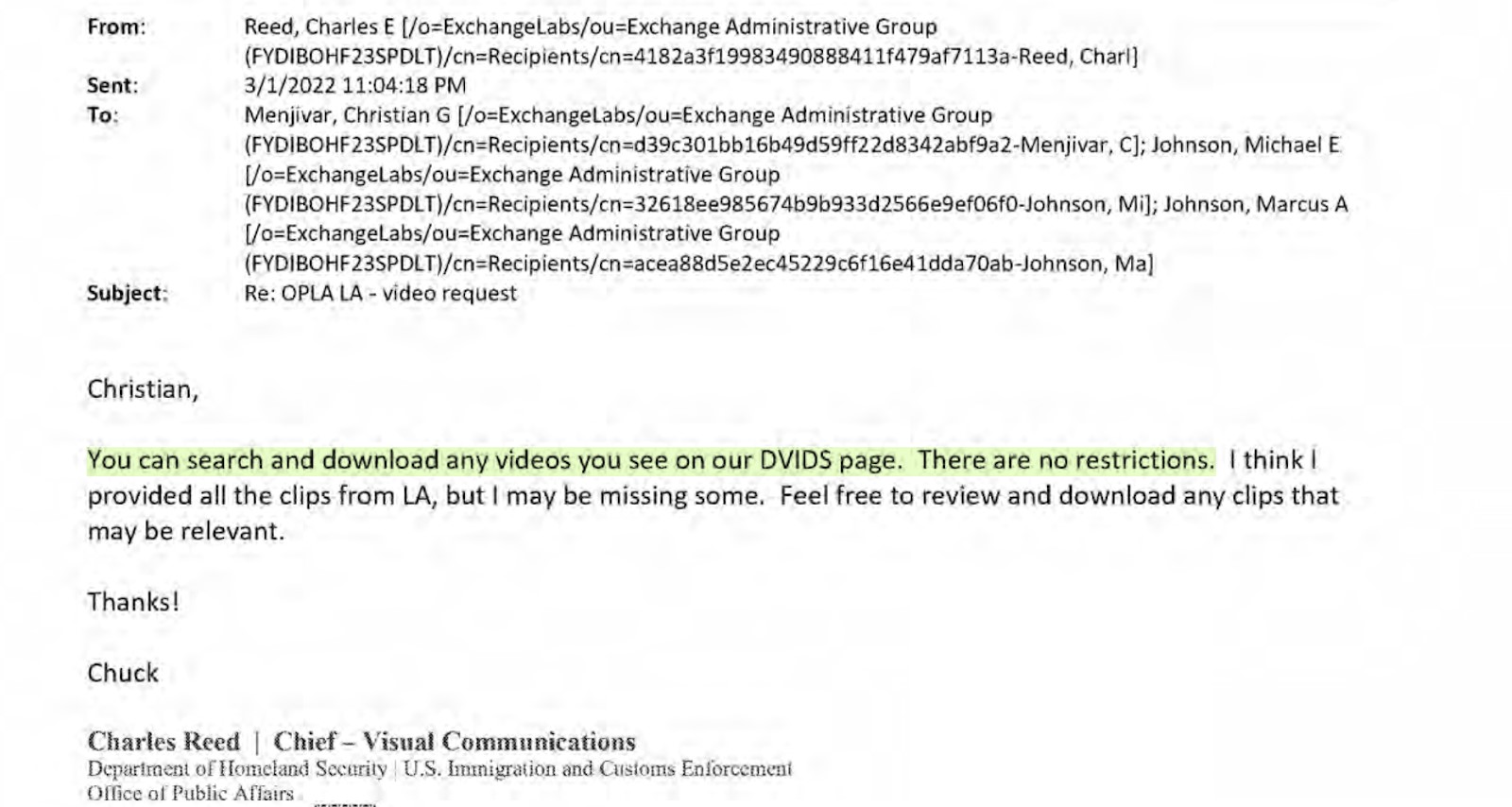
Takeaway #2: The videos that ICE records and posts to the Defense Visual Information Distribution Service (DVIDS) are available to anyone to download, with no restrictions.
DVIDS is a program run by the Department of Defense that gives the media and the public access to audio and video of U.S. military operations around the world.
Takeaway #3: The posting of videos to DVIDS containing unblurred faces and other identifiers violates ICE and DHS guidance for in-house filming and guidance for external production companies.
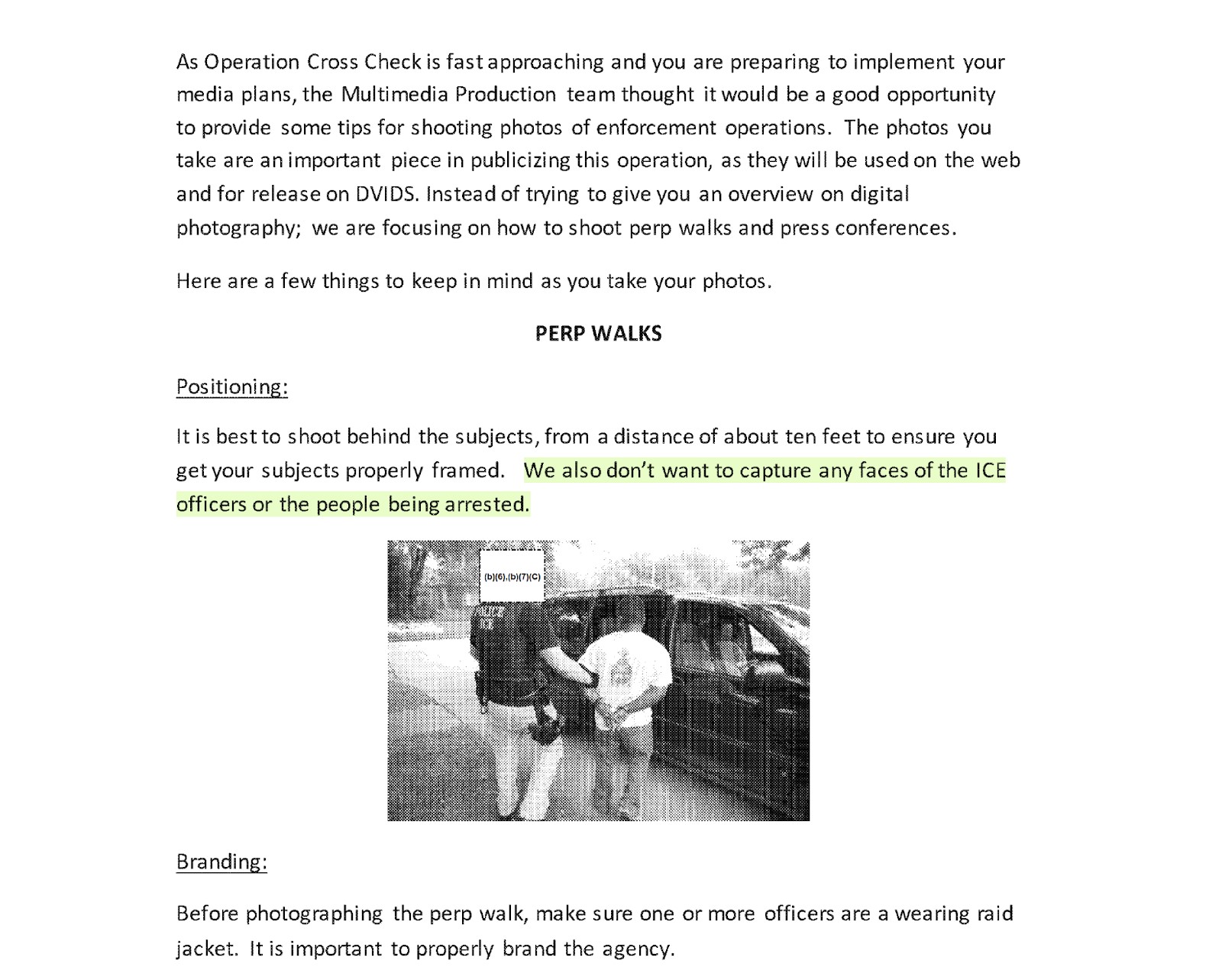
ICE internal guidance advises videographers to avoid capturing noncitizens’ faces, but videographers routinely ignore this policy. This guidance also uses degrading language (“perp walks”) to refer to noncitizens, furthering the false “criminal alien” narrative internally as well as externally.
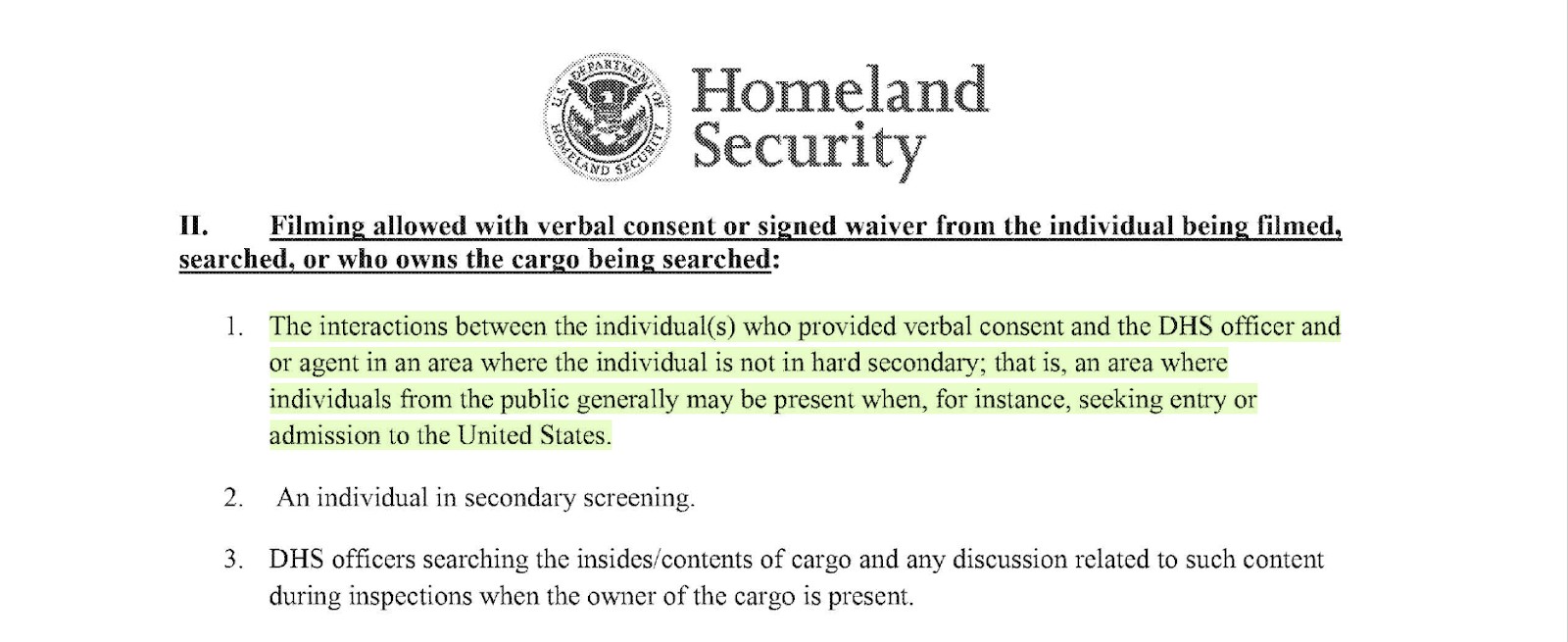
DHS guidance for third-party production companies allows filming of interactions between officers and noncitizens in public locations only with consent. But it is unclear whether DHS and ICE employees themselves obtain consent from noncitizens before filming.
Takeaway #4: Videos of immigration enforcement operations show that ICE officers routinely wear “POLICE” vests, which often trick noncitizens into believing ICE officers are local police.
This video was provided to ILD in response to its FOIA complaint.

The complete set of documents ICE and DHS produced in response to the FOIA complaint is available below. ILD and IRC have chosen not to post the complete set of videos to avoid promoting ICE’s films; please contact Jayashri Srikantiah to request the videos.