
Short Courses
Innovation in the Curriculum
Stanford Law School’s Short Courses bring leading voices from across the legal profession directly into the classroom for intensive, one- or two-unit sessions that unfold over just a few weeks. Taught by prominent judges, policymakers, scholars, and practitioners, these courses allow students to explore timely legal issues with instructors who are actively shaping the law in courts, government, and practice.
This unique format creates space for deep engagement with real-world legal questions while introducing students to a wide range of professional perspectives. Recent instructors have included federal appellate judges, former senior government officials, and leading litigators, teaching topics that range from the inner workings of the Supreme Court to complex federal litigation, communications policy, reproductive rights litigation, and the evolving law surrounding insurrection and executive power. By pairing Stanford Law’s academic strengths with the experience of leaders in the field, Short Courses offer students a window into how law is made, interpreted, and practiced today.
Featured Spring Course
Spring Short Courses

Perspectives on Judging
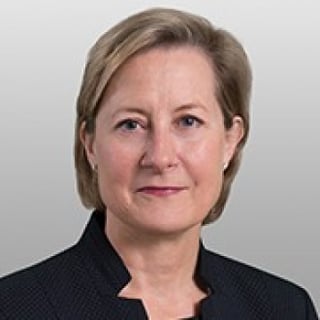
In this course, Judge Florence Y. Pan of the U.S. Court of Appeals for the D.C. Circuit will draw on over sixteen years of experience on the bench to consider what it means to be a judge and how to do the job well. Having served as a judge at both the trial and appellate levels and within the state and federal court systems, Judge Pan will provide unique insights into the judicial decision-making process. Students will not only engage with myriad legal issues -- such as sentencing, procedural fairness, and constitutional law -- but also with the various practical concerns of being a judge, including running a courtroom and chambers, recruiting and working with law clerks, and managing heavy dockets. The course will consider these issues from a diversity of perspectives, including those of guest co-teachers, such as Judge Casey Cooper of the U.S. District Court for the District of Columbia and Chief Judge Sri Srinivasan of the D.C. Circuit.
During the weeks of March 30 and April 6, 2026.
Reproductive Rights and the Dynamics of Litigation in the Midst of Constitutional Change
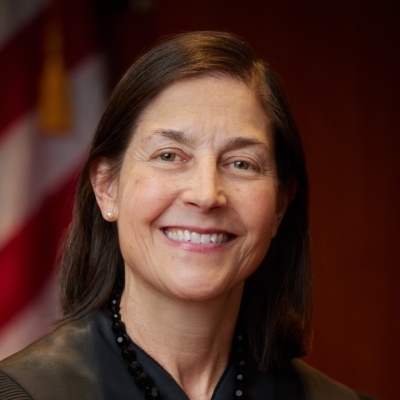
When the US Supreme Court overruled 50 years of federal constitutional protection for abortion rights in its 2022 Dobbs ruling, the legal strategies to protect abortion rights changed dramatically. This course will explore the landscape in state and federal courts of lawsuits post-Dobbs that are rebuilding those legal rights and fighting to maintain access in a variety of circumstances, including in both protective and restrictive States and in marginalized communities of color and the socioeconomically disadvantaged. We will begin with analysis of the doctrinal evolution of the federal constitutional right, and the post-Dobbs shift to protections for abortion under new state constitutional amendments and preexisting state precedent, along with related protections such as the right to interstate travel. We will look at the range of stakeholders critical to litigation to protect abortion access and consider some of the practicalities of the lawsuits in which they are involved, including pregnant individuals, abortion care providers, clinics, emergency rooms, reproductive justice organizations, other public interest organizations, and manufacturers and suppliers of abortion medication. We will analyze litigation strategy concerns common to social justice movements, weighing long-term goals and short-term needs. The role of the federal and state governments will also be examined. We will study the government tools that are used both to protect and to undermine abortion rights through statutory developments, regulatory change, and criminal law. Students will write three short papers on selected topics.
During the weeks of March 30, April 6, and April 13, 2026.
The Role of the Special Counsel: From Watergate to Jack Smith
This course explores the role of independent and special counsels in the investigation and prosecution of potential violations of federal criminal law by executive branch officials. Topics will include the legal scheme governing the appointment of special counsels; the evolution of the role from Watergate to the Jack Smith investigation; appointment and removal of special counsels; the justifications for and criticisms of the special counsel role; and executive immunities and privileges.
During the weeks of April 13 and April 20, 2026.

A Litigator's Guide to AI. Attention Is All You Need?
Taught from a litigator's perspective, this course examines using LLMs in everyday practice. The course will teach how attention, the skill that defines great advocacy, bridges legal practice and the transformer architecture powering LLMs. Lawyers already structure arguments, visuals, and case narratives to direct attention; large language models allocate it through a structurally parallel process. A model's context window demands the same discipline as a jury's attention span: structure, selection, and sequence matter. From that foundation, students develop a practitioner's understanding of transformers, tool use, reasoning, and agentic systems, and apply them to case development, context assembly, strategic analysis, and advocacy. Students then design and build their own AI-powered workflows for case development and analysis. The course shows why the litigator's craft is already the foundation of AI-augmented practice, and gives students the tools to prove it. What remains irreducibly human: judgment, strategy, and framing. No coding required.
During the weeks of April 8, April 10, and April 15, 2026.
Winter Short Courses

Recurring Issues in Complex Litigation
In this course we will examine issues that arise at various pretrial stages of different types of complex federal litigation, including patent, antitrust, and civil rights cases. We will explore techniques courts have devised for handling these issues and consider the advantages and disadvantages of each. The course materials consist largely of briefs and other litigation documents filed in real cases that were presided over by the professor, Judge Stark, allowing us to see how actual disputes have played out in actual proceedings.
During the weeks of January 12, January 19, and January 26, 2026

The Future of Wired, Wireless, and Space Communications Law and Policy
Communications technologies affect every aspect of civic and commercial life. In the digital age, they are also changing at a blistering pace. How does law and policy keep up? We will explore the frameworks governing wired, wireless, and space communications. In particular, we will consider what past practices mean as technology continues to evolve and how legal and regulatory models can both foster and constrain innovation. Subjects considered will include universal service obligations, network nondiscrimination, spectrum licensing, broadcast media, and satellite services as well as the role of administrative decision-making in developing the future of policies governing these technologies.
During the weeks of January 26 and February 2, 2026
The President and the Supreme Court
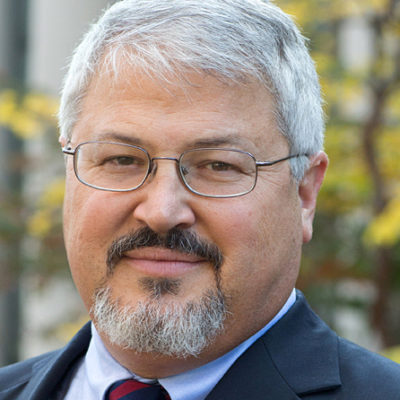
This seminar will focus on the relationship between the president and the Supreme Court. In our three sessions we will examine (a) whether and when federal courts can issue injunctions against the president, (b) pre-Trump v. United States Supreme Court decisions on the amenability of the president to suit in federal court, and (c) Trump v. United States. We will read unedited opinions and scholarship; the reading will be on the heavy side.
During the weeks of January 5 and January 12, 2026

The Modern U.S. Supreme Court
This seminar will explore some of the workings of the United States Supreme Court, with reference to some of the larger constitutional questions, such as free speech, racial discrimination, privacy, affirmative action, administrative power, and abortion, as well as the role of the Court in American democracy. Elements used in grading: Attendance, class participation, written assignments.
Featured Winter Course

Autumn Short Courses

Advanced Topics in Federal Courts
We will take a "deep dive" into some of the most interesting and contentious issues in the "federal courts" space. Illustrative topics might include any or all of the following: (1) Jurisdiction-stripping (Can Congress eliminate the Supreme Court's jurisdiction to hear certain types of cases, and if so, under what circumstances?); (2) Standing doctrine (Is the "injury-in-fact" requirement made up, and might there be a better way to think about the case-or-controversy requirement?); (3) Habeas corpus (What role should innocence play?); and Certification (Might federal courts' certification of questions to state supreme courts unlawfully delegate federal judicial power?).
September 29, 30, and October 2; 8:00 to 9:20; October 1; 5:00 to 7:30; October 3; 2:00 to 4:30 pm
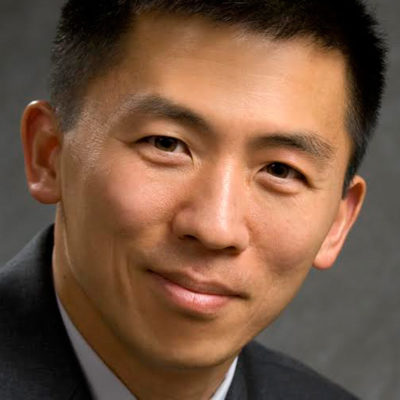
Contemporary Issues in Constitutional Law
This is an advanced constitutional law seminar for students who have already taken the introductory Constitutional Law course. The seminar will provide an opportunity for in-depth discussion of competing theories of constitutional interpretation, the role of the Supreme Court in our political system, and analysis of judicial behavior. Each week, these themes will be examined through the lens of a current "hot topic" in constitutional law - for example, executive power, religious liberty, LGBTQ+ rights, affirmative action, campaign finance, immigration, abortion, and other topics. This is not a "spectator" class; all students will be expected to participate actively in class discussion each week. This is a good seminar for students interested in clerking or pursuing academia.
October 20, 21, 23, and 24; 8:00 to 9:30 am; October 22; 4:15 to 7:15 pm

Law of Insurrection
Federal and state prosecutors spent nearly four years trying to hold to account those who aimed to overturn the results of the 2020 presidential election. This class describes the legal tools that prosecutors used, how their work was interpreted by the courts, and the body of "insurrection law" they developed. But more than just being a look back, this class will be a look forward: how will politicians and parties try to overthrow future elections, and what tools do lawyers--and citizens--have to stop them? This class aims to prepare students for any potential insurrection that lies ahead, and empowers them to help protect the rule of law.
September 24, October 1 and 8; 4:15 to 7:15 pm; September 26, October 3 and 10; 2:00 to 5:00 pm

Legal Practice in International Organizations: Challenges, Strategy and Leadership
In a world under pressure where global trade, multilateralism and development and humanitarian assistance are facing challenges, in-house counsel in international organizations play a key role as trusted business adviser. These legal professionals enable leaders to adapt their organizations to fast-paced and changing context, demanding quick adaptation and managing uncertainty. This course dives into the unique legal frameworks and practical challenges that arise within international organizations. Students will gain insights into the legal status and functioning of international organizations, their governance and the legal challenges they face. The course aims to bridge legal foundations with concrete examples and practice, focusing on diplomatic immunities and privileges, corporate governance, contracts, employment matters and dispute settlement, legal risk management, compliance and ethics and emerging legal trends such as safeguarding and data protection. Students will prepare, review and discuss case studies in class to reflect on the peculiar nature of the role, responsibilities and impact of in-house counsel in international organizations. Learning objectives: 1. Understand the various types of international organizations, their legal status and frameworks; 2. Explore the role and responsibilities of in-house counsel in international organizations and prepare for a career as in-house counsel; 3. Gain an understanding of the management of legal risk, compliance and ethics within an international organizations; and 4. Analyze case studies and real-world examples from international organizations.
October 20, 21, 22, 23, 24, and 27; 8:00 to 9:30 am
