Neukom Center for the Rule of Law

Rule of Law and Democracy Annual Conference

The Rule of Law and Democracy conference takes place every fall at Stanford Law School, welcoming leading academics, policy makers, and practitioners to discuss key rule of law questions facing the judiciary. In 2026, the conference will address questions relating to judicial transitions after authoritarianism, judicial evaluation, and judicial innovation in the age of AI.

VIEW CONFERENCE WEBSITE

2026 Conference

Rule of Law and Democracy: Judicial Transitions, Administration, and Innovation

September 24-26, 2026

2025 Conference and Report

Private Enforcement at the Founding and Article II

Conference Report: Rule of Law and Democracy: Innovations and Challenges

In September 2025, leading scholars, judges, and policy makers from across the world gathered at Stanford Law School for the first “Rule of Law and Democracy: Innovations and Challenges” conference. Over two days, conference participants explored two topics: (1) judicial innovations that have demonstrably improved the competence and independence of a country’s judiciary and (2) the prosecution of former heads of state for abuse of power while in office. Both topics are near the center of challenges to democracy and the rule of law today.

Academic and policy debates around the rule of law are not new. The fundamental principles of the rule of law—judicial independence, governmental transparency, consistent decision-making—are well established and broadly accepted. Similarly, the harms caused by recent waves of democratic erosion and autocratization are now well documented. The harder questions concern what institutional success actually looks like in practice. After the third wave of democratization in the late 1980s and early 1990s, dozens of countries undertook ambitious judicial reform efforts with optimism about building effective legal institutions. Yet when we examine the outcomes, the results are sobering: a recent study of more than forty instances where presidents attempted to defy term limits—perhaps the clearest threat to constitutional democracy—found that courts ruled against the executive in only two cases. Similarly, the proliferation of prosecutions against former heads of state in countries like Peru, Korea, Ecuador, Brazil, and France raises difficult questions about whether such accountability measures ultimately safeguard or destabilize democratic institutions.

Judicial Selection, Education, and Experience

Adam Hofmann Office of the Governor, California

Adam Hofmann

  • Office of the Governor, California
Omar Hernández Salgado Instituto Tecnológico Autónomo de México (ITAM)

Omar Hernández Salgado

  • Instituto Tecnológico Autónomo de México (ITAM)
Jennifer Yim Board of Pardons and Parole, Utah

Jennifer Yim

  • Board of Pardons and Parole, Utah
Diego A. Zambrano

Diego A. Zambrano

  • Neukom Center for the Rule of Law, Stanford Law School

AI as a Tool for Judicial Administration: Benefits and Challenges

Elliott Ash Center for Law & Economics, ETH Zurich
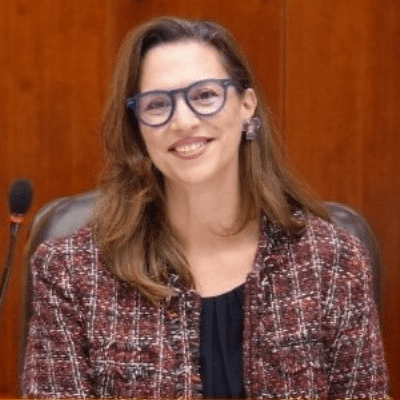
Elliott Ash

  • Center for Law & Economics, ETH Zurich
Hon. Natalia Ángel Cabo Constitutional Court of Colombia; Universidad de los Andes

Hon. Natalia Ángel Cabo

  • Constitutional Court of Colombia; Universidad de los Andes
Margaret Hagan

Margaret Hagan

  • Stanford Law School
Right Hon. Dame Helen Winkelmann Supreme Court of New Zealand

Right Hon. Dame Helen Winkelmann

  • Supreme Court of New Zealand

Administrative Innovations to Enhance the Courts’ Democratic Role

Nation’s Largest Trial Court Partners with Stanford Law School’s Deborah L. Rhode Center on the Legal Profession to Identify Innovative Ways to Expand and Improve Access to Justice

David Freeman Engstrom

  • Deborah L. Rhode Center on the Legal Profession, Stanford Law School
Bernardo S. Silveira University of California, Los Angeles

Bernardo S. Silveira

  • University of California, Los Angeles
Hon. Ann S. Timmer Supreme Court of Arizona

Hon. Ann S. Timmer

  • Supreme Court of Arizona

Poland: Rule of Law Recovering?

Senator Adam Bodnar Republic of Poland

Senator Adam Bodnar

  • Republic of Poland
Anna Grzymala-Busse The Europe Center, Stanford University

Anna Grzymala-Busse

  • The Europe Center, Stanford University

Constitutionalism and the Prosecution of Former Heads of State

Gretchen Helmke University of Rochester
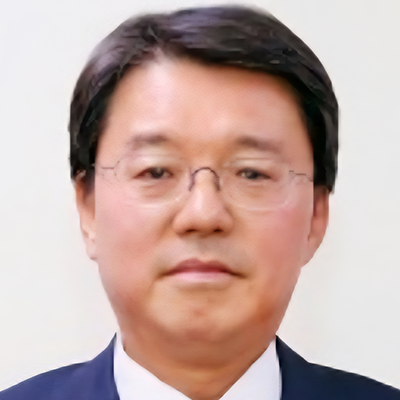
Gretchen Helmke

  • University of Rochester
Hon. Jung-Won Kim (Formerly) Constitutional Court of the Republic of Korea

Hon. Jung-Won Kim

  • (Formerly) Constitutional Court of the Republic of Korea
Hon. Daniela Salazar Marín Universidad San Francisco de Quito; (Formerly) Constitutional Court of Ecuador

Hon. Daniela Salazar Marín

  • Universidad San Francisco de Quito; (Formerly) Constitutional Court of Ecuador
Oscar Vilhena Vieira Getulio Vargas Foundation Law School

Oscar Vilhena Vieira

  • Getulio Vargas Foundation Law School
Diego A. Zambrano

Diego A. Zambrano

  • Neukom Center for the Rule of Law, Stanford Law School

To Prosecute or Not to Prosecute: Institutions, Factors, Decisionmakers

Eleonora Bottini University of Caen Normandy

Eleonora Bottini

  • University of Caen Normandy
Zachary Elkins University of Texas Photographer: http://www.whitneyleephotography.com/

Zachary Elkins

  • University of Texas, Austin
Erik G. Jensen

Erik G. Jensen

  • Neukom Center for the Rule of Law, Stanford Law School
Sonia Mittal Yale Law School

Sonia Mittal

  • Yale Law School

Challenges to the Rule of Law

Francis Fukuyama Ford Dorsey Master’s in International Policy, Stanford University

Francis Fukuyama

  • Ford Dorsey Master’s in International Policy, Stanford University
Erik G. Jensen

Erik G. Jensen

  • Neukom Center for the Rule of Law, Stanford Law School
Abby K. Wood University of Southern California, Gould School of Law

Abby K. Wood

  • University of Southern California, Gould School of Law